

Plato believed that knowledge is not merely acquired through experience but is, in fact, an act of remembering what the soul already knows. This profound idea, known as the theory of recollection, challenges our understanding of learning. Today, we often think of gaining knowledge as filling our minds with new information, but Plato suggests that true wisdom is already within us, waiting to be unlocked. How might this perspective change the way we approach education and personal growth?
Consider the moments when you suddenly grasp a concept that previously eluded you. That “aha” feeling, Plato might argue, is not new information entering your mind, but rather a memory reawakened. Imagine a child learning to walk. They stumble, fall, and try again until they find their balance. In Plato’s view, this process mirrors the soul’s journey toward recollecting truths it already possesses.
At planksip.org, we explore these timeless concepts, inviting you to engage with Plato’s legacy in fresh ways. Here, Plato isn’t just an ancient thinker but a living ideal, personified through discussions and reflections on life’s deeper questions. Join our community and help reimagine what Plato’s wisdom could mean for us today.
From the Archives of Ancient Greece: Featuring Dr. Michael Sugrue
Dr. Michael Sugrue dives into Plato’s Meno, examining the idea that “all learning is recollection.” Sugrue describes how Socrates, through a series of leading questions, guides a young, uneducated boy to derive geometric principles on his own. This boy, with no prior education, finds knowledge within himself, revealing that understanding is not external but embedded within each of us.
Sugrue’s insights challenge the modern notion of rote memorization and passive learning. Imagine a classroom where teachers don’t just impart facts, but instead, help students rediscover what they already know. Such an approach would focus on drawing out the innate potential within each learner, rather than filling empty vessels. Reflecting on this could lead us to rethink how we approach not just education, but our entire understanding of what it means to "know" something.
Interested in exploring more of Dr. Sugrue’s perspectives? Visit planksip.org for exclusive access to his commentary and reflections on ancient philosophy, where ancient insights meet contemporary relevance.
Insights from the Dialogues: Quoting Plato
In Meno, Socrates introduces the concept of anamnesis (recollection), which is vividly demonstrated in his dialogue with Meno’s slave. Socrates draws a series of lines in the sand, asking the boy a series of questions that seem simple at first but gradually reveal geometric truths. The boy, initially unaware of his own knowledge, begins to articulate principles he had never been taught (Meno, 81d-85b). This process, Socrates claims, is proof that the soul already knows and only needs prompting to remember.
This dialogue offers a powerful metaphor for our own learning experiences. Consider the satisfaction of solving a difficult problem or completing a complex task without external help. It’s almost as if the solution was already there, waiting to be uncovered. Plato's notion of recollection pushes us to trust in our capacity to discover and recognize truth independently—a message that resonates in moments of self-doubt or uncertainty.
How might this idea shape our lives? Engage in discussions at planksip.org and share your reflections on how you experience learning as a form of remembering.
Chance and Fate: Exploring Ancient Games
Ancient Greek games of chance, like knucklebones (astragali), often mirrored life's unpredictability, but they also symbolized the tension between fate and skill. Each throw of the bones required both an acceptance of randomness and an understanding of calculated choices. This duality of luck and decision-making can be seen as a reflection of Plato’s theory of recollection.
Explore the Mystical World of Astraguli: Ancient Games of Chance with Cultural Significance.
Just as a skilled player learns to anticipate outcomes, the soul, in Plato’s view, must discern truth amid the chaos of life. Players who mastered these games didn’t merely rely on luck—they tapped into a deeper intuition, perhaps akin to Plato’s idea of recollecting knowledge already within. Imagine these ancient games as metaphors for life, reminding us that even when fate seems to control outcomes, our responses can reveal hidden wisdom.
Join our discussion forums at planksip.org to explore how these ancient metaphors resonate in your own life. Is there a time when you felt luck played a part, but reflection revealed an underlying sense of clarity or truth?
Virtues Revisited: Practical Lessons for Today
Prudence, or practical wisdom, is the virtue of knowing when and how to act. In the context of Plato’s theory of recollection, prudence becomes the skill of discerning when a familiar idea or memory is the key to present challenges. Think of it as finding patterns in your own experiences—recognizing echoes of past lessons in new situations. A prudent person doesn’t just act but acts with the foresight of remembered truths.
Consider moments when you’ve faced a tough decision and found the right answer by reflecting on a similar situation from the past. In those moments, you’re not merely making a decision; you’re recalling the wisdom of prior experience. Plato believed that recollection guides us toward virtuous actions, helping us make choices aligned with the Good.
At planksip.org, we delve into these concepts, reflecting on how practical wisdom shapes our daily lives. Join us to share your stories of prudence and the echoes of memory that guide you.
Engage with Us: Reader’s Corner
We want to hear from you! How does Plato’s theory of recollection resonate with your understanding of learning and memory? Have you experienced moments of clarity that felt like rediscovering something you already knew? Your reflections might be featured in our next newsletter, connecting your insights with the broader philosophical journey.
Submit your thoughts and join the conversation at planksip.org, where the personification of Plato is a living dialogue—an ideal worth imagining.
Closing Reflection: Socrates’ Enduring Legacy
Socrates once said, “An unexamined life is not worth living,” urging us to question and rediscover ourselves continually. Plato’s theory of recollection aligns perfectly with this mission of self-examination. The knowledge we seek is often within us, waiting to be uncovered through reflection and dialogue.
As you go about your week, take a moment to consider what hidden truths might lie dormant in your mind. What could you remember that would change your perspective on the world? Visit planksip.org to engage with these timeless questions and explore the enduring legacy of Plato and Socrates.
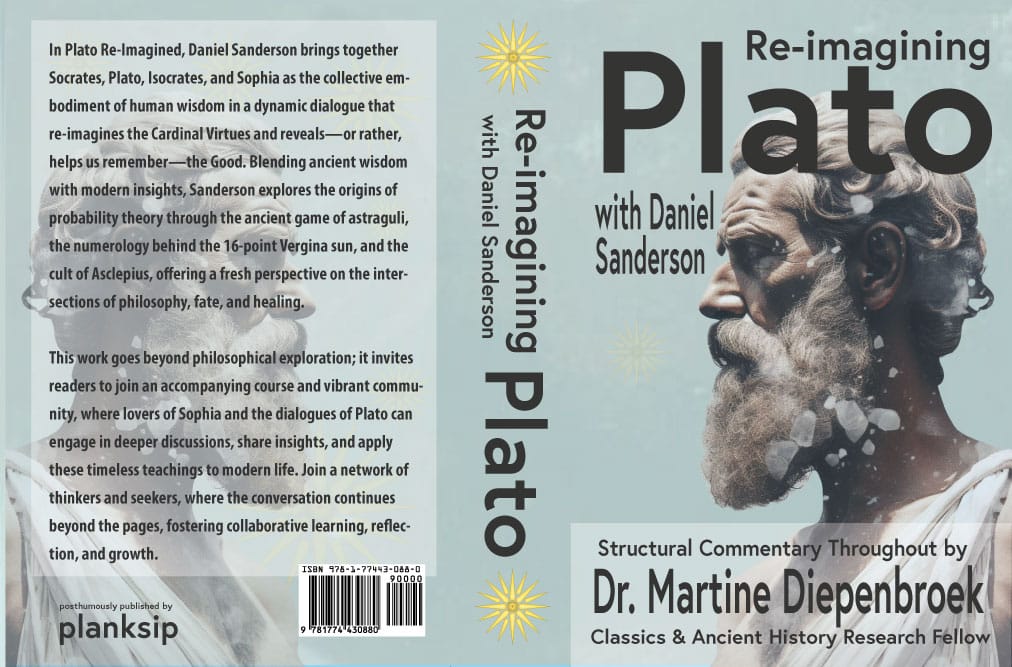
Plato Re-Imagined
This course offers 32 comprehensive lectures exploring most of Plato's dialogues. These lectures guide students toward a consilient understanding of the divine—a concept that harmonizes knowledge across disciplines and resonates with secular and religious leaders. As a bonus, Lecture #33 focuses on consilience, demonstrating how different fields of knowledge can converge to form a unified understanding.


