

The Unseen Architect: How Mathematics Defines Quantity
One might be tempted to view mathematics merely as a sophisticated tool for measuring what already exists in the world. Yet, such a perspective, while not entirely incorrect, profoundly undersells its true philosophical import. For, as we delve into the annals of thought, from the Platonic ideals to the Newtonian mechanics, it becomes strikingly clear that mathematics is not just a descriptor of quantity, but its very definer. It provides the foundational definition through which we comprehend, categorize, and ultimately interact with the quantitative aspects of reality, acting as an indispensable bridge between abstract thought and empirical science.
The Ancient Roots of Quantitative Definition
From the earliest philosophical inquiries, thinkers grappled with the nature of number and magnitude. The ancient Greeks, particularly those featured in the Great Books of the Western World, understood that mere counting was insufficient; a deeper definition was required.
- Plato's Forms: For Plato, numbers and geometric shapes existed as perfect, immutable Forms in a realm beyond sensory experience. These Forms provided the true, unchanging definition of quantity, making the physical world's approximations intelligible. A "two" we perceive is merely a shadow of the ideal Form of Twoness.
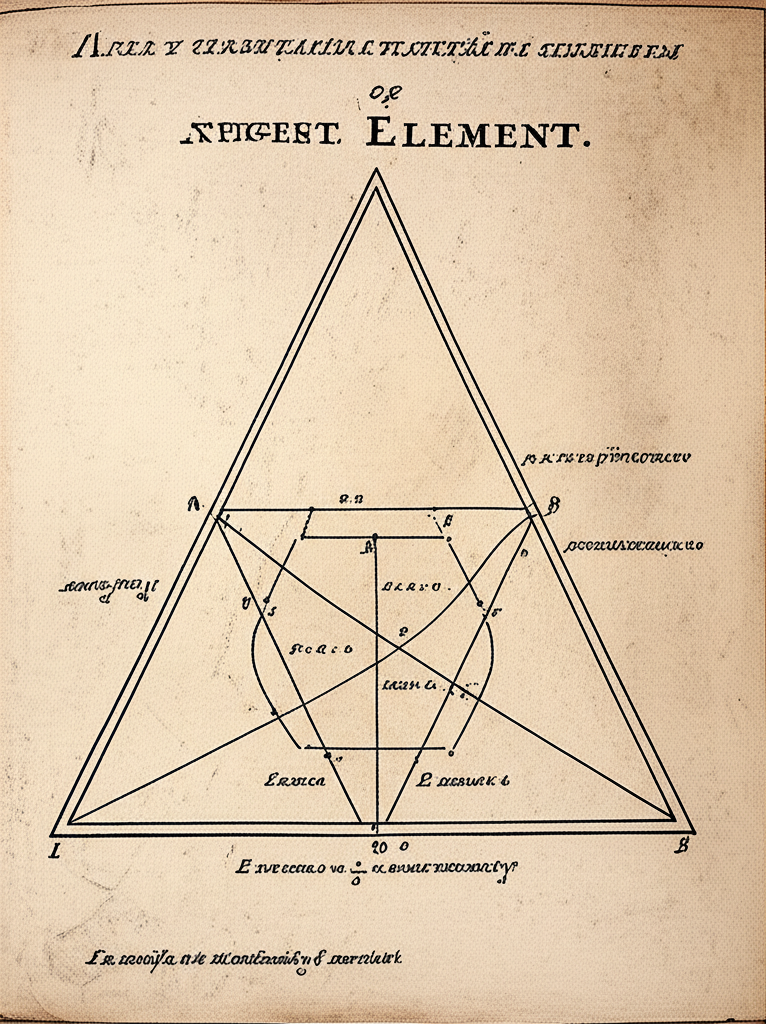
- Euclid's Elements: This monumental work is not just a collection of geometric proofs; it's a systematic definition of spatial quantity. Through axioms, postulates, and theorems, Euclid meticulously constructs a framework that defines points, lines, planes, and solids, establishing the very rules by which these quantities interact and are understood. The concept of "equal quantity" in geometry is rigorously defined here, not merely observed.
- Aristotle's Categories: Aristotle identified quantity as one of his ten fundamental categories of being. He distinguished between discrete quantity (number) and continuous quantity (magnitude, such as lines, surfaces, and bodies). While Aristotle was more empirical than Plato, his categorization laid philosophical groundwork for understanding the different definitions of quantity that mathematics would formalize.
These classical thinkers, therefore, did not just use mathematics; they engaged with it as the very language for defining what quantity is.
Mathematics as the Definitional Language of Quantity
Mathematics provides the syntax and grammar for understanding quantity in a way no other discipline can. It moves beyond mere observation to establish the inherent properties and relationships of numbers and magnitudes.
How Mathematics Defines Quantity:
- Establishing Axioms and Postulates: Mathematical systems begin with fundamental, self-evident truths that define the basic properties of quantity. For instance, the Peano axioms define the natural numbers, establishing their existence and fundamental operations.
- Providing Universal Language: Regardless of culture or language, a mathematical expression of quantity (e.g., 2+2=4) holds a universal and unambiguous definition. This precision allows for consistent understanding across diverse contexts.
- Categorizing Types of Quantity: Mathematics doesn't just count; it differentiates. It provides the definitions for:
- Discrete Quantity: Countable items (integers).
- Continuous Quantity: Measurable magnitudes (real numbers, like length or time).
- Cardinal Quantity: "How many" (e.g., three apples).
- Ordinal Quantity: "Which position" (e.g., third place).
- Extensive Quantity: Can be added (e.g., mass, length).
- Intensive Quantity: Cannot be added (e.g., temperature, density).
- Enabling Abstract Generalization: By abstracting quantity from specific instances, mathematics allows us to study its properties in a pure form, leading to general laws and theories applicable to countless scenarios. The definition of a variable in algebra allows us to represent any quantity.
The Scientific Imperative: Quantifying the World
The pivotal role of mathematics in defining quantity became even more pronounced with the birth of modern science. Figures like Galileo Galilei and Isaac Newton, also cornerstones of the Great Books tradition, fundamentally reshaped our understanding of the universe by insisting that nature's book is written in the language of mathematics.
- Galileo's Vision: Galileo famously asserted that the universe "is written in mathematical language." For him, understanding nature meant defining its phenomena quantitatively. The motion of a falling object, for example, wasn't just "fast" or "slow"; its speed and acceleration were precisely defined by mathematical equations.
- Newtonian Mechanics: Newton's Principia Mathematica is perhaps the ultimate testament to mathematics' definitional power in science. Concepts like mass, force, velocity, and acceleration are not merely observed attributes; they are rigorously defined through mathematical relationships.
- Force (F = ma): This equation isn't just a measurement tool; it's a fundamental definition of force in terms of mass and acceleration.
- Gravity (F = Gm1m2/r²): This defines the quantitative relationship between mass, distance, and the gravitational force.
Without these precise mathematical definitions, scientific theories would lack the predictive power and explanatory coherence we now take for granted. The ability to quantify through mathematical definition is what transforms observation into understanding, allowing for experimentation, prediction, and the advancement of knowledge.
Conclusion: The Indispensable Foundation
In philosophical and scientific discourse, the role of mathematics extends far beyond mere calculation. It is the very framework that allows us to conceive of, articulate, and rigorously define quantity in all its forms. From the abstract ideals of Plato to the empirical laws of Newton, mathematics has consistently provided the bedrock upon which our understanding of the quantitative world is built. It gives us the precise definition of "how much," "how many," and "how big," making it an indispensable discipline for anyone seeking to comprehend the fundamental structure of reality.
📹 Related Video: PLATO ON: The Allegory of the Cave
Video by: The School of Life
💡 Want different videos? Search YouTube for: ""Plato's Philosophy of Mathematics and Forms Explained""
📹 Related Video: KANT ON: What is Enlightenment?
Video by: The School of Life
💡 Want different videos? Search YouTube for: ""The Mathematical Universe: Galileo, Newton, and the Scientific Revolution""