

The Unseen Architect: How Mathematics Defines Quantity
Mathematics is often perceived as merely a tool for measurement, a sophisticated calculator for the empirical world. However, to confine its role thus is to miss its profound philosophical significance. In truth, mathematics does not merely describe quantity; it fundamentally defines it, providing the very framework through which we conceptualize and articulate "how much" or "how many." From the simplest count to the most complex scientific theories, our understanding of quantity is inextricably linked to the rigorous, abstract principles of mathematics, making it an indispensable partner in both philosophy and science.
From Intuition to Precise Definition
Our initial encounters with quantity are often intuitive: one apple, two stones. But this raw perception quickly gives way to the need for a more structured definition as quantities grow or become abstract. It is here that mathematics steps in, transforming vague notions into precise, universal concepts.
- The Birth of Number: The very idea of a "number" is a mathematical construct. It abstracts away the specific nature of the objects being counted (apples, stones, ideas) to focus solely on their numerosity. This abstraction, pioneered by ancient thinkers and formalized over millennia, allows us to compare and manipulate quantities independent of their physical manifestation.
- Beyond Counting: Mathematics extends quantity far beyond simple enumeration. Concepts like zero, negative numbers, fractions, irrational numbers, and complex numbers define new categories of quantity that are not directly observable in discrete physical objects but are essential for sophisticated scientific and philosophical inquiry.
Mathematics as the Language of Quantity
If quantity is a property, then mathematics is the language that gives this property its meaning and structure. It provides the grammar and syntax for expressing quantitative relationships, enabling us to move from simple observation to profound insight.
Consider the following aspects of this linguistic power:
- Universal Consistency: Mathematical definitions of quantity ensure consistency across cultures and disciplines. A "unit" or a "ratio" holds the same meaning whether discussed by an ancient Greek philosopher, a Renaissance astronomer, or a modern physicist. This universality is crucial for the collaborative nature of
science. - Rigorous Abstraction: Mathematics allows us to abstract quantity from its physical referent. We can discuss the quantity of "justice" or "happiness" in a metaphorical sense, but when we speak of the quantity of "energy" or "mass,"
mathematicsprovides the exactdefinitionand means of measurement within a scientific context. - Conceptual Expansion: Mathematical operations (addition, multiplication, calculus) are not just ways to manipulate quantities; they are ways to define new quantities. For instance, velocity is defined as the rate of change of position with respect to time, a concept rooted in calculus. This
definitionexpands our understanding of whatquantitycan be.
The Role in Science and Beyond
In science, the definition of quantity through mathematics is not just convenient; it is foundational. From Galileo's insistence that the book of nature is written in the language of mathematics to Newton's calculus-based definition of physical laws, mathematics has been the bedrock upon which our understanding of the quantitative aspects of reality is built.
Table: Mathematical Definitions of Key Quantities in Science
| Quantity | Mathematical Definition / Framework | Philosophical Implication |
|---|---|---|
| Length/Distance | Euclidean geometry, metric spaces, vector magnitudes | Spatial relations are mathematically structured. |
| Time | Real numbers, calculus (rates of change), relativity's spacetime | Time as a measurable, continuous dimension. |
| Mass/Energy | Scalar quantities, E=mc² (relativity), quantum field theory | Fundamental properties of existence, defined by mathematical laws. |
| Probability | Set theory, measure theory, statistical distributions | Quantifying uncertainty and likelihood. |
| Information | Shannon entropy, bits (binary digits) | Information itself can be quantified and measured. |
These examples underscore how mathematics doesn't just measure existing quantities but provides the very conceptual apparatus for their definition and study. Without the mathematical framework, many of these quantities would remain vague intuitions or entirely unknowable.
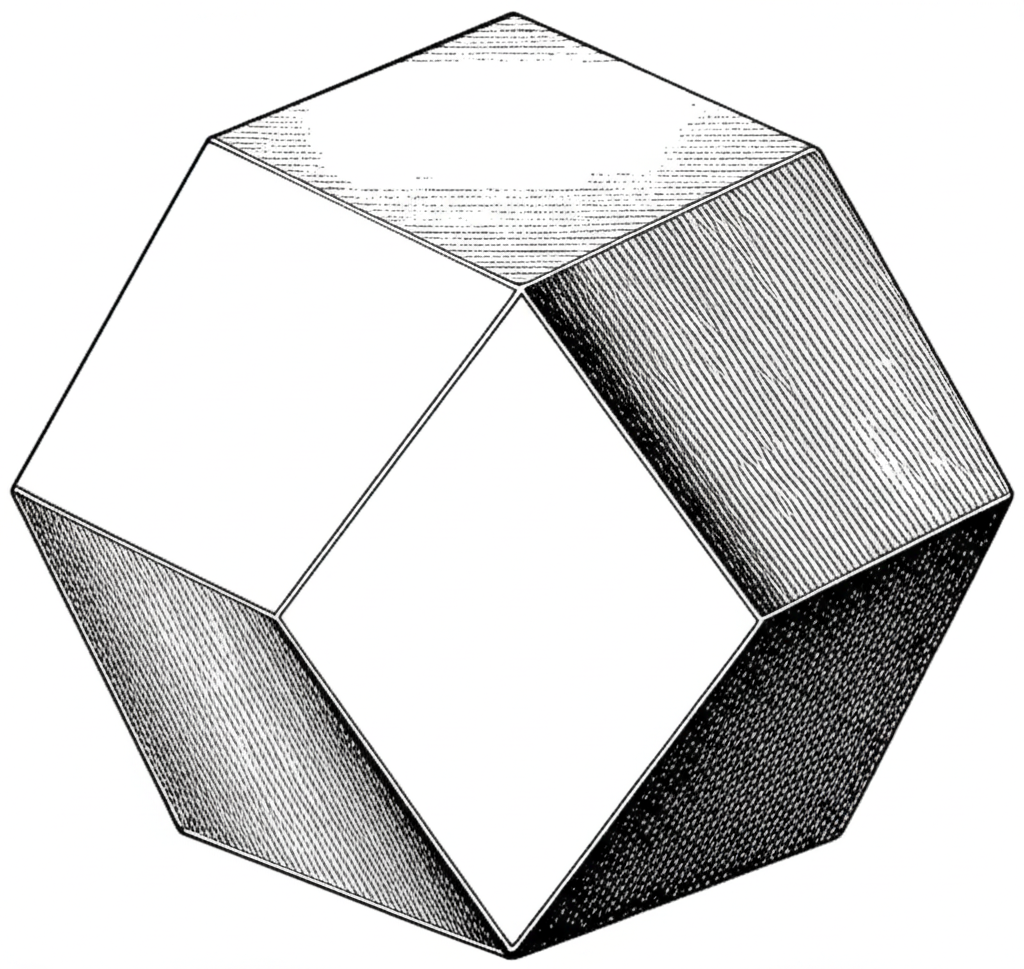 , rendered with precise geometric lines and shadows, against a background that subtly blends classical Greek architectural elements with abstract mathematical symbols like integrals or sigma notation, symbolizing the convergence of ancient philosophical ideals of form and modern mathematical rigor in defining reality.)
The Philosophical Implications: Is Quantity Inherent or Constructed?
The profound role of mathematics in defining quantity leads to deep philosophical questions. Is quantity an inherent property of the universe, merely awaiting mathematical discovery, or is it a construct of our mathematical systems, a way for us to impose order on a fundamentally unquantifiable reality?
- Platonic Realism: For thinkers like Plato, mathematical entities and their definitions of quantity exist independently of human thought, in a realm of perfect Forms. Our
mathematicsmerely allows us to apprehend these eternal truths. - Aristotelian Empiricism: Aristotle, while acknowledging the importance of number, grounded quantity in the properties of existing things, categorizing it as an attribute.
Mathematicsthen becomes a tool for understanding these attributes. - Modern Perspectives: Contemporary philosophy often grapples with the interplay between mathematical formalism and empirical observation. Does
mathematicsdiscover the quantitative nature of the cosmos, or does it provide the only coherent way for us todefineand interact with what we perceive as quantity?
Ultimately, mathematics is far more than a computational engine; it is the fundamental language and conceptual framework through which quantity is not just measured, but profoundly defined. It is the architect of our quantitative understanding, shaping both our scientific endeavors and our philosophical reflections on the nature of reality itself.
📹 Related Video: What is Philosophy?
Video by: The School of Life
💡 Want different videos? Search YouTube for: ""Philosophy of Mathematics: Is Math Discovered or Invented?""
📹 Related Video: KANT ON: What is Enlightenment?
Video by: The School of Life
💡 Want different videos? Search YouTube for: ""The Unreasonable Effectiveness of Mathematics in the Natural Sciences Explained""