

This article explores the profound philosophical concept of labor as the fundamental engine of wealth creation. Drawing insights from the Great Books of the Western World, we examine how man's transformative effort upon nature, both individually and collectively, generates value, shapes societies, and informs the very structure and purpose of the State. We delve into how philosophers from antiquity to the modern era have grappled with labor's role not merely as a means of subsistence, but as a defining characteristic of human existence and the bedrock of societal prosperity.
The Indispensable Hand: Labor as the Foundation of Wealth
From the earliest philosophical inquiries, the act of labor has been recognized as far more than mere toil; it is the essential catalyst through which raw nature is transformed into wealth. Before any commodity can be exchanged, before any capital can accumulate, and before any sophisticated economic system can arise, there must be the exertion of human energy—the application of man's will and skill to the natural world. This foundational truth underscores nearly every major treatise on economics and political philosophy found within the Great Books of the Western World.
From Raw Earth to Human Value: The Genesis of Wealth
Consider the untouched forest or the unmined ore. These are resources, certainly, but they remain potential rather than actual wealth. It is only through the labor of felling trees, processing timber, extracting metal, and shaping these materials that they acquire practical utility and economic value. This transformative process is the genesis of wealth, marking the shift from a state of natural abundance to one of human-made prosperity. It is a testament to man's unique capacity to impose his will and intelligence upon his environment, making it serve his needs and desires.
Man, Nature, and the Alchemy of Effort
The relationship between man and nature, mediated by labor, is a recurring theme in philosophical thought. Philosophers have long debated the precise mechanisms by which labor imbues value, but the consensus remains that it is the active engagement, the effort expended, that bridges the gap between potential and actual wealth.
Philosophical Roots: Labor as Property and Purpose
The very concept of ownership, for many thinkers, is inextricably linked to labor. When man mixes his labor with something in the natural world, he imbues it with a part of himself, thereby establishing a claim. This idea forms a crucial part of early modern political theory, laying the groundwork for understanding property rights and the distribution of wealth. Beyond mere acquisition, labor also provides purpose and meaning, connecting man to his environment and to his fellow human beings through the goods and services he produces.
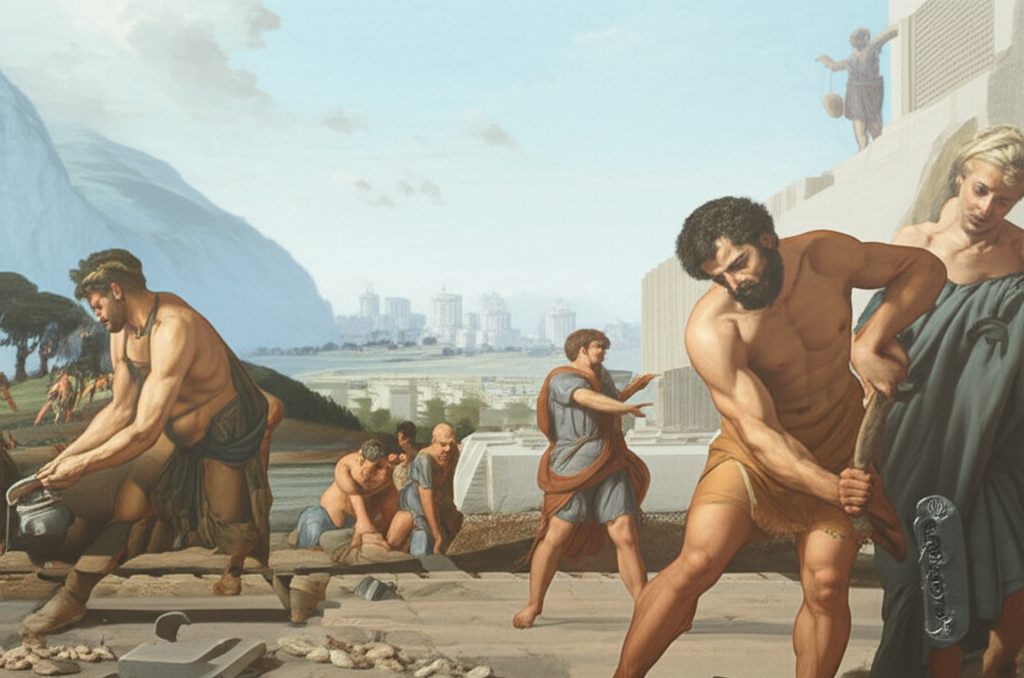
The Collective Endeavor: Labor, Society, and the State
While individual labor is fundamental, the creation of significant wealth often requires collective effort. Societies organize themselves to facilitate production, distribute resources, and manage the fruits of their collective labor. This is where the concept of the State becomes paramount.
The State's Role in Organizing and Distributing Wealth
The State, in its various forms, plays a crucial role in structuring the environment within which labor generates wealth. It establishes laws, protects property, regulates commerce, and sometimes even directs economic activity. The effectiveness and justice of these state functions profoundly impact how wealth is created, accumulated, and distributed among its citizens. Philosophers have extensively debated the ideal role of the State in this process, questioning how to best foster productivity while ensuring equity and preventing exploitation. The balance between individual freedom to labor and the collective good overseen by the State remains a perpetual philosophical challenge.
Perspectives from the Great Books: A Legacy of Thought
The Great Books of the Western World offer a rich tapestry of perspectives on labor and its relationship to wealth. These thinkers, across millennia, have laid the intellectual groundwork for our understanding of economic and social systems.
Here are a few seminal contributions:
- Aristotle on Oikos and Natural Acquisition: In his Politics, Aristotle distinguishes between "natural" acquisition (like farming or hunting, which provide for household needs) and "unnatural" acquisition (like usury or excessive trade for profit). He recognized the labor involved in oikos (household management) as fundamental to providing for the family's needs, thus creating a basic form of wealth. His emphasis was on self-sufficiency and the proper use of resources generated through labor.
- Locke's Labor Theory of Property: John Locke, in his Second Treatise of Government, famously argued that man acquires property by mixing his labor with nature. "Every man has a property in his own person: this no body has any right to but himself. The labor of his body, and the work of his hands, we may say, are properly his." This revolutionary idea posited labor as the original source of value and legitimate ownership, predating and justifying the formation of the State.
- Adam Smith and the Division of Labor: Adam Smith's The Wealth of Nations is a cornerstone of modern economic thought. Smith detailed how the division of labor dramatically increases productivity and, consequently, national wealth. By specializing tasks, man becomes more efficient, leading to greater output and a more complex, prosperous society. He observed how this specialization, driven by self-interest, inadvertently contributes to the collective good, generating wealth far beyond what individual, unspecialized labor could achieve.
The Enduring Significance of Labor in a Modern World
Even in an age of automation and advanced technology, the fundamental principle that labor creates wealth remains profoundly relevant. While the nature of labor may evolve—from purely physical to intellectual, creative, or service-oriented—it is still human ingenuity, effort, and organization that transform raw materials, information, and ideas into valuable goods and services. The challenges of modern society, such as equitable wealth distribution, the impact of artificial intelligence on employment, and the sustainability of our economic models, all ultimately circle back to how we understand, value, and manage human labor. The philosophical inquiries initiated by the Great Books continue to provide a vital framework for navigating these contemporary issues.
Conclusion: The Unseen Architect of Prosperity
In conclusion, the role of labor in creating wealth is not merely an economic concept but a profound philosophical truth that defines human existence and societal progress. From the individual man's struggle to transform his environment to the complex organizational structures of the State, labor stands as the unseen architect of prosperity. The insights gleaned from the Great Books of the Western World remind us that understanding labor is crucial not just for economic analysis, but for comprehending human nature, justice, and the very fabric of civilization.
📹 Related Video: KANT ON: What is Enlightenment?
Video by: The School of Life
💡 Want different videos? Search YouTube for: "John Locke labor theory of property explained"
📹 Related Video: PLATO ON: The Allegory of the Cave
Video by: The School of Life
💡 Want different videos? Search YouTube for: "Adam Smith wealth of nations summary"