

The Indispensable Hand: How Labor Forges Wealth from the Earth
Summary: At its core, the creation of wealth is not a mystical process but a tangible outcome of human labor. From the earliest philosophical inquiries to modern economic thought, the act of applying human effort, skill, and ingenuity to the natural world has been recognized as the fundamental force transforming raw potential into valuable goods and services. This article explores how philosophers across the ages have understood the relationship between Man, his Labor, and the generation of Wealth, examining the crucial role of the State in this intricate dance of production and distribution.
The Genesis of Value: Labor as the Primal Act
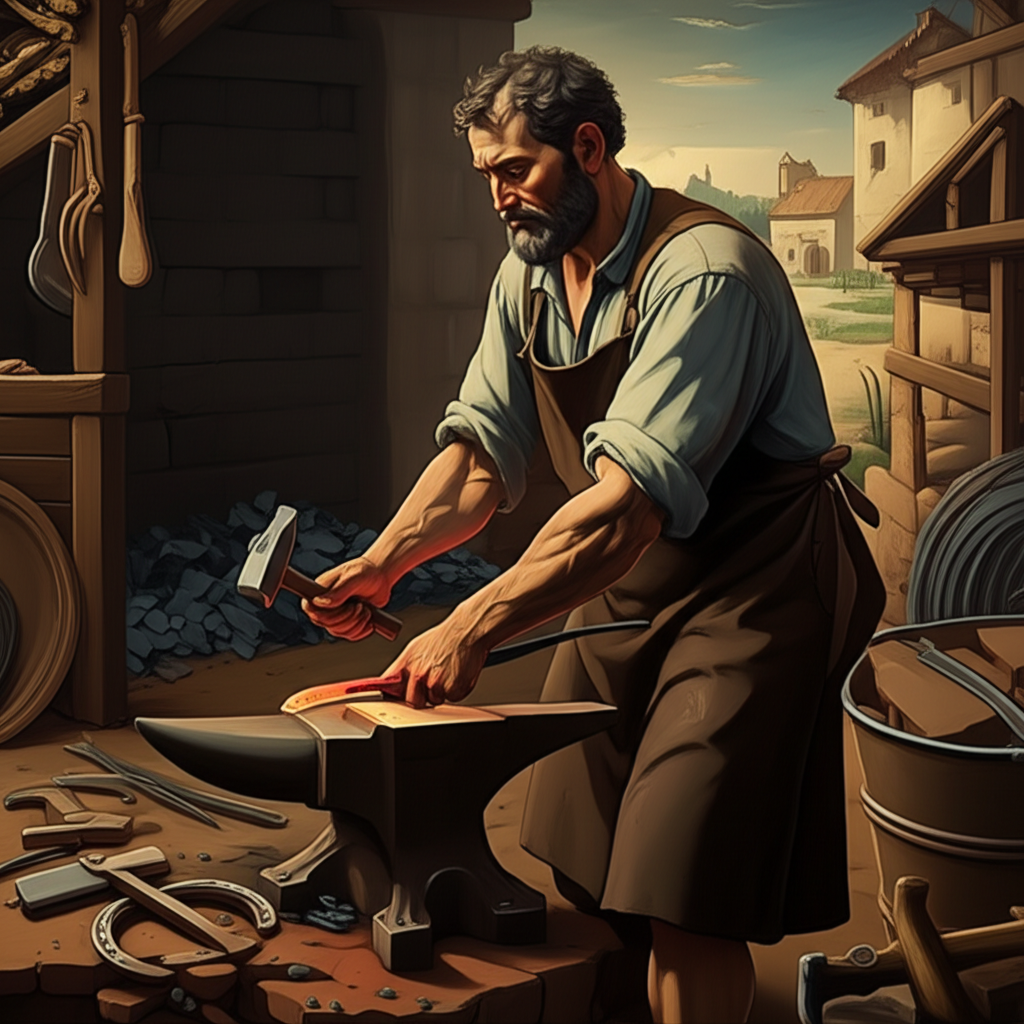
How does something become valuable? This question has puzzled thinkers for millennia, giving rise to complex economic theories and profound philosophical debates. Yet, beneath the layers of currency, markets, and capital, lies a simple, undeniable truth: without human labor, the vast resources of the earth remain inert. A tree in the forest is merely wood; it takes the man with his axe, his saw, and his skill to transform it into shelter, furniture, or fuel. This transformative power of labor is not just an economic principle but a foundational element of human existence, deeply explored within the Great Books of the Western World.
Philosophical Foundations: Labor's Ancient Roots and Modern Manifestations
The idea that labor is central to value isn't a modern invention. Ancient philosophers, while often placing manual labor lower on the social hierarchy, still recognized its necessity.
Ancient and Classical Perspectives
- Plato's Republic: In constructing his ideal city, Plato emphasizes the division of labor as essential for efficiency and the creation of a well-ordered society. Each citizen performs the task for which they are best suited, contributing to the collective wealth and stability of the State.
- Aristotle's Politics and Nicomachean Ethics: Aristotle distinguishes between "natural" and "unnatural" forms of acquisition. While he views household management (oikonomia) and farming as natural and honorable ways to acquire necessities through labor, he critiques chrematistics – the pursuit of wealth for its own sake, often through trade and usury – as unnatural and potentially corrupting. Nevertheless, the underlying principle of effort yielding sustenance is clear.
The Dawn of Modern Thought: Labor as Property and Value
The Enlightenment brought a radical re-evaluation of labor's status, elevating it from a mere necessity to a fundamental right and the source of all value.
- John Locke's Two Treatises of Government: Locke famously posits that a man acquires property by "mixing his labor with" natural resources. When he tills the soil, he imbues it with his effort, making it his own. This concept is revolutionary, establishing labor as the original title to wealth and property, predating the State itself. The value added by his work is what fundamentally transforms common resources into private holdings.
- Adam Smith's The Wealth of Nations: Smith, building on Locke, develops the labor theory of value more comprehensively. He argues that "the real price of every thing, what every thing really costs to the man who wants to acquire it, is the toil and trouble of acquiring it." The amount of labor embodied in a good determines its natural price. Furthermore, Smith brilliantly illustrates how the division of labor dramatically increases productivity, leading to an unprecedented accumulation of wealth for nations.
Table 1: Evolution of Labor's Role in Wealth Creation
| Era/Philosopher | Key Concept of Labor | Connection to Wealth | Role of Man | Role of State |
|---|---|---|---|---|
| Plato | Division of Labor | Societal efficiency, collective well-being | Specialized contributor | Organizer, enforcer of order |
| Aristotle | Natural Acquisition | Sustenance, household management | Producer for needs | Maintains just exchange |
| John Locke | Labor-Property Link | Original source of private property | Individual proprietor | Protector of property rights |
| Adam Smith | Labor Theory of Value, Division of Labor | Source of exchangeable value, national prosperity | Productive agent | Creates framework for free markets |
| Karl Marx | Labor-Power, Surplus Value | Source of all value, but also exploitation | Alienated worker | Instrument of ruling class (in capitalist state) |
Man's Ingenuity: Beyond Mere Toil
It is crucial to recognize that labor is not simply physical exertion. The man brings his intellect, creativity, and problem-solving abilities to bear. It is the ingenuity of man that invents tools, refines processes, and organizes production, multiplying the effectiveness of raw effort. From designing a complex machine to crafting a beautiful piece of art, the human mind is inextricably linked to the value generated by the hands. This intellectual labor transforms simple resources into sophisticated goods, driving innovation and expanding the very definition of wealth.
Defining Wealth: More Than Material Accumulation
While often associated with material possessions, the philosophical understanding of wealth extends beyond mere accumulation.
- Aristotle: True wealth (oikonomia) serves the good life, facilitating eudaimonia (human flourishing). Excessive material gain for its own sake is seen as potentially corrupting.
- Adam Smith: National wealth is measured by the "annual produce of the land and labor of the society," reflecting the capacity of a nation to provide for its citizens. This encompasses not just goods but also services, and the overall standard of living.
- Contemporary Views: Modern philosophy often grapples with how to define wealth in an age of intangible assets, intellectual property, and environmental concerns. Is a thriving ecosystem part of a nation's wealth? Does access to education and healthcare contribute to a man's wealth? These questions underscore the evolving understanding of what truly constitutes societal prosperity.
The State's Hand: Guiding Labor and Distributing Wealth
The relationship between labor, wealth, and the man is profoundly shaped by the State. Philosophers have debated the ideal role of government in this dynamic.
- Protection of Property (Locke): The State is formed to protect the natural rights of individuals, including their right to property acquired through labor. Without this protection, the fruits of one's efforts would be insecure, undermining the incentive to create wealth.
- Regulation and Justice (Rousseau, Marx): Jean-Jacques Rousseau, in The Social Contract, questions whether existing property arrangements, often stemming from initial acts of labor, are truly just or merely perpetuate inequality. Karl Marx, in Das Kapital, argues that under capitalism, the State primarily serves to protect the interests of the capitalist class, who appropriate the surplus value created by the labor of the working man, leading to profound alienation and inequality.
- Public Goods and Welfare: Beyond protection, the modern State often takes on roles in providing public goods (infrastructure, education, healthcare) that enhance the productivity of labor and contribute to a more equitable distribution of wealth. It sets minimum wages, regulates working conditions, and implements social safety nets, all of which impact how labor is valued and how wealth is shared.
The Unceasing Effort: Labor as the Foundation of Civilization
From the earliest hunter-gatherer to the most sophisticated software engineer, labor remains the bedrock upon which all human wealth is built. It is the active engagement of man with his environment, guided by intellect and sustained by effort, that transforms potential into reality. While the forms of labor and the definitions of wealth may evolve, and the State's role in regulating this process continues to be debated, the fundamental truth endures: our hands, our minds, and our collective efforts are the ultimate architects of prosperity. Understanding this profound connection, illuminated by centuries of philosophical inquiry, is essential for any society striving for justice, flourishing, and sustainable wealth.
YouTube Video Suggestions:
-
📹 Related Video: What is Philosophy?
Video by: The School of Life
💡 Want different videos? Search YouTube for: "John Locke Labor Theory of Property Explained Philosophy"
-
📹 Related Video: ARISTOTLE ON: The Nicomachean Ethics
Video by: The School of Life
💡 Want different videos? Search YouTube for: "Adam Smith Division of Labor and Wealth of Nations Summary"