

The Architect of Prosperity: Labor's Enduring Role in Creating Wealth
In the intricate tapestry of human existence, few threads are as fundamental as the concept of labor. This article delves into the profound philosophical assertion that labor is not merely an activity but the very bedrock upon which all wealth is built. From the individual Man transforming raw materials to the collective efforts shaping the economy of the State, we explore how human exertion, ingenuity, and effort imbue value, drive progress, and ultimately define prosperity, drawing insights from the Great Books of the Western World.
The Genesis of Value: Labor as Transformation
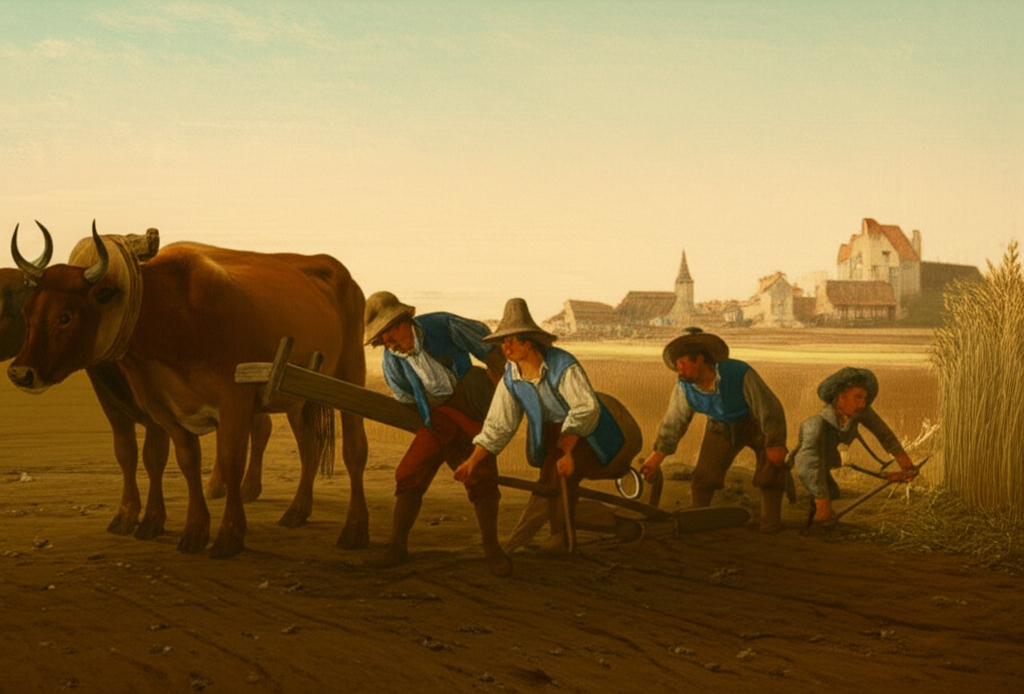
At its most elemental, wealth does not spring forth spontaneously. It is, instead, a consequence of human interaction with the natural world. The raw earth, the untouched forest, the unmined ore — these possess potential, but little inherent value until Man applies his labor to them. This transformative power of labor is a cornerstone of classical philosophy.
Consider John Locke's seminal argument: when Man mixes his labor with something from nature, he makes it his property, thereby imbuing it with value. An apple on a tree belongs to no one, but the apple picked by a hand, or the field tilled by a farmer, becomes a product of labor. This simple act of appropriation and transformation is the first step in the creation of wealth. It’s not just about taking; it's about the effort, skill, and time invested.
- Raw Material: A tree in the forest.
- Labor Applied: Felling the tree, cutting planks, shaping wood.
- Resulting Wealth: Furniture, housing, tools – items of significantly higher value and utility than the raw tree.
This principle extends to every facet of economic life. The miner's toil extracts ore, the artisan's skill refines it, the builder's effort constructs with it. In each step, labor is the alchemical ingredient that turns potential into tangible wealth.
Beyond Subsistence: Labor and the Accumulation of Wealth
While individual labor is crucial for basic sustenance and the creation of initial value, the true accumulation of societal wealth escalates dramatically with the organization and specialization of labor. Adam Smith, in his Wealth of Nations, famously articulated how the division of labor leads to unprecedented increases in productivity.
When Man specializes, he becomes more efficient, develops greater skill, and invents tools that further enhance his output. A single individual might struggle to make a few pins a day, but a factory where labor is divided into distinct tasks (drawing out the wire, straightening it, cutting it, pointing it, grinding the top for receiving the head, etc.) can produce thousands. This exponential increase in output means more goods and services are created with the same amount of effort, leading directly to a greater collective wealth.
The surplus created by this efficient labor is what allows for the investment in new tools, technologies, and infrastructure, further compounding wealth generation. This is the engine of economic growth, where labor is not just transforming but also multiplying value.
Factors Contributing to Enhanced Labor Productivity:
- Specialization: Focusing on specific tasks increases skill and efficiency.
- Tools and Machinery: Innovations that amplify human effort.
- Knowledge and Education: Improved techniques and understanding.
- Organization: Efficient management and coordination of tasks.
The State, Society, and the Distribution of Wealth
The role of labor in creating wealth is undeniable, yet its implications extend beyond individual production to the very structure of the State and society. Philosophers throughout history have grappled with how this wealth, once created, should be managed and distributed.
From Plato's ideal State, where labor and roles were strictly defined for the common good, to Aristotle's considerations of justice in economic exchange, the relationship between labor, wealth, and governance has been a central theme. The State often plays a critical role in establishing the conditions under which labor can thrive and wealth can be generated and protected. This includes:
- Protecting Property Rights: Ensuring that the fruits of Man's labor are secure.
- Establishing Infrastructure: Roads, markets, and legal systems facilitate trade and productive labor.
- Regulating Markets: Preventing exploitation and ensuring fair exchange.
However, the question of who benefits from the wealth created by labor has also sparked profound debates. Karl Marx, for instance, critically examined the capitalist system, arguing that labor is the sole source of value, and that the capitalist class accumulates wealth by appropriating the surplus value created by the labor of the working class. This perspective highlights the inherent tension between the creation of wealth and its equitable distribution, a challenge that continues to occupy philosophical and political discourse.
The Enduring Philosophical Debate
While the fundamental principle that labor creates wealth remains largely undisputed across philosophical traditions, the precise mechanisms, ethical implications, and societal structures surrounding it continue to be subjects of vigorous debate. Is all labor equally valuable? How should intellectual labor be valued compared to manual labor? What is the State's responsibility in ensuring that those who labor receive a fair share of the wealth they create?
These questions underscore the enduring relevance of understanding labor not just as an economic input, but as a profound philosophical concept central to human dignity, societal structure, and the very definition of prosperity. The Great Books offer us a rich tapestry of thought, reminding us that the sweat of the brow is not merely a means to an end, but a foundational act of creation that shapes our world.
*## 📹 Related Video: ARISTOTLE ON: The Nicomachean Ethics
Video by: The School of Life
💡 Want different videos? Search YouTube for: "'John Locke Labor Theory of Property Explained'"*
*## 📹 Related Video: KANT ON: What is Enlightenment?
Video by: The School of Life
💡 Want different videos? Search YouTube for: "'Adam Smith Division of Labor Wealth of Nations Summary'"*