

The Indispensable Bridge: The Role of Induction in Generalization
Summary: Induction plays a fundamental and often understated role in how we generalize from specific observations to universal principles, forming the very bedrock of our empirical knowledge. This process, moving from the particular instances we experience to the universal laws we infer, is essential for scientific discovery and everyday understanding, despite profound philosophical challenges to its justification.
The Inductive Leap: From Observation to Understanding
At the heart of human reasoning lies a profound capacity: the ability to observe individual phenomena and derive broader, more general truths. This cognitive leap is precisely the role of induction. Unlike deduction, which moves from general premises to specific conclusions, induction is the process of reasoning from a set of specific observations to a general conclusion or principle. When we see the sun rise day after day, we induce that the sun will rise tomorrow. When a scientist observes countless instances of a chemical reaction under specific conditions, they induce a chemical law. This powerful mechanism allows us to organize our experiences and predict future events, thereby building a coherent framework of knowledge.
From Particulars to Universals: Forging Generalizations
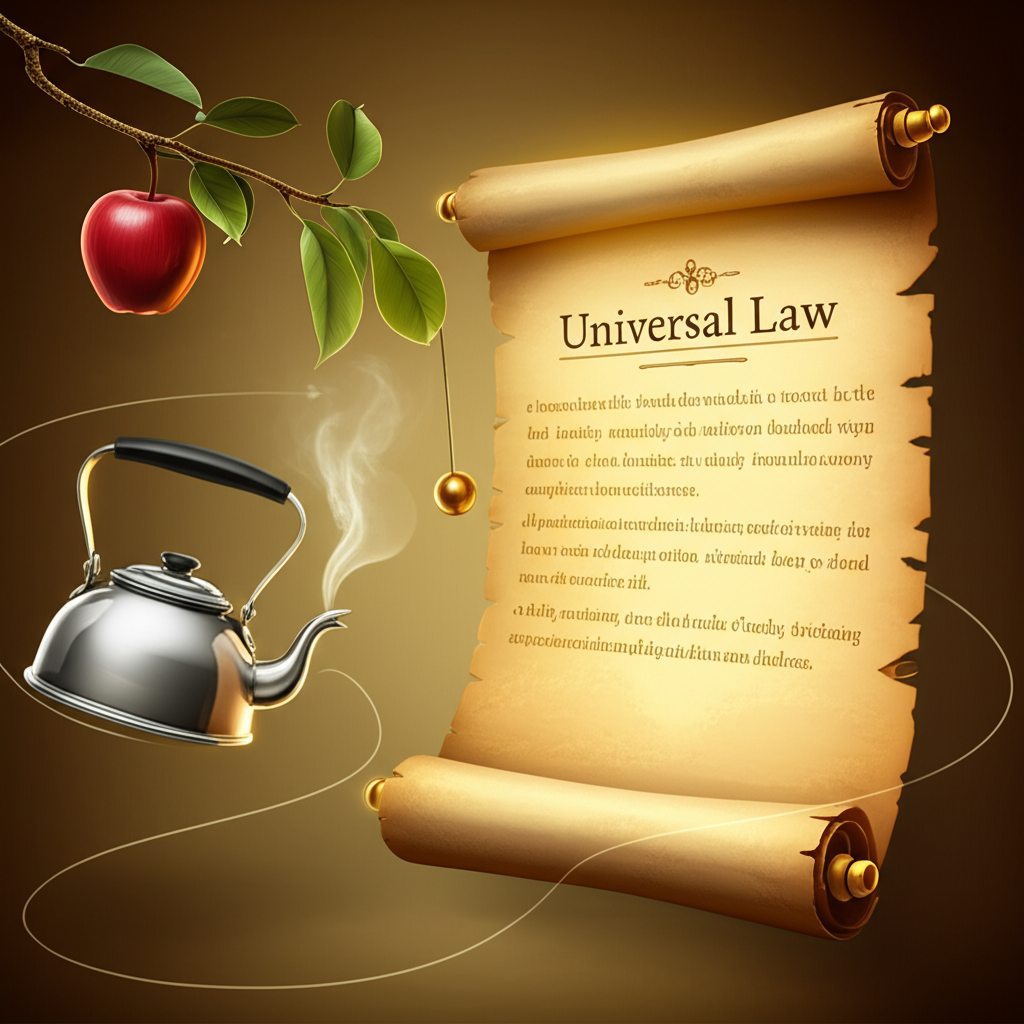
The core function of induction is to bridge the gap between the particular and the universal. We are constantly bombarded with particular data points – individual events, unique observations, specific facts. Without induction, this data would remain a chaotic collection, devoid of meaning.
Consider the following process:
- Observation of Particulars: We observe numerous individual instances of a phenomenon. (e.g., this raven is black, that raven is black, the other raven is black).
- Pattern Recognition: We identify a recurring pattern or property across these particulars. (e.g., all observed ravens share the property of being black).
- Generalization (Inductive Conclusion): We infer a universal statement that applies to all instances of that phenomenon, even those not yet observed. (e.g., all ravens are black).
This movement from the observed "many" to the inferred "all" is what allows us to form generalizations, hypotheses, and ultimately, scientific theories. As thinkers in the Great Books of the Western World have explored, from Aristotle's concept of epagoge to Francis Bacon's systematic approach to empirical observation, this process is central to how we construct our understanding of the world. Bacon, in particular, championed a rigorous inductive method in his Novum Organum, arguing for the careful collection and analysis of data to arrive at true knowledge, rather than relying on abstract deductions alone.
The Role of Induction in Knowledge Acquisition
The role of induction in acquiring knowledge cannot be overstated. It is the engine of empirical science and the foundation of common sense. Without the ability to generalize from experience, every new encounter would be a completely novel event, rendering learning and prediction impossible.
- Scientific Discovery: Inductive reasoning is fundamental to formulating scientific laws and theories. Scientists observe phenomena, gather data, identify patterns, and then induce general principles that explain those patterns. These principles are then tested, refined, or potentially overturned by new observations, in a continuous cycle of inductive and deductive reasoning.
- Everyday Understanding: Our daily lives are predicated on inductive inferences. We induce that gravity will keep us grounded, that food will nourish us, and that our friends will behave consistently. These are not deductive certainties but highly probable generalizations based on past experience.
- Concept Formation: How do we learn what a "dog" is? By encountering many particular dogs and inducing the common characteristics that define the universal concept of "dog."
The Philosophical Quandary: Hume and the Problem of Induction
Despite its undeniable utility, the philosophical justification for induction presents a profound challenge. David Hume, a central figure in the Great Books, famously articulated this "problem of induction" in his An Enquiry Concerning Human Understanding. Hume argued that our belief in inductive inferences – that the future will resemble the past, or that unobserved instances will conform to observed ones – is based not on logical necessity, but on custom or habit.
Hume's core argument:
- No Deductive Justification: The conclusion of an inductive argument is not logically necessary. It is always possible, however unlikely, that the next observation will contradict the previous patterns (e.g., the sun might not rise tomorrow, or the next raven might be white).
- No Inductive Justification: To justify induction by appealing to past successes of induction would be circular reasoning. We would be using induction to justify induction, which assumes the very principle we are trying to prove.
This profound critique highlights that while induction is practically indispensable for acquiring knowledge about the world, its ultimate rational basis remains elusive. It suggests that our universal generalizations, while incredibly useful, rest on a foundation that is more pragmatic than logically certain.
Induction's Enduring Utility: An Imperfect Necessity
Despite Hume's powerful challenge, induction remains the primary method by which we expand our empirical knowledge and navigate the world. We continue to rely on it because, in practice, it works. It allows us to build predictive models, discover scientific laws, and make informed decisions.
The role of induction is not to provide absolute, deductive certainty, but to offer the most probable and useful generalizations based on available evidence. It is a tool for navigating uncertainty, transforming a multitude of particular experiences into actionable, albeit provisional, universal insights. In essence, it is the indispensable bridge between the chaos of raw experience and the ordered structure of knowledge.
YouTube Video Suggestions:
- YouTube: "The Problem of Induction Explained"
- YouTube: "Hume's Challenge to Induction Philosophy"
📹 Related Video: What is Philosophy?
Video by: The School of Life
💡 Want different videos? Search YouTube for: "The Role of Induction in Generalization philosophy"