

The Indispensable Bridge: The Role of Induction in Generalization
The human mind, in its relentless quest to understand the world, constantly seeks patterns, rules, and overarching truths. This endeavor, at its very core, relies heavily on induction – a mode of reasoning that allows us to move from specific observations to broader, more general conclusions. Without induction, our knowledge would be confined to mere isolated facts, incapable of forming the predictive theories and universal laws that underpin science, philosophy, and even our daily lives. This article explores the fundamental role of induction in forming generalizations, examining its power, its pitfalls, and its enduring significance in bridging the gap between the particular and the universal.
What is Inductive Reasoning?
At its simplest, induction is the process of inferring a general principle or rule from a set of specific instances or observations. Unlike deduction, which moves from general premises to specific conclusions with logical certainty, induction aims to establish probable general conclusions based on empirical evidence. It's the leap of faith, albeit a reasoned one, that the patterns we've observed in the past and present will continue into the future.
Consider these examples:
- Observing that every swan encountered so far is white, one might induce that "all swans are white."
- Noticing that objects consistently fall to the ground when dropped, we generalize the law of gravity.
- Experiencing that the sun rises every morning, we conclude that it will rise tomorrow.
In each case, a finite number of particular observations leads to a universal statement or expectation.
The Bridge from Particular to Universal
The most profound role of induction lies in its attempt to construct universal statements from a collection of particular experiences. Without this capacity, our understanding of the world would remain fragmented. We wouldn't be able to formulate scientific laws, develop ethical principles, or even learn from experience. The "Great Books of the Western World" are replete with instances where thinkers, from Aristotle's biological classifications to Newton's laws of motion, implicitly or explicitly employed inductive reasoning to build comprehensive systems of knowledge.
However, this bridge is inherently probabilistic, not certain. The problem of induction, famously articulated by David Hume, highlights this challenge: no matter how many particular instances confirm a generalization, there's always the possibility that the next instance will contradict it. The observation of a black swan, for example, definitively refutes the generalization "all swans are white," even after thousands of white swans have been observed. This philosophical hurdle underscores that inductive generalizations, while immensely useful, are always provisional and open to revision.
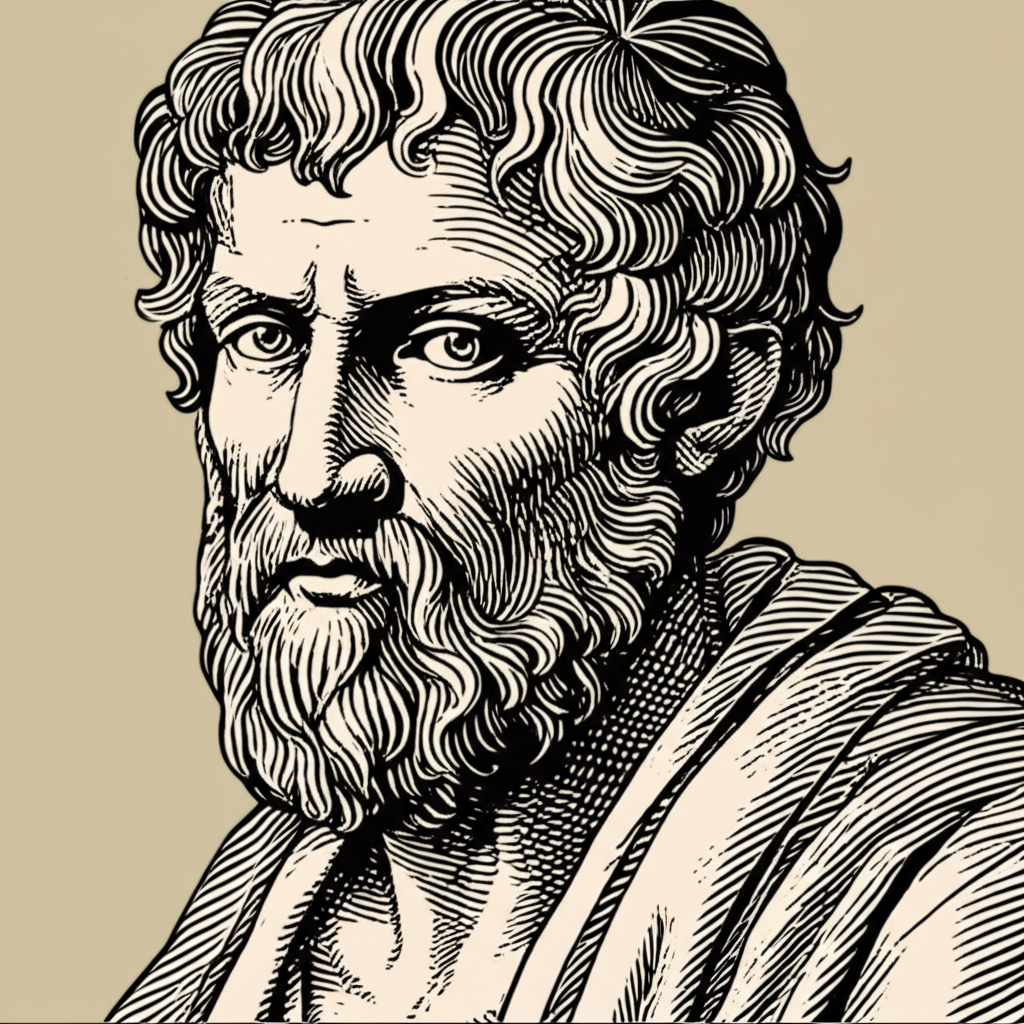 standing on one side of a vast chasm, with a precarious, unfinished bridge stretching towards the other side, representing the jump from 'Particular Instances' to 'Universal Truths'. Below the bridge, swirling mists symbolize the uncertainty and 'problem of induction.')
Induction and the Pursuit of Knowledge
Despite its inherent limitations, the role of induction in the advancement of knowledge is undeniable and indispensable. It is the engine of scientific discovery, driving the formulation of hypotheses and theories. Scientists gather data (particulars), identify patterns, and then generalize these patterns into testable theories (universals). These theories, while never absolutely proven by induction, gain strength and credibility through repeated empirical confirmation.
Induction is not merely a tool for scientists; it's fundamental to everyday learning and decision-making. We induce that a hot stove will burn us based on past experiences, or that a friend will be reliable because they always have been. This practical utility, though lacking deductive certainty, allows us to navigate and predict our environment effectively.
Key Aspects of Induction's Role in Knowledge:
- Hypothesis Formation: Inductive reasoning is crucial for generating initial hypotheses from observations.
- Theory Building: Scientific theories are often built upon a foundation of inductive generalizations from empirical data.
- Prediction: Based on past patterns, induction allows us to make informed predictions about future events.
- Learning from Experience: Our ability to learn and adapt relies heavily on inducing general rules from specific experiences.
The Indispensable Imperfection
While philosophers continue to grapple with the logical justification of induction, its practical role in shaping our knowledge and understanding of the world remains paramount. We may never achieve absolute certainty through induction, but it is the most powerful tool we possess for moving beyond individual facts to comprehend the grander tapestry of existence. It is the constant, imperfect endeavor to connect the dots of the particular into the meaningful patterns of the universal, an effort central to human inquiry since antiquity, as evidenced throughout the enduring works of the Great Books.
YouTube: "David Hume Problem of Induction Explained"
YouTube: "Scientific Method Inductive Deductive Reasoning"
📹 Related Video: What is Philosophy?
Video by: The School of Life
💡 Want different videos? Search YouTube for: "The Role of Induction in Generalization philosophy"