

The Unseen Architect: How Imagination Forges Scientific Hypothesis
The popular image of science often paints a picture of cold, hard facts, meticulous observation, and rigorous logic, leaving little room for the whimsical flights of fancy we associate with imagination. Yet, this view misses a crucial, often understated, element at the heart of scientific progress: imagination. Far from being a mere decorative faculty, imagination is the unseen architect that builds the conceptual frameworks of hypothesis, allowing the Mind to transcend the immediately observable and envision new possibilities, ultimately driving the very engine of Science.
At its core, a scientific hypothesis is an educated guess, a provisional explanation for observed phenomena that can be tested. But where do these "guesses" come from? They rarely spring fully formed from data alone. Instead, they emerge from a powerful interplay of Memory and Imagination, where past experiences and knowledge are creatively reconfigured to propose something entirely new.
Beyond the Purely Empirical: The Mind's Creative Leap
For centuries, philosophical discourse, particularly within the Great Books of the Western World, has grappled with the nature of knowledge and how we come to understand the world. While empiricism champions sensory experience as the fount of all knowledge, it's imagination that allows us to connect disparate observations, to infer underlying mechanisms, and to conceive of entities or processes that are not directly perceptible.
Consider the following:
- Connecting the Dots: Observation provides the dots, but imagination draws the lines, creating patterns and potential relationships.
- Forecasting the Unseen: How do we hypothesize about the existence of black holes, subatomic particles, or ancient civilizations? We cannot directly observe them in their entirety or at their origin. It requires an imaginative leap, constructing a mental model based on indirect evidence and theoretical frameworks.
- Challenging the Status Quo: Revolutionary scientific hypotheses often arise from imagining a world different from the one currently accepted, prompting paradigm shifts.
The Intertwined Dance of Memory and Imagination
It's tempting to think of imagination as pure invention, conjuring ideas ex nihilo. However, as ancient philosophers like Aristotle explored in works on the soul and memory, our capacity for imagination (phantasia) is deeply rooted in our sensory experiences and memory.
- Memory as Raw Material: Our memories — of observations, experiments, theories, and even failures — serve as the building blocks for imagination. We recall how things work, what has been tried, what patterns have emerged.
- Imagination as the Architect: Imagination then takes these remembered elements and rearranges them, combines them in novel ways, extrapolates from them, or even inverts them to form new concepts. It's not about creating something from nothing, but about creating something new from existing parts.
- The "What If" Scenario: This is the hallmark of imaginative hypothesis formation. "What if gravity worked differently at a quantum level?" "What if life originated from a different chemical pathway?" These questions are born from the mind's ability to simulate alternative realities based on stored information.
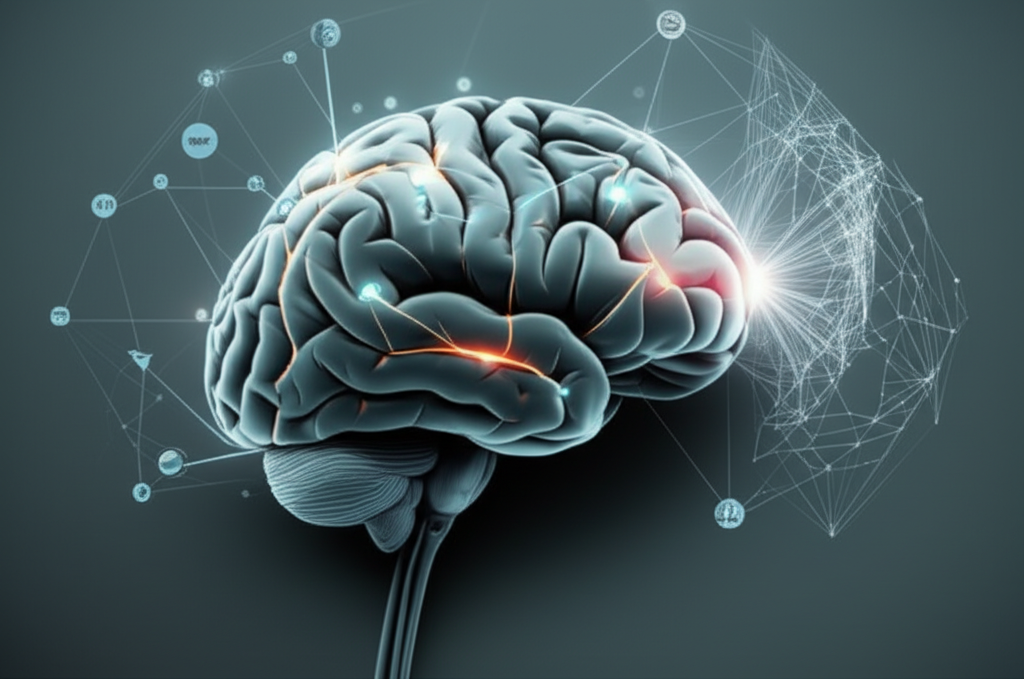
Building Mental Models: Visualizing the Unseen
Many scientific breakthroughs begin with a mental model, an imagined representation of a complex system or phenomenon. From Galileo imagining the path of a falling object without air resistance to Einstein conceiving of thought experiments involving light and moving frames of reference, the ability to visualize abstract concepts is paramount.
Think of:
- Atomic Structures: No one has ever "seen" an atom in the way we see a tree. Our understanding of atomic structure, from Bohr's planetary model to quantum orbitals, began as imaginative constructs to explain observed chemical reactions and spectral lines.
- Evolutionary Pathways: Tracing the lineage of species over millions of years requires an enormous imaginative effort to reconstruct environments, pressures, and genetic changes based on fragmented fossil evidence.
- Theoretical Physics: Concepts like wormholes, parallel universes, or the multiverse are born entirely from the mathematical and imaginative capacities of the mind, proposing possibilities that push the boundaries of current empirical verification.
The Hypothesis: A Bridge Between the Known and the Unknown
The scientific hypothesis stands as a testament to the power of the human Mind to bridge the gap between what we know and what we seek to understand. It is the imaginative leap, informed by memory and guided by reason, that proposes a potential answer to a scientific question. While rigorous testing and empirical validation are indispensable to the scientific method, it is imagination that first lights the path forward, offering the initial spark that ignites discovery. Without this creative faculty, Science would be a mere cataloging of observations, rather than a dynamic quest for deeper understanding.
YouTube Video Suggestions:
- YouTube: "Imagination in Science Philosophy"
- YouTube: "Great Books of the Western World Plato Aristotle Mind"
📹 Related Video: What is Philosophy?
Video by: The School of Life
💡 Want different videos? Search YouTube for: "The Role of Imagination in Scientific Hypothesis philosophy"