

The Unseen Architect: Imagination's Indispensable Role in Scientific Hypothesis
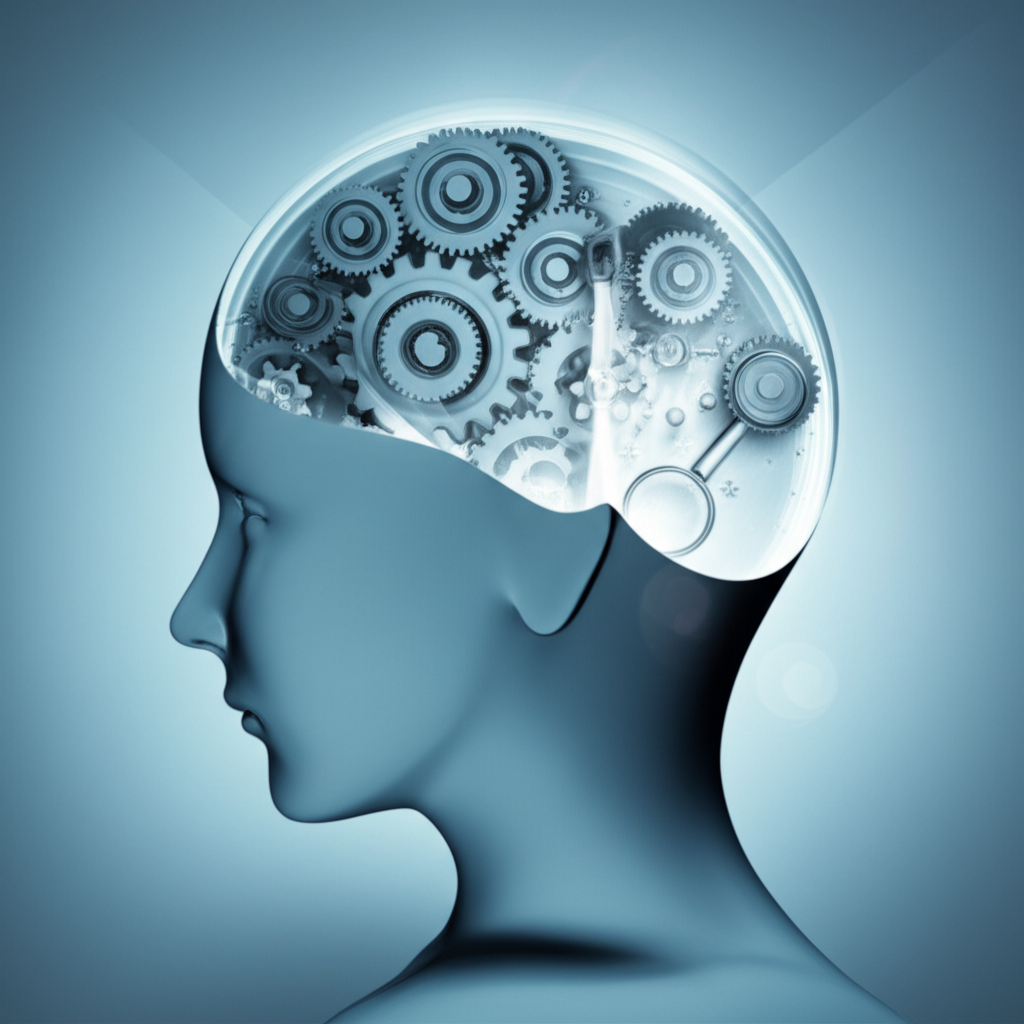
Science is often perceived as a realm of cold, hard facts, rigorous logic, and empirical observation, leaving little room for the whimsical flights of fancy associated with imagination. Yet, this perception overlooks one of the most vital engines of scientific progress: the creative Mind. Far from being a mere decorative flourish, imagination is the unseen architect that constructs the possibilities, bridging the known with the unknown, and ultimately giving birth to the very Hypothesis that guides scientific inquiry. Without the capacity to envision what could be, to synthesize disparate ideas, and to project beyond immediate data, Science would be reduced to mere cataloging, incapable of true discovery.
Beyond the Laboratory Bench: Rethinking the Scientific Mind
The popular image of a scientist often involves meticulous measurements, complex equations, and the methodical testing of existing theories. While these elements are undeniably crucial, they represent only one half of the scientific process. The other half, the genesis of new ideas, is where Memory and Imagination take center stage. The Mind does not simply process data; it actively constructs models, visualizes scenarios, and forms novel connections.
Consider the historical trajectory of scientific thought, as documented in the Great Books of the Western World. From Aristotle's detailed observations and classifications to Descartes's rationalistic quest for certainty, and further to Kant's exploration of the mind's active role in shaping experience, the intellectual lineage reveals a continuous interplay between empirical engagement and conceptual innovation. Each major leap forward was predicated not just on gathering more data, but on someone having the imaginative leap to interpret that data in a radically new way, or to conceive of an entirely new framework.
The Crucible of Creativity: How Imagination Forges Hypotheses
A Hypothesis is more than an educated guess; it is a testable proposition that seeks to explain a phenomenon or predict an outcome. But where do these propositions come from? They don't simply emerge fully formed from data. Instead, they are products of a deeply creative process rooted in imagination.
- Synthesis of Disparate Elements: Imagination allows the Mind to draw upon existing Memory – observations, theories, and experiences – and combine them in novel ways. It can see patterns where none were obvious, or connect seemingly unrelated phenomena.
- Mental Modeling and Simulation: Before an experiment can be designed, a scientist often runs mental simulations. What if X happens? How would Y respond? This ability to visualize processes and outcomes that haven't yet been observed or tested is pure imagination at work.
- Abduction and Inference to the Best Explanation: When faced with a perplexing observation, imagination helps generate multiple possible explanations. While logic helps evaluate these, the initial generation of plausible (and sometimes wildly implausible) explanations relies on creative thought.
- Conceiving the Unobservable: Many scientific concepts – dark matter, subatomic particles, quantum fields – are not directly observable. Their existence is posited through imaginative leaps, which then guide the development of indirect experimental methods to detect their effects.
Table 1: Imagination's Contribution to Hypothesis Formation
| Imaginative Faculty | Role in Hypothesis | Example (Conceptual) |
|---|---|---|
| Synthesizing Memory | Combining existing knowledge to form new insights. | Connecting disparate observations about planetary motion. |
| Mental Simulation | Running "thought experiments" to predict outcomes. | Einstein imagining riding alongside a light beam. |
| Pattern Recognition | Seeing relationships and structures in complex data. | Kekulé's dream of the Ouroboros leading to benzene ring. |
| Conceiving the Unseen | Postulating entities or forces beyond direct observation. | Hypothesizing the existence of unseen particles. |
| Analogical Reasoning | Transferring understanding from one domain to another. | Comparing the atom to a miniature solar system. |
The Thought Experiment: Imagination's Scientific Playground
Perhaps the most famous example of imagination's scientific power is the "thought experiment." From Galileo's imagined falling objects to Einstein's scenarios involving trains, clocks, and light beams, these mental constructions allow scientists to explore the implications of theories or challenge existing paradigms without the need for physical apparatus. They are pure exercises of the Mind's imaginative capacity, drawing on Memory and conceptual understanding to push the boundaries of current knowledge.
These imaginative scenarios, while not empirical data themselves, are crucial for formulating testable Hypotheses. They help clarify concepts, identify potential contradictions, and point towards novel directions for empirical investigation. Without the freedom to imagine impossible or extreme situations, many groundbreaking theories might never have been conceived.
Cultivating the Creative Scientist
To foster true scientific advancement, we must acknowledge and actively cultivate the imaginative faculties of the Mind. It's not enough to teach data analysis and experimental design; we must also encourage curiosity, divergent thinking, and the courage to propose unconventional ideas.
- Embrace Play and Exploration: Allow for unstructured problem-solving and open-ended questions.
- Encourage Interdisciplinary Thinking: Cross-pollination of ideas often sparks imaginative leaps.
- Value "What If" Questions: These are the seeds of new Hypotheses.
- Study the History of Science: Understanding how past breakthroughs occurred, often through imaginative leaps, inspires future innovation.
Ultimately, Science is a human endeavor, and the human Mind is inherently imaginative. The rigorous methods of scientific inquiry serve to test and refine the products of this imagination, but they do not replace it. The Hypothesis – the very starting point of discovery – is a testament to the power of Memory and Imagination working in concert, pushing the boundaries of what we know and what we can conceive.
YouTube Video Suggestions:
-
📹 Related Video: KANT ON: What is Enlightenment?
Video by: The School of Life
💡 Want different videos? Search YouTube for: ""Einstein's Thought Experiments Explained" or "The Role of Imagination in Scientific Discovery""
2. ## 📹 Related Video: What is Philosophy?
Video by: The School of Life
💡 Want different videos? Search YouTube for: ""Karl Popper Falsification and Hypothesis" or "Philosophy of Science Imagination""