

The Unseen Architect: How Imagination Forges Scientific Hypothesis
Science, often perceived as a realm of cold, hard facts and rigorous logic, owes an immense debt to one of the most fluid and elusive faculties of the mind: imagination. Far from being a mere whimsical diversion, imagination is the crucible in which novel scientific hypotheses are forged, acting as the bridge between observed phenomena and the unseen principles that govern them. This article explores how our capacity for memory and imagination empowers scientists to transcend the immediate, to envision new possibilities, and ultimately, to expand the frontiers of human knowledge.
Beyond Empiricism: The Mind's Creative Leap
The conventional narrative of scientific discovery often emphasizes empirical observation and inductive reasoning. We gather data, identify patterns, and then formulate general laws. While undeniably crucial, this view overlooks the initial, often audacious, leap required to conceive of a pattern or law that isn't immediately apparent. Before a theory can be tested, it must first be imagined.
Consider the great thinkers chronicled in the Great Books of the Western World. Aristotle meticulously observed the natural world, but his classifications and causal explanations required a conceptual framework – a way of imagining the underlying order. Later, figures like Galileo didn't just observe falling objects; he imagined a world without air resistance, a thought experiment that was a profound act of imagination leading to new hypotheses about motion. The mind doesn't passively receive reality; it actively constructs possible realities.
Memory and Imagination: The Wellspring of Novelty
The genesis of a scientific hypothesis is rarely ex nihilo. It draws heavily upon our accumulated knowledge and experiences, which are stored in our memory. However, imagination is what allows us to reconfigure these stored elements in novel ways. It's the faculty that permits us to:
- Synthesize disparate pieces of information: Connecting seemingly unrelated facts to form a new whole.
- Extrapolate beyond the known: Projecting existing principles into new, unexplored domains.
- Visualize unseen mechanisms: Creating mental models of processes that cannot be directly observed (e.g., atoms, black holes, genetic code).
- Formulate counterfactual scenarios: Asking "what if" questions that challenge existing paradigms and open avenues for new thought.
Our memory provides the building blocks, but imagination is the architect that arranges them into an entirely new structure – the hypothesis. Without this creative interplay, science would be limited to describing what is, rather than discovering what could be.
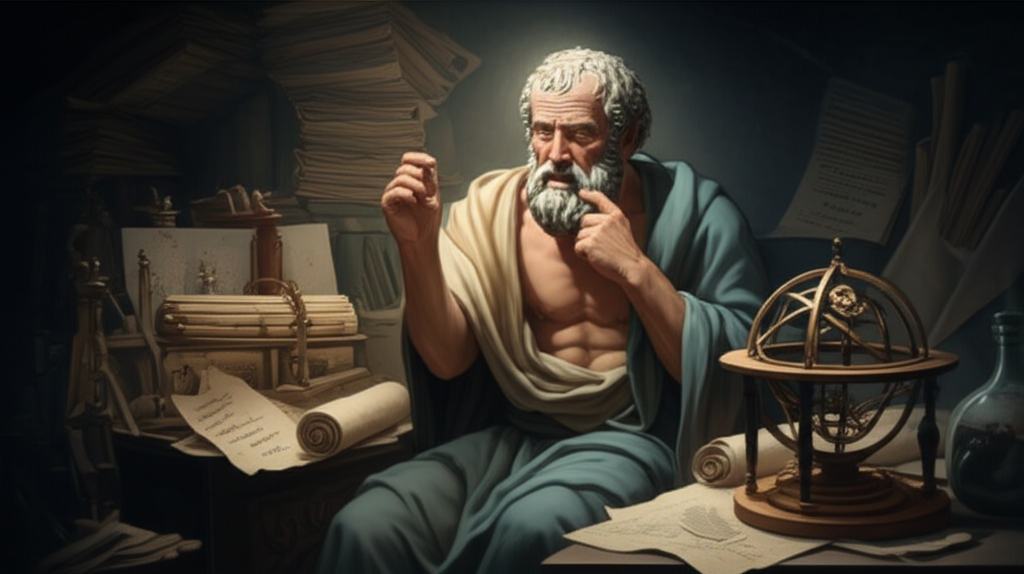
From Conjecture to Confirmation: The Hypothetical Journey
The journey from a nascent idea to a verified scientific principle is arduous, but it begins with that imaginative spark. A hypothesis is, by definition, an educated guess, a provisional explanation that demands testing. It is a statement born of intuition and creative insight, yet it must be rigorously subjected to empirical scrutiny.
- Conception: An imaginative leap, often fueled by an anomaly or an unanswered question, leads to a new idea. This is where the mind actively constructs a plausible explanation.
- Formulation: The imaginative idea is translated into a testable hypothesis, often involving predictions.
- Testing: Experiments and observations are designed to either support or refute the hypothesis.
- Refinement/Rejection: Based on the evidence, the hypothesis is either refined, accepted (provisionally), or rejected, prompting a new cycle of imaginative conjecture.
This iterative process, central to the scientific method, highlights that imagination isn't just a starting point; it's a recurring engine throughout the entire discovery process, constantly re-evaluating and re-envisioning solutions.
The Philosopher's Gaze: Imagination as a Cognitive Tool
Philosophers, from Plato to Kant, have grappled with the nature and role of imagination within the mind. Plato, in his "Allegory of the Cave," implicitly suggests that true knowledge requires an imaginative leap beyond mere shadows. Descartes, while prioritizing clear and distinct ideas of the intellect, acknowledged imagination's role, even if he saw it as distinct from pure reason. Kant's transcendental imagination, a faculty that synthesizes sensory input into coherent experience, comes closest to articulating its fundamental role in structuring our understanding of the world – a prerequisite for any scientific hypothesis.
Indeed, the very act of forming a hypothesis is an exercise in synthetic reasoning, where disparate pieces of information are imaginatively brought together to form a coherent, albeit provisional, whole. It is the mind's ability to visualize possibilities that allows science to move beyond mere description into explanation and prediction. Without this imaginative capacity, the pursuit of knowledge would be severely constrained, perhaps even impossible.
In conclusion, imagination is not merely the domain of poets and artists; it is a foundational pillar of scientific inquiry. It is the unseen architect that builds the theoretical frameworks upon which empirical data can be organized and understood. The mind, through its capacity for memory and imagination, continually pushes the boundaries of the known, ensuring that the journey of scientific discovery remains an exhilarating and endlessly creative endeavor.
YouTube: "The Role of Imagination in Science and Philosophy"
YouTube: "Great Books of the Western World: Science and Knowledge"
📹 Related Video: What is Philosophy?
Video by: The School of Life
💡 Want different videos? Search YouTube for: "The Role of Imagination in Scientific Hypothesis philosophy"