

The Unseen Engine: How Imagination Drives Scientific Hypothesis
Often relegated to the realm of fantasy, imagination plays a surprisingly crucial and profoundly scientific role in the formation of hypotheses. It is the mind's engine for envisioning possibilities, bridging the known with the unknown, and transforming mere observation into potential discovery. Far from being a mere flight of fancy, imagination, intertwined with memory and imagination, is the very crucible in which groundbreaking scientific hypotheses are forged.
Beyond Mere Daydreams: The Philosophical Core of Imagination
When we think of scientific discovery, our minds often conjure images of laboratories, meticulous data, and rigorous experimentation. Yet, before the first experiment is designed or the first data point recorded, there exists a vital, often overlooked, phase: the genesis of an idea. This genesis is not solely a product of cold logic, but a vibrant interplay of memory and imagination.
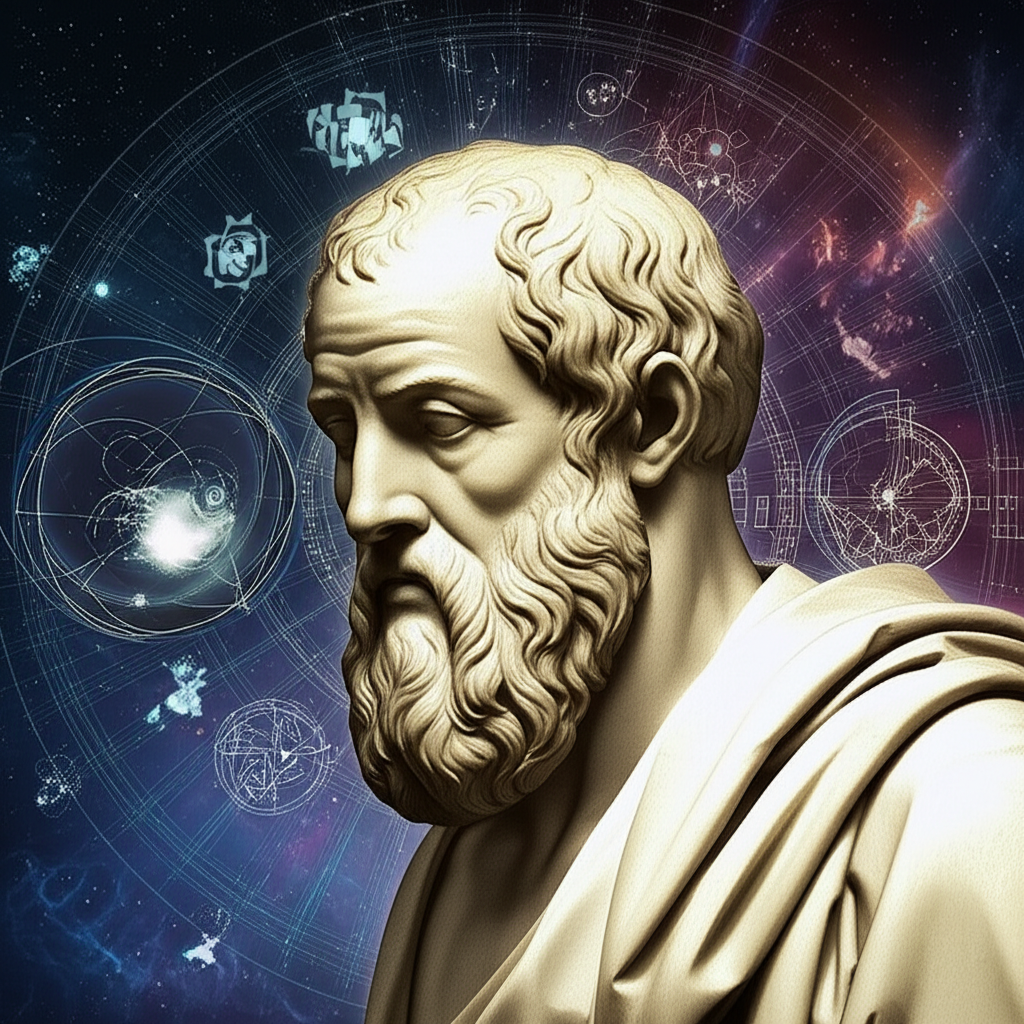
In the philosophical tradition, particularly as explored in the Great Books of the Western World, imagination is far more than idle fancy. It is a cognitive faculty that allows us to form mental images of things not present to the senses, or even of things that do not exist in reality. It reconstructs past experiences (memory), reconfigures existing concepts, and projects new possibilities. Aristotle, for instance, considered phantasia (imagination) essential for thought, linking it closely to perception and memory. It is the workshop of the mind where raw sensory data and stored knowledge are processed and recombined into novel configurations.
The Mind's Canvas: Crafting a Hypothesis
A scientific hypothesis is, at its heart, an educated guess – a testable proposition that explains an observation or phenomenon. But how does one arrive at such a guess? It is here that imagination takes center stage, acting as the mind's canvas upon which potential realities are sketched.
-
The Role of Analogy and Metaphor: Often, scientists imagine phenomena by drawing parallels to something familiar. The structure of an atom might be imagined as a miniature solar system, or the spread of a disease as a wave. These analogies, born of imagination, provide a conceptual framework, allowing the mind to grasp complex or unseen mechanisms by relating them to known patterns. This is not just poetic embellishment; it's a fundamental cognitive strategy for forming testable hypotheses.
-
Visualizing the Unseen: Much of science deals with entities beyond direct sensory experience – subatomic particles, distant galaxies, abstract forces. Imagination allows researchers to visualize these unseen worlds, to mentally manipulate variables, and to predict outcomes. How does a molecule interact? What happens if this variable changes? The ability to run these mental simulations is a powerful tool for generating hypotheses that can then be subjected to empirical scrutiny.
From Intuition to Experiment: The Scientific Journey
The journey from an imagined scenario to a validated scientific theory is rigorous. An initial spark of imagination might lead to an intuitive hypothesis. This intuition, however, must then be formalized, stripped of its subjective origins, and translated into a precise, testable statement. The beauty lies in this transition: imagination provides the initial direction, but logic and empirical methods provide the verification. Without the imaginative leap, many groundbreaking hypotheses – from Darwin's natural selection to Einstein's relativity – might never have been conceived.
A Timeless Insight: The Great Books Perspective
Philosophers across the ages, from the ancients wrestling with the nature of forms to Enlightenment thinkers pondering the limits of human reason, have grappled with the interplay of perception, memory, and imagination. While the specific language of 'scientific hypothesis' is a more modern construct, the underlying recognition of the mind's capacity to synthesize, project, and create new understanding is a consistent thread. The very act of discerning patterns in the natural world, of positing causes for effects, demands a faculty that can extrapolate beyond immediate experience – a faculty we call imagination.
Conclusion: The Indispensable Spark
To view science as a purely rational, emotionless pursuit is to misunderstand its very genesis. While rigorous methodology is paramount for validation, the initial spark, the audacious leap into the unknown, is often fueled by imagination. It is the mind's capacity to play, to dream, to reconfigure reality that allows us to formulate the hypotheses that push the boundaries of knowledge. Thus, imagination is not merely a delightful diversion; it is an indispensable tool, a vital force in the relentless pursuit of scientific truth.
📹 Related Video: What is Philosophy?
Video by: The School of Life
💡 Want different videos? Search YouTube for: "'Imagination in scientific discovery philosophy' 'Role of imagination in hypothesis formation'"