

The Indispensable Compass: The Role of Hypothesis in Evolution
The journey of understanding evolution is not merely a collection of observations; it is a meticulously constructed narrative, guided and refined by the indispensable role of hypothesis. In the grand tapestry of science, a hypothesis serves as the initial, testable proposition, a philosophical beacon that transforms raw data into coherent explanation. Without this critical intellectual tool, the profound insights of evolutionary theory would remain fragmented, lacking the explanatory power that defines a robust science. This article delves into how hypotheses have shaped, and continue to shape, our comprehension of life's unfolding story, drawing on the deep philosophical underpinnings of scientific inquiry found in the Great Books of the Western World.
The Genesis of Scientific Understanding: From Observation to Explanation
Our innate human curiosity drives us to ask "why?" and "how?" In the realm of nature, this fundamental impulse is the precursor to all scientific endeavor. The intricate patterns of life, the astonishing diversity of species, and the remarkable adaptations observed across ecosystems demand more than just cataloging; they demand explanation. This is where the scientific method, with hypothesis at its core, steps in.
From Aristotle's meticulous observations and classifications of the natural world, documented in his biological treatises, to Francis Bacon's revolutionary call for inductive reasoning in the Novum Organum, the philosophical tradition has long recognized that true knowledge progresses beyond mere description. It requires the formulation of testable ideas that can be either supported or refuted by empirical evidence. The theory of evolution, in particular, stands as a monumental testament to this principle, having been built layer by layer upon a foundation of countless hypotheses.
Hypothesis: The Guiding Light of Scientific Inquiry
A hypothesis is not simply a guess; it is a proposed explanation for a phenomenon, grounded in existing knowledge and formulated in a way that allows for empirical testing. It is a provisional statement that sets the direction for scientific investigation, acting as a bridge between observation and theory.
Key Characteristics of a Scientific Hypothesis:
- Testability: It must be possible to design an experiment or gather observations that could potentially support or contradict the hypothesis.
- Falsifiability: There must be some possible outcome of an experiment or observation that could prove the hypothesis wrong. This critical concept, often associated with Karl Popper, ensures that science remains open to correction and avoids untestable dogma.
- Predictive Power: A good hypothesis often makes predictions about what should be observed under specific conditions, which can then be tested.
The philosophical heritage, from Descartes' emphasis on clear and distinct ideas in his Discourse on Method to the logical frameworks developed over centuries, provides the intellectual scaffolding for constructing such precise and rigorous propositions. The role of hypothesis is thus deeply ingrained in the very fabric of how we approach understanding the world scientifically.
Evolutionary Theory: A Tapestry Woven with Hypotheses
The theory of evolution by natural selection, as famously articulated by Charles Darwin, began as a powerful hypothesis. Darwin observed variations within species, the struggle for existence, and the inheritance of traits. From these observations, he hypothesized that individuals with advantageous traits would be more likely to survive and reproduce, passing those traits to their offspring, leading to gradual changes in populations over time.
This initial, groundbreaking hypothesis sparked an explosion of scientific inquiry. Researchers began to:
- Test the mechanism of natural selection: Examining how environmental pressures influence survival and reproduction in various populations.
- Investigate common descent: Searching for transitional fossils, comparing anatomical structures (homology), and later, analyzing genetic similarities across species.
- Propose hypotheses about specific evolutionary events: Such as the evolution of flight, the origin of humans, or the adaptive radiation of finches on the Galápagos Islands.
Each of these lines of inquiry involved formulating specific, testable hypotheses. For instance, the hypothesis that humans and other great apes share a common ancestor led to predictions about genetic similarities, which were later overwhelmingly confirmed by DNA sequencing. The role of hypothesis in evolutionary science is not confined to its genesis but is a continuous process, driving new discoveries and refining our understanding.
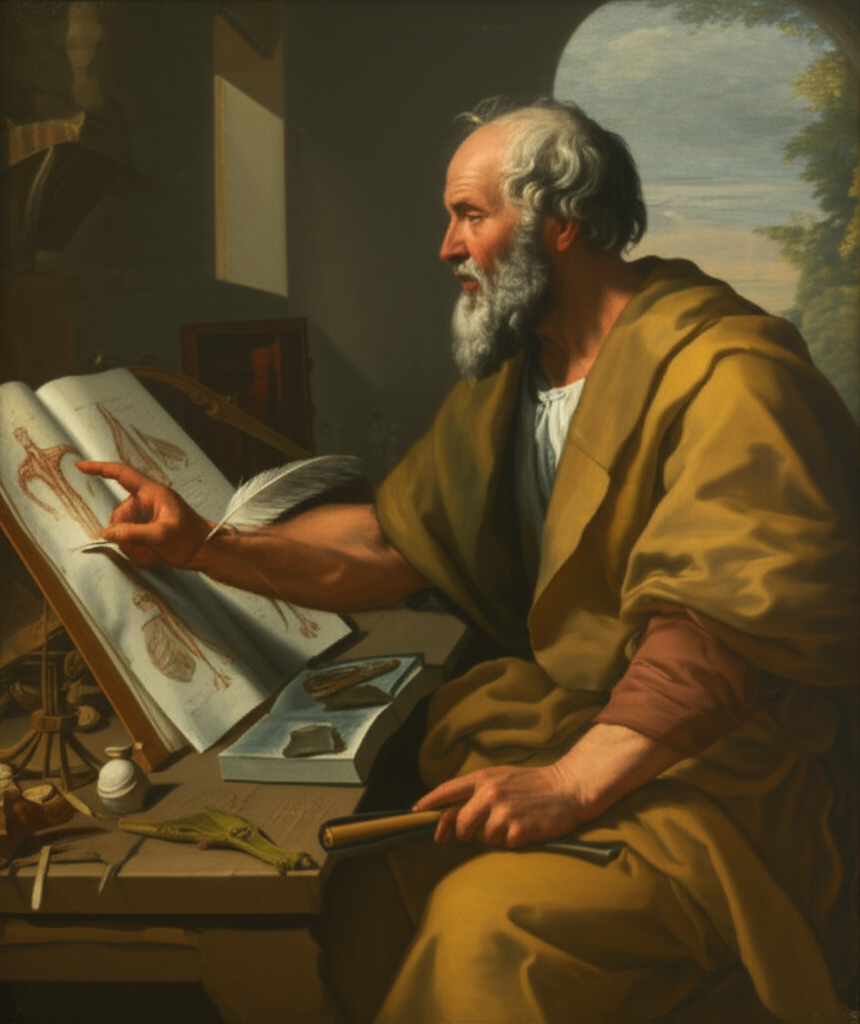
The Iterative Cycle: Hypothesis, Observation, Refinement
The true power of hypothesis in science lies in its participation in an iterative cycle of inquiry:
- Observation: Noticing a phenomenon or pattern in the natural world.
- Hypothesis Formulation: Proposing a testable explanation for the observation.
- Prediction: Deducing what should be observed if the hypothesis is true.
- Experimentation/Further Observation: Collecting data to test the prediction.
- Analysis and Conclusion: Interpreting the data to determine if it supports or refutes the hypothesis.
- Refinement or New Hypothesis: If the hypothesis is refuted, or if new questions arise, the process begins anew with a revised or entirely new hypothesis.
This dynamic process is what allows evolutionary science to continually adapt and grow. When new fossil evidence emerges, or advances in genetics provide unprecedented insights, new hypotheses are formed to integrate this information, leading to an ever more comprehensive and nuanced understanding of life's history. The persistence of this methodical approach, advocated by many thinkers in the Great Books, ensures that scientific knowledge is self-correcting and robust.
The Philosophical Underpinnings of Hypothesis in Science
Beyond its practical application, the role of hypothesis touches upon profound philosophical questions regarding the nature of knowledge itself. How do we move from the specific to the general? How do we distinguish between mere correlation and causation? These are questions that have occupied philosophers for millennia.
- Empiricism and Rationalism: The act of hypothesizing bridges these two great philosophical traditions. It requires rational thought to construct a logical explanation, but it demands empirical observation to validate it.
- The Problem of Induction: While hypotheses guide us, philosophers like David Hume have highlighted the inherent difficulty in proving universal truths from limited observations. However, the scientific method, by emphasizing falsifiability, offers a pragmatic solution: we seek to disprove, rather than absolutely prove, hypotheses, allowing for progressive refinement of knowledge.
- The Pursuit of Truth: Ultimately, the role of hypothesis in evolutionary science (and all science) is a manifestation of humanity's enduring quest for understanding the underlying principles that govern reality. It is an intellectual tool that allows us to construct models of the world, test their veracity, and thereby inch closer to a more complete picture of truth.
Conclusion: The Enduring Significance of Hypothesis
The profound insights of evolutionary science are a testament to the power of the hypothesis. It is the intellectual engine that propels scientific discovery, transforming scattered observations into a coherent, explanatory framework. From Darwin's initial groundbreaking conjectures to the complex genomic hypotheses of today, the role of hypothesis has been, and remains, absolutely central. It is the compass that guides us through the intricate wilderness of nature, allowing us to chart the course of life's remarkable journey and ensuring that science remains a dynamic, self-correcting, and ever-advancing pursuit of knowledge.
📹 Related Video: What is Philosophy?
Video by: The School of Life
💡 Want different videos? Search YouTube for: ""Philosophy of Science Karl Popper Falsifiability""
📹 Related Video: ARISTOTLE ON: The Nicomachean Ethics
Video by: The School of Life
💡 Want different videos? Search YouTube for: ""History of Evolutionary Thought Aristotle Darwin""