

The Role of Hypotheses in Astronomy
In the grand tapestry of scientific inquiry, few disciplines demand the intellectual rigor and imaginative leaps quite like astronomy. It is a field perpetually gazing into the abyss of the unknown, where direct experimentation is often impossible, and our understanding relies heavily on the power of reasoning. At the heart of this quest for cosmic comprehension lies the hypothesis – an indispensable tool that bridges observation with theoretical frameworks, guiding our journey through the stars and beyond. This article explores the profound significance of hypotheses in shaping astronomical knowledge, from ancient geocentric models to our contemporary understanding of dark matter and black holes, emphasizing its foundational role in all science.
Unveiling the Cosmos: The Hypothesis as a Guiding Light
From the earliest stargazers who charted the movements of celestial bodies to modern astrophysicists probing the universe's most enigmatic phenomena, the advancement of astronomy has always been predicated on asking "what if?" and then rigorously testing the proposed answers. A hypothesis is not merely a guess; it is a testable proposition, an educated inference based on existing knowledge or preliminary observations, designed to explain a phenomenon or predict future occurrences. It is the crucial first step in the scientific method, transforming curiosity into structured investigation. Without the formulation and critical examination of hypotheses, our understanding of the universe would remain stagnant, a collection of disconnected observations rather than a coherent narrative.
The Genesis of Astronomical Understanding: A Historical Perspective
The history of astronomy is, in essence, a chronicle of competing hypotheses. For centuries, the Ptolemaic hypothesis of a geocentric universe, with Earth at its unmoving center, dominated Western thought, finding its place within the philosophical frameworks inherited from antiquity and the early Great Books. This elaborate model, while complex, offered a remarkably accurate predictive power for planetary motions visible from Earth, a testament to its initial utility.
However, as observational tools improved and new data emerged, particularly through the meticulous work of Tycho Brahe and the subsequent reasoning of Johannes Kepler and Galileo Galilei, the geocentric hypothesis began to show its cracks. The heliocentric hypothesis, championed by Nicolaus Copernicus, offered a simpler, more elegant explanation for the observed planetary movements. This shift was not merely a change in models; it was a profound philosophical reorientation, demonstrating the iterative nature of science where established hypotheses are challenged, refined, or overthrown by new, better-fitting ones.
From Geocentric to Heliocentric: A Paradigm Shift
| Era | Dominant Hypothesis | Key Proponents | Supporting Observations/Reasoning | Outcome |
|---|---|---|---|---|
| Ancient/Med | Geocentric | Ptolemy, Aristotle | Earth's apparent immobility, celestial bodies orbiting Earth. | Provided initial predictive power, aligned with philosophical views. |
| Renaissance | Heliocentric | Copernicus, Galileo, Kepler | Simpler explanation for retrograde motion, telescopic observations. | Revolutionized astronomy, laid groundwork for Newtonian physics. |
Modern Astronomy: Hypotheses at the Edge of the Known
Today, hypotheses continue to drive astronomical discovery, pushing the boundaries of what we can directly observe. Consider the existence of dark matter and dark energy. These concepts are not directly observed entities but powerful hypotheses formulated to explain observed gravitational effects (like galaxy rotation curves) and the accelerating expansion of the universe, respectively. Without these hypothetical constructs, our current cosmological models would be fundamentally incomplete. Similarly, the existence of black holes, initially a theoretical prediction stemming from Einstein's general relativity, was a hypothesis that has since garnered overwhelming observational evidence, transforming it from a theoretical curiosity into an established reality.
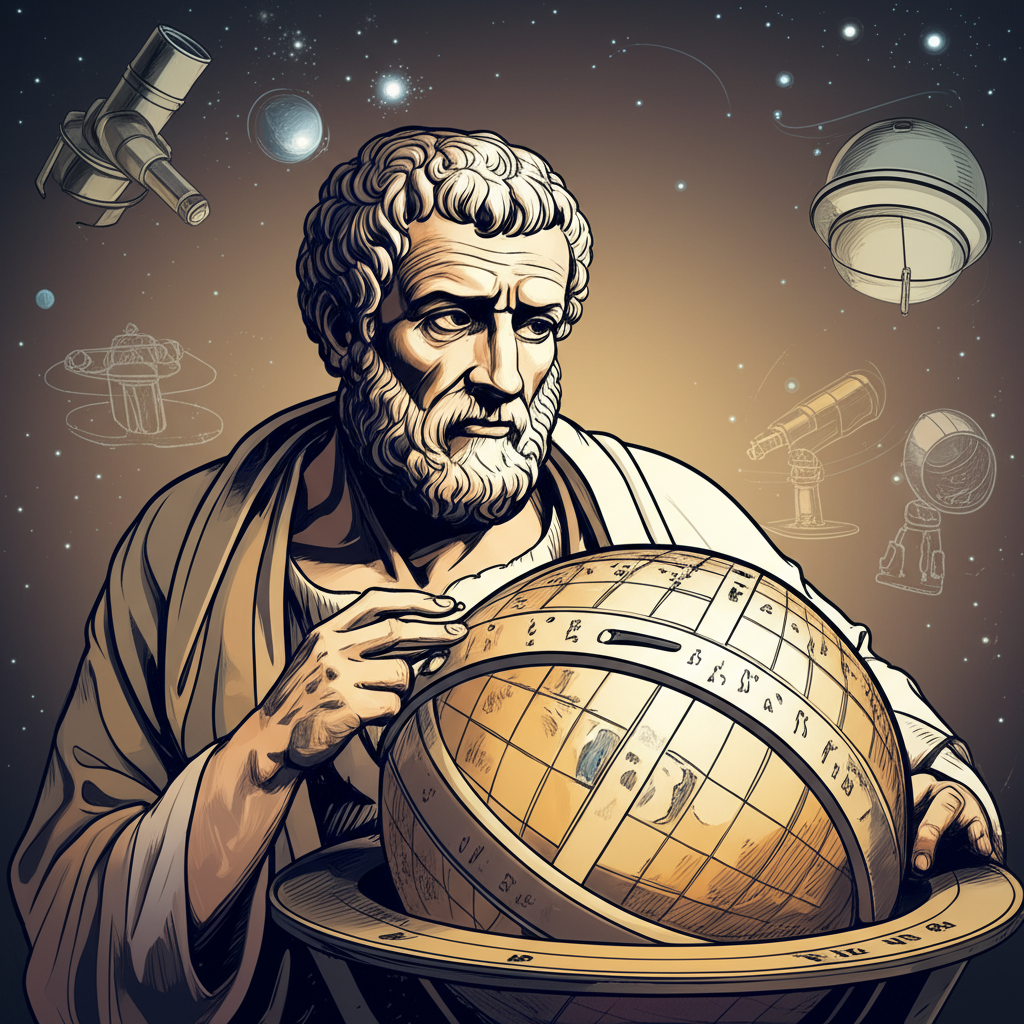
The Iterative Nature of Scientific Reasoning
The process of scientific inquiry in astronomy is a continuous loop of observation, hypothesis formation, prediction, and testing.
- Observation: Anomalies or patterns are noted (e.g., galaxies rotating faster than visible mass suggests).
- Hypothesis Formation: A testable explanation is proposed (e.g., "There is unseen mass, dark matter, causing this extra gravity").
- Prediction: If the hypothesis is true, what else should we observe? (e.g., "Dark matter should clump in certain ways, affecting light from distant objects").
- Experimentation/Further Observation: New data is collected to test the prediction (e.g., gravitational lensing studies).
- Analysis and Conclusion: The hypothesis is either supported, refined, or rejected. This often leads to new observations and new hypotheses, perpetuating the cycle of science.
This iterative process, deeply rooted in the principles of reasoning outlined by philosophers from Bacon to Popper, ensures that astronomical knowledge is constantly evolving, self-correcting, and moving closer to a comprehensive understanding of the universe.
The Philosophical Weight of Astronomical Hypotheses
Beyond their practical utility in explaining phenomena, hypotheses in astronomy carry significant philosophical weight. They force us to confront the limits of our perception and the vastness of the cosmos, challenging anthropocentric biases and expanding our conception of reality. The journey from a geocentric to a heliocentric universe, for instance, wasn't just a scientific shift; it was a profound philosophical revelation about humanity's place in the universe. It demonstrated that even deeply held beliefs, when confronted with rigorous reasoning and empirical evidence, must yield to better hypotheses.
As we continue to formulate hypotheses about multiverses, the origins of life beyond Earth, or the fundamental nature of space-time, we are engaging in a distinctly human act of intellectual exploration. These hypotheses are not just about explaining the universe; they are about understanding our capacity for knowledge, the power of our intellect, and our unending drive to make sense of the cosmos we inhabit. The Great Books remind us that this quest is as much about self-knowledge as it is about cosmic revelation.
Conclusion
The hypothesis stands as an indispensable cornerstone of astronomy, a testament to the power of human reasoning and the enduring spirit of scientific inquiry. From the ancient models of the cosmos to the cutting-edge theories of modern astrophysics, hypotheses have guided our observations, structured our understanding, and propelled us into ever-deeper explorations of the universe. They are the essential imaginative leaps, rigorously tested and refined, that transform raw data into profound insights. As long as there are unanswered questions in the night sky, the role of hypotheses will remain central to science, illuminating the path forward in our ceaseless quest to comprehend the vast and mysterious expanse of the cosmos.
📹 Related Video: What is Philosophy?
Video by: The School of Life
💡 Want different videos? Search YouTube for: ""philosophy of science hypothesis astronomy""
📹 Related Video: PLATO ON: The Allegory of the Cave
Video by: The School of Life
💡 Want different videos? Search YouTube for: ""great books scientific revolution astronomy""