

The Role of God in the Moral Universe: An Enduring Philosophical Quest
The question of God's role in the moral universe is perhaps one of humanity's most ancient and profound inquiries, lying at the very heart of Theology and Religion. For millennia, thinkers have grappled with whether morality is divinely ordained, inherently linked to a transcendent being, or if it can flourish independently. This pillar page delves into the complex relationship between the divine and our understanding of Good and Evil, exploring the arguments, dilemmas, and enduring legacies of this philosophical debate as illuminated by the Great Books of the Western World. We will navigate the historical perspectives, key theories, and the persistent challenges that shape our comprehension of a cosmos where ethics and divinity often intertwine.
Is Morality Divine? Exploring the Foundations of Ethics
From the earliest myths to contemporary philosophical discourse, the idea that God is the ultimate source of morality has been a cornerstone for countless civilizations and religious traditions. This perspective posits that moral laws are not human constructs but rather eternal truths revealed or established by a divine creator.
The Divine Command Theory: God's Will as Law
At its core, Divine Command Theory argues that an action is morally good if and only if God commands it, and morally evil if God forbids it. This theory grounds morality absolutely in the will of a divine being, offering a clear and universally applicable ethical framework for believers.
- Key Tenets:
- Moral obligations arise from divine commands.
- Without God, there is no objective morality.
- Right and wrong are not arbitrary but reflect God's perfect nature.
This theory finds resonance in many sacred texts, where commandments are presented as direct pronouncements from the divine. For instance, the Ten Commandments in the Abrahamic traditions serve as a prime example of God's explicit moral instructions to humanity.
The Euthyphro Dilemma: A Timeless Challenge
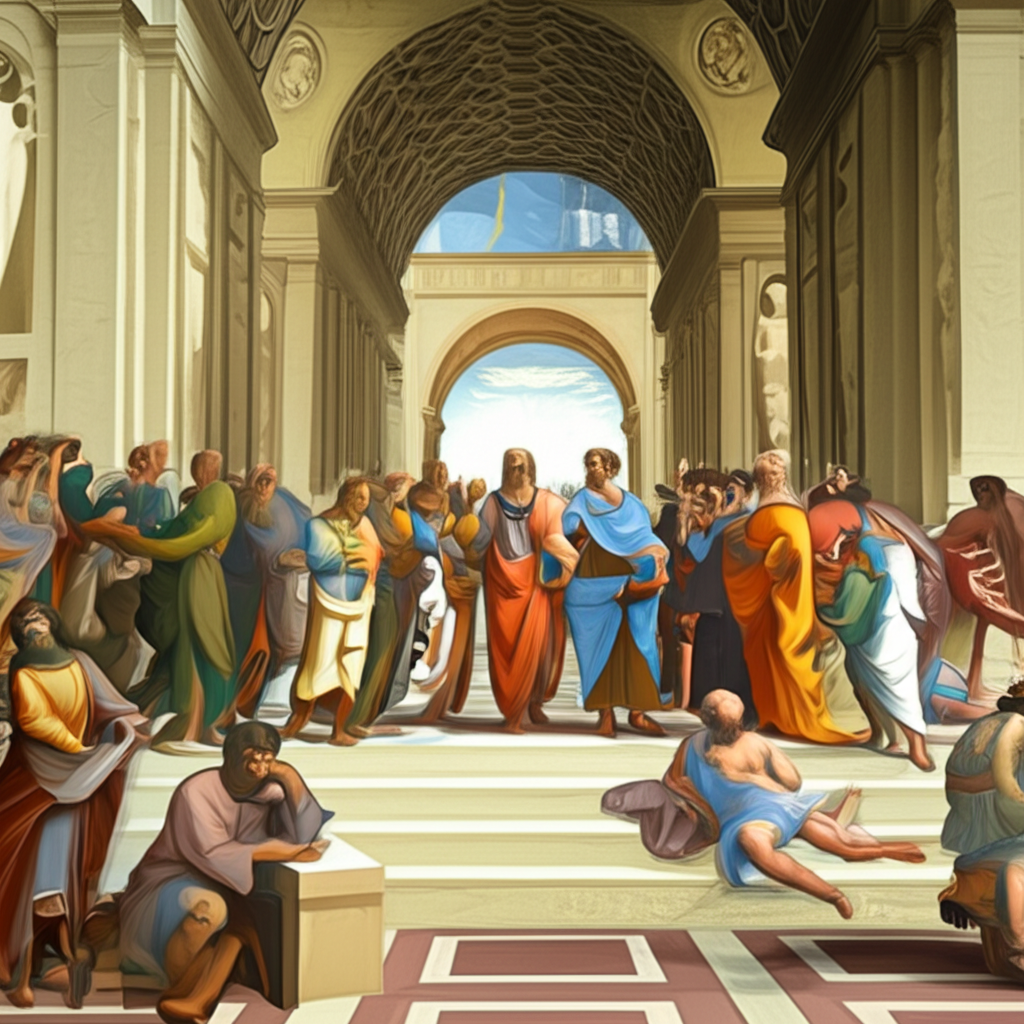
However, the Divine Command Theory faces a significant challenge, famously articulated in Plato's dialogue Euthyphro. Socrates poses the critical question: "Is the pious loved by the gods because it is pious, or is it pious because it is loved by the gods?"
This dilemma presents a profound problem:
- If something is good because God commands it: Then morality becomes arbitrary. God could command cruelty, and it would, by definition, become good. This seems to undermine the very concept of inherent goodness and God's own benevolence.
- If God commands something because it is good: Then goodness exists independently of God's commands. In this scenario, God acknowledges an external standard of morality rather than creating it, implying that morality could exist even without a divine legislator.
The Euthyphro Dilemma forces us to consider whether Good and Evil possess an intrinsic nature or are purely contingent on divine fiat. This question has spurred centuries of Theological and philosophical debate, seeking to reconcile divine omnipotence with objective moral standards.
Natural Law: God as the Architect of a Moral Cosmos
Moving beyond direct divine commands, another powerful Theological and philosophical tradition posits that God's role in the moral universe is more akin to an architect or rational designer. This is the concept of Natural Law.
Natural Law theory, profoundly developed by thinkers like Aristotle (who laid the groundwork for teleological thinking) and later by Thomas Aquinas in his Summa Theologica, suggests that morality is inherent in the very structure of the universe and human nature, as designed by God.
- Aristotle's Influence: While not explicitly a Theologian, Aristotle's emphasis on telos (purpose or end) profoundly influenced later Christian thinkers. He argued that everything in nature has an inherent purpose, and fulfilling this purpose constitutes its "good." For humans, this telos is to live a life of reason and virtue.
- Aquinas's Synthesis: Aquinas integrated Aristotle's teleology with Christian Theology. He argued that God imbues creation with an inherent order and purpose. Human reason, by observing the natural world and reflecting on human nature, can discern these divinely established moral principles. Actions are good if they align with our natural inclinations (e.g., self-preservation, procreation, seeking knowledge, living in society), which are themselves reflections of God's rational design.
Table: Divine Command vs. Natural Law
| Feature | Divine Command Theory | Natural Law Theory |
|---|---|---|
| Source of Morality | God's explicit commands/will | God's rational design inherent in creation and human nature |
| How Morality is Known | Revelation (scriptures, prophets) | Reason, observation of nature, human reflection |
| Role of God | Direct legislator, arbiter of right/wrong | Architect, designer of a moral order |
| Universality | Universal for those who accept revelation | Potentially universal, accessible to all rational beings |
| Key Challenge | Euthyphro Dilemma, arbitrariness | Interpretation of "nature," potential for cultural bias |
In the Natural Law tradition, God doesn't just tell us what is Good and Evil; He built goodness into the fabric of existence, making it discoverable through human reason. This offers a bridge between Religion and philosophy, suggesting a moral order that is both divine and rational.
The Problem of Evil: A Challenge to God's Moral Role
One of the most persistent and vexing challenges to the idea of an all-good, all-powerful God playing a definitive role in a moral universe is the Problem of Evil. If God is perfectly good, omnipotent (all-powerful), and omniscient (all-knowing), why does Evil exist in the world?
This problem, explored by thinkers from Augustine in Confessions and City of God to modern philosophers, questions the very nature of God's goodness or His capacity to intervene in a world rife with suffering, injustice, and moral depravity.
- Types of Evil:
- Moral Evil: Evil caused by human actions (e.g., murder, war, cruelty).
- Natural Evil: Evil resulting from natural processes (e.g., earthquakes, disease, famine).
Various Theological and philosophical responses (theodicies) have been proposed:
- Free Will Defense: God allows moral evil because He granted humans free will, which is a greater good. The capacity for choosing Good necessarily implies the capacity for choosing Evil.
- Soul-Making Theodicy: Evil, particularly suffering, is necessary for human moral and spiritual development. It provides opportunities for courage, compassion, and growth.
- Augustinian Theodicy: Evil is not a substance but a privation or absence of Good, like darkness is the absence of light. It entered the world through the fall of humanity, not through God's creation.
The Problem of Evil remains a powerful argument against certain conceptions of God's direct involvement in the moral order, compelling philosophers and Theologians to constantly refine their understanding of divine attributes and the nature of Good and Evil.
Beyond Divine Mandates: Secular Morality and the Enduring Quest
While Religion and Theology have historically dominated discussions about God's role in morality, the Enlightenment brought forth powerful arguments for a secular basis for ethics. Philosophers like Immanuel Kant, in his Critique of Practical Reason, sought to ground morality purely in human reason, independent of any divine command or revelation.
Kant's Categorical Imperative proposes that moral duties are universal and rational, derived from the principle that one should act only according to a maxim that one could at the same time will to become a universal law. Here, Good and Evil are determined by the rationality and universalizability of our actions, not by a divine decree.
Even in a secular framework, the shadow of the Euthyphro Dilemma persists: Is morality objective and discoverable, or is it a human construct, potentially arbitrary? The conversation shifts from "What does God command?" to "What does reason demand?" or "What promotes human flourishing?"
The Enduring Relevance
Regardless of one's personal beliefs, the philosophical journey through God's role in the moral universe offers profound insights into the nature of Good and Evil, justice, and human responsibility. The Great Books of the Western World provide a rich tapestry of thought that continues to inform our understanding:
- Plato's Dialogues: Challenging simple answers and pushing for deeper understanding.
- Aristotle's Nicomachean Ethics: Grounding virtue in human flourishing and rational activity.
- Augustine's Confessions and City of God: Grappling with the origins of evil and the nature of divine justice.
- Aquinas's Summa Theologica: Synthesizing faith and reason to articulate a comprehensive moral framework.
- Kant's Critiques: Seeking an autonomous, rational foundation for moral duty.
These texts invite us to confront fundamental questions: Is there an objective moral truth? If so, where does it come from? Can we be truly moral without belief in God? The debate over God's role in the moral universe is not merely an academic exercise; it touches upon the very fabric of human existence, our values, and our aspirations for a just and ethical world.
YouTube Video Suggestions:
-
📹 Related Video: PLATO ON: The Allegory of the Cave
Video by: The School of Life
💡 Want different videos? Search YouTube for: ""Plato Euthyphro Dilemma explained""
2. ## 📹 Related Video: ARISTOTLE ON: The Nicomachean Ethics
Video by: The School of Life
💡 Want different videos? Search YouTube for: ""Divine Command Theory vs Natural Law Aquinas""