

The question of God's role in the moral universe is one of philosophy's most enduring and profound inquiries, stretching back to the dawn of systematic thought. This pillar page delves into the multifaceted relationship between divine existence and human morality, exploring whether God is the ultimate source, a necessary guarantor, or perhaps even an irrelevant factor in our understanding of right and wrong. From ancient Greek dialogues to medieval theological treatises and modern ethical frameworks, we trace the arguments that have shaped our understanding of God, Theology, Religion, and the very nature of Good and Evil.
The Divine Architect of Morality? An Introduction to the Enduring Question
Is morality inherently tied to the divine? This fundamental question lies at the heart of countless philosophical and theological traditions. For millennia, humanity has grappled with the idea that our sense of Good and Evil, our ethical codes, and our very capacity for moral judgment might somehow be contingent upon a higher power. Are moral laws merely human constructs, or do they echo an eternal, divine will? The answers we seek often dictate not only our understanding of the cosmos but also our personal conduct and societal structures.
From the dialogues of Plato to the intricate scholasticism of Thomas Aquinas, and through the Enlightenment's re-evaluations, thinkers recorded in the Great Books of the Western World have consistently returned to this nexus. This discussion is not merely academic; it shapes the very fabric of religion, influences legal systems, and underpins our deepest convictions about justice and compassion.
The Euthyphro Dilemma and the Foundations of Divine Command Theory
One of the most potent challenges to the idea of God as the sole arbiter of morality comes from Plato's dialogue Euthyphro. Socrates poses a pivotal question: "Is the pious loved by the gods because it is pious, or is it pious because it is loved by the gods?" This dilemma, often rephrased as "Is something good because God wills it, or does God will it because it is good?", lays bare the core tension in Divine Command Theory (DCT).
Divine Command Theory (DCT) asserts that moral truths are simply the commands of God. An action is morally right if and only if God commands it, and morally wrong if God forbids it. This perspective offers a seemingly clear and objective basis for morality, grounding Good and Evil in an infallible, omnipotent source.
- Proponents of DCT often argue that it provides:
- An objective standard for morality, preventing subjective relativism.
- A compelling motivation for moral behavior (divine reward/punishment).
- A clear explanation for the universality of certain moral injunctions across cultures.
However, the Euthyphro dilemma raises significant challenges:
- Arbitrariness: If something is good because God wills it, then God could, theoretically, command cruelty or deceit, and these would become good. This seems to make morality arbitrary and dependent on divine whim, rather than on any inherent quality of the acts themselves.
- Redundancy: If God wills something because it is good, then goodness must exist independently of God's will. In this case, God merely recognizes and commands pre-existing moral truths, suggesting that morality has a foundation beyond divine command.
- Problem of Evil: If God commands what is good, how do we reconcile the existence of suffering and evil in the world with an all-good, all-powerful God? This leads to complex theological debates, as explored later.
- Interpretation: Differing interpretations of divine commands across various religions and even within the same faith tradition pose practical challenges to DCT. Whose God? Whose interpretation?
God as the Grounding of Objective Morality
Despite the challenges of the Euthyphro dilemma, many philosophers and theologians argue that God is indeed indispensable for objective moral truths. Without a divine foundation, they contend, morality risks dissolving into mere subjective preference, cultural convention, or pragmatic utility, leaving no ultimate reason why one should be good.
Thomas Aquinas offers a powerful articulation of this view through his Natural Law Theory. For Aquinas, morality is not just God's arbitrary command but is rooted in God's eternal reason. God, as the rational creator, imbues creation with a natural order and purpose (telos). Human reason, by reflecting on our nature and the natural order, can discern these inherent purposes and derive moral precepts. For instance, our natural inclination to preserve life and seek knowledge are seen as reflections of the divine design, leading to moral duties. Thus, Good and Evil are not arbitrary but are discoverable through reason because they are embedded in the very structure of reality by a rational God.
- Arguments for God as the grounding of objective morality often include:
- The Moral Argument for God's Existence: The widespread human experience of objective moral duties (e.g., "murder is wrong") points to a transcendent lawgiver or moral grounder, which is God.
- Meaning and Purpose: A divine creator provides ultimate meaning and purpose to human existence, which in turn gives weight and significance to moral striving. Without this, life and morality might seem ultimately meaningless.
- Transcendence: Moral values that transcend human opinion or cultural norms require a transcendent source, one that is not ourselves. Theology often posits God as this necessary transcendent ground.
Moral Systems Independent of God
While many find God essential for morality, a significant philosophical tradition argues that ethical systems can, and indeed do, flourish independently of divine revelation or command. These secular ethical frameworks demonstrate that reasoned inquiry, human empathy, and societal needs can provide robust foundations for distinguishing Good and Evil.
- Virtue Ethics (Aristotle): Predating monotheistic conceptions of God, Aristotle's ethics focus on character. Morality is about cultivating virtues (e.g., courage, temperance, justice) that lead to human flourishing (eudaimonia). These virtues are developed through reason, habit, and community, without direct reliance on divine commands.
- Deontology (Immanuel Kant): Kant argued that moral duties are derived from reason itself, not from God's will or consequences. The "Categorical Imperative" dictates that we should act only according to maxims that we could universalize without contradiction. For Kant, moral law is a product of rational autonomy, universally binding because it is based on reason, which is common to all rational beings.
- Utilitarianism (John Stuart Mill): This consequentialist ethic holds that the morally right action is the one that produces the greatest good for the greatest number. Morality is determined by outcomes, focusing on maximizing happiness and minimizing suffering. Its principles are derived from observing human nature and societal well-being, not from divine decrees.
- Social Contract Theory: Philosophers like Hobbes, Locke, and Rousseau argued that moral rules and political authority arise from a hypothetical agreement among individuals to live together peacefully and cooperatively. Morality, in this view, is a rational arrangement for mutual benefit and social order.
These systems demonstrate that ethical thought can proceed by grounding morality in human reason, shared experience, and the pursuit of human well-being, rather than divine authority. The "Atheist's Dilemma" – the claim that one cannot be good without God – is often countered by pointing to the vast body of secular ethical philosophy and the moral lives lived by countless non-believers.
The Problem of Evil and its Moral Implications
The existence of Good and Evil is central to any discussion of God's role in the moral universe. However, the presence of immense suffering, injustice, and evil in a world supposedly overseen by an all-good, all-powerful, and all-knowing God presents a profound challenge known as the Problem of Evil.
- If God is omnipotent, He can prevent evil.
- If God is omniscient, He knows about evil.
- If God is omnibenevolent, He wants to prevent evil.
- Yet, evil exists.
This logical inconsistency forces a re-evaluation of either God's attributes or the nature of evil itself. This is where Theodicy comes in – attempts to reconcile the existence of evil with the goodness and power of God.
- Free Will Defense: A common argument is that God allows evil as a necessary byproduct of human free will. A world with moral agents capable of choosing Good and Evil (and thus choosing goodness freely) is deemed superior to a world where beings are programmed to be good. The moral responsibility for evil, therefore, lies with humanity.
- Soul-Making Theodicy (Irenaean Theodicy): This view, popularized by John Hick, suggests that the world, with its challenges and suffering, is a "soul-making" environment. Adversity and the struggle against evil provide opportunities for moral and spiritual growth, developing virtues like courage, compassion, and resilience that would not be possible in a paradise.
- Cognitive Limitations: Some argue that humans, with their limited understanding, cannot fully grasp God's ultimate plan or the reasons for allowing evil. What appears as evil from our perspective might serve a greater good in a divine scheme.
The Problem of Evil profoundly impacts our understanding of divine justice and the meaning of human suffering. It challenges the notion of a perfectly moral God as the direct source of all goodness, forcing a more nuanced view of divine involvement in the moral landscape.
Religious Pluralism and Moral Diversity
The global landscape is rich with diverse religions, each offering unique perspectives on God, morality, and the path to Good and Evil. This pluralism presents both challenges and opportunities in understanding God's role in the moral universe.
While specific rituals, dietary laws, or social customs may vary widely across faiths, there is often a surprising degree of overlap in fundamental moral principles. Most major religions advocate for compassion, justice, honesty, and the condemnation of murder, theft, and deceit.
Table: Comparative Views on Divine Morality (Brief Examples)
| Religious Tradition | Concept of God/Divine | Source of Morality | Example Moral Principle |
|---|---|---|---|
| Judaism | Yahweh, transcendent creator | Torah, Halakha (divine law) | Ten Commandments (e.g., "Thou shalt not murder") |
| Christianity | Trinitarian God, incarnate in Jesus | Bible (Old & New Testament), Church tradition | Love your neighbor as yourself, Golden Rule |
| Islam | Allah, singular, all-merciful | Quran, Sunnah (Prophet's teachings), Sharia Law | Justice, charity (Zakat), prohibition of intoxicants |
| Hinduism | Brahman (ultimate reality), many deities | Vedas, Upanishads, Dharma (righteous conduct) | Ahimsa (non-violence), Karma, selflessness |
| Buddhism | No personal creator God (focus on enlightenment) | Dharma (teachings of Buddha), Eightfold Path | Compassion, abstaining from harm, truthfulness |
This table illustrates that while the theology and divine nature differ, many core ethical directives converge. This convergence suggests that either a universal moral intuition exists, or that divine wisdom, however interpreted, guides humanity towards similar fundamental Good and Evil distinctions. The challenge lies in reconciling the specific, sometimes conflicting, moral injunctions that arise from different sacred texts and traditions.
Contemporary Perspectives and the Ongoing Debate
In the modern era, the debate surrounding God's role in the moral universe continues to evolve. Advances in science, particularly evolutionary biology and neuroscience, offer new perspectives on the origins of human morality, often suggesting that our moral instincts have natural, rather than supernatural, roots. However, these scientific explanations do not necessarily negate a divine role; some argue that God could have used evolution as the mechanism for instilling moral capacities.
The rise of secular humanism and increasing global interconnectedness also necessitate a re-evaluation of morality in a pluralistic world. Can we find universal moral principles that transcend specific religious doctrines? Many believe that reason, empathy, and a shared commitment to human dignity can form the basis of a global ethic, regardless of one's belief in God.
Yet, for many, faith remains an indispensable guide. Religion provides not only a moral code but also a community, a sense of purpose, and a framework for understanding suffering and hope. The tension between faith and reason, between divine command and human autonomy, continues to animate philosophical inquiry.
Key Questions for Reflection:
- Can morality truly be objective without a divine legislator?
- How do we reconcile differing moral commands across various theologies and religions?
- Does the existence of evil undermine the concept of an all-good God who is the source of morality?
- What role does human reason play in discovering or constructing moral principles, regardless of belief in God?
- How do our personal beliefs about God influence our understanding and practice of Good and Evil?
An Ever-Unfolding Inquiry
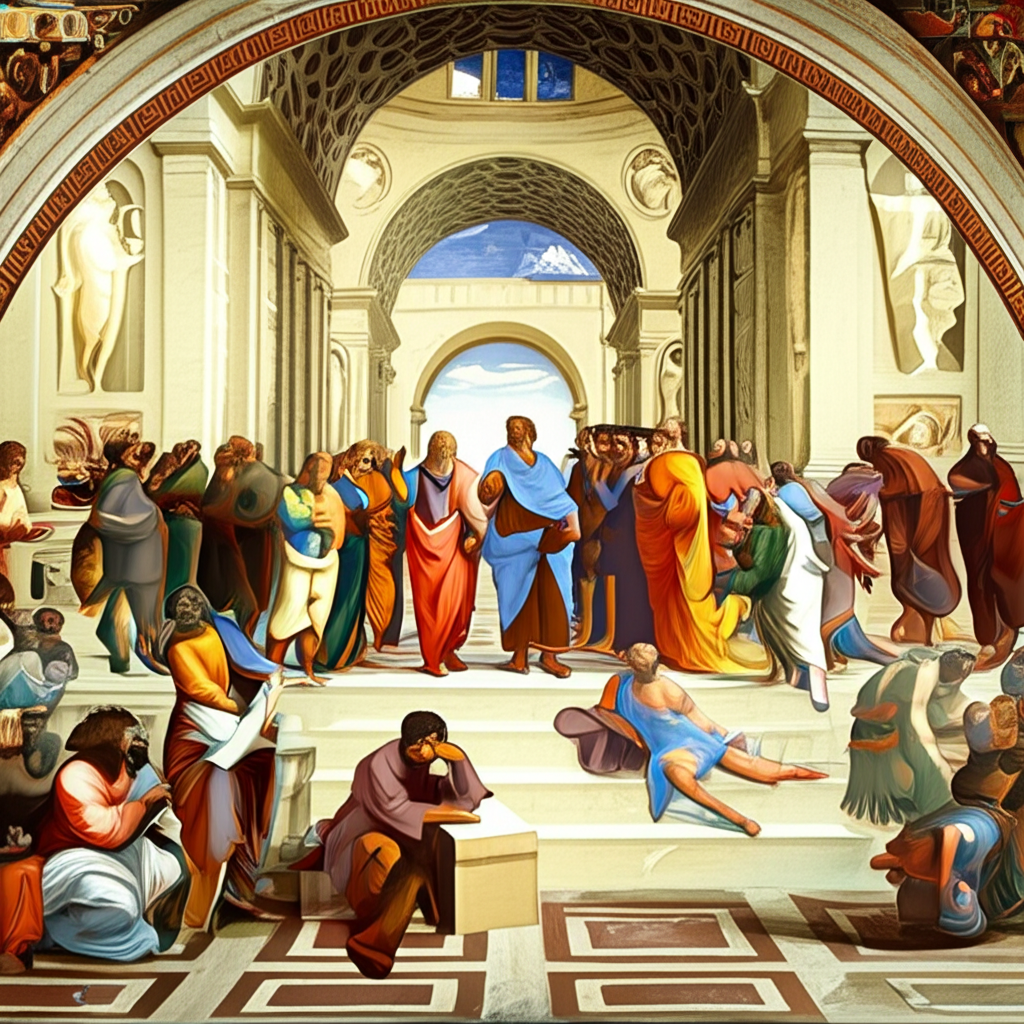
The question of God's role in the moral universe is not a simple one with a definitive answer. It is a profound inquiry that has shaped civilizations, inspired countless works of art and literature, and continues to challenge our deepest assumptions about existence, purpose, and the nature of Good and Evil. From the ancient dialogues of the Greeks to the intricate theologies of the Abrahamic faiths and the secular ethics of the modern age, this debate highlights the human yearning for meaning, justice, and a coherent understanding of our place in the cosmos.
Whether one ultimately concludes that morality is divinely commanded, divinely inspired through natural law, or entirely independent of God, the very act of engaging with this question enriches our understanding of ourselves, our societies, and the complex tapestry of human thought. The journey through these philosophical landscapes, guided by the wisdom of the Great Books, is an ongoing testament to humanity's relentless pursuit of truth and ethical living.
📹 Related Video: KANT ON: What is Enlightenment?
Video by: The School of Life
💡 Want different videos? Search YouTube for: ""Euthyphro Dilemma Explained""
📹 Related Video: KANT ON: What is Enlightenment?
Video by: The School of Life
💡 Want different videos? Search YouTube for: ""Natural Law Theory vs Divine Command Theory""