

The Role of God in the Moral Universe: A Philosophical Odyssey
The question of God's role in the moral universe is perhaps one of humanity's most enduring and profound inquiries. It delves into the very bedrock of our understanding of Good and Evil, shaping not only Theology and Religion but also the secular ethical frameworks that govern our societies. From ancient covenants to modern existential quandaries, this pillar page explores the multifaceted ways in which God has been posited as the source, enforcer, or even a challenge to human morality, drawing upon the rich tapestry of thought found within the Great Books of the Western World. We will journey through divine commands, natural law, the autonomy of human reason, and the persistent problem of evil, ultimately seeking to understand how this relationship continues to define our moral landscape.
The Divine Origin of Morality: Command and Creation
For millennia, the primary source of moral authority for countless civilizations has been a divine creator. This perspective, often termed Divine Command Theory (DCT), posits that an action is morally good simply because God commands it, and evil because God forbids it.
Theology as the Bedrock of Right and Wrong
In this framework, morality is not a human invention or a product of reason; it is an immutable decree from an omnipotent, omniscient, and perfectly good being. The most iconic representation of this is arguably the Ten Commandments, delivered to Moses, which served as the foundational legal and moral code for ancient Israel and profoundly influenced Western jurisprudence.
However, even within the classical texts, challenges to this simplistic view emerged. Plato, in his dialogue Euthyphro, famously posed a dilemma: "Is the pious loved by the gods because it is pious, or is it pious because it is loved by the gods?" This question, though specific to piety, directly translates to morality, asking whether God's commands create morality or merely reveal an independently existing morality. This philosophical knot has tantalized thinkers for centuries, probing the very nature of divine authority and the essence of Good and Evil.
Natural Law and Divine Reason: Aquinas and Beyond
Moving beyond direct divine commands, another powerful theological perspective emerged, suggesting that God's role in morality is more subtle yet equally pervasive: Natural Law.
God's Blueprint in the Fabric of Existence
Thomas Aquinas, a towering figure in medieval Theology, masterfully synthesized Aristotelian philosophy with Christian doctrine to articulate a comprehensive Natural Law theory in his Summa Theologica. For Aquinas, the universe is ordered by God's eternal law, and human beings, through their unique capacity for reason, can discern a portion of this law – the natural law. This natural law is essentially the participation of the rational creature in the eternal law.
According to Aquinas, certain actions are inherently right or wrong because they align with or deviate from our rational nature, which itself is a reflection of God's rational design. For example, preserving life, procreating, seeking knowledge, and living in society are seen as fundamental goods because they are inherent inclinations of human nature, placed there by the Creator. Thus, God doesn't just command morality; He builds it into the very fabric of existence and our rational faculties, making it discoverable through reason, even without direct revelation. This perspective offers a robust framework that bridges Religion and reason, suggesting that moral truths are not arbitrary but objectively grounded in the divine order.
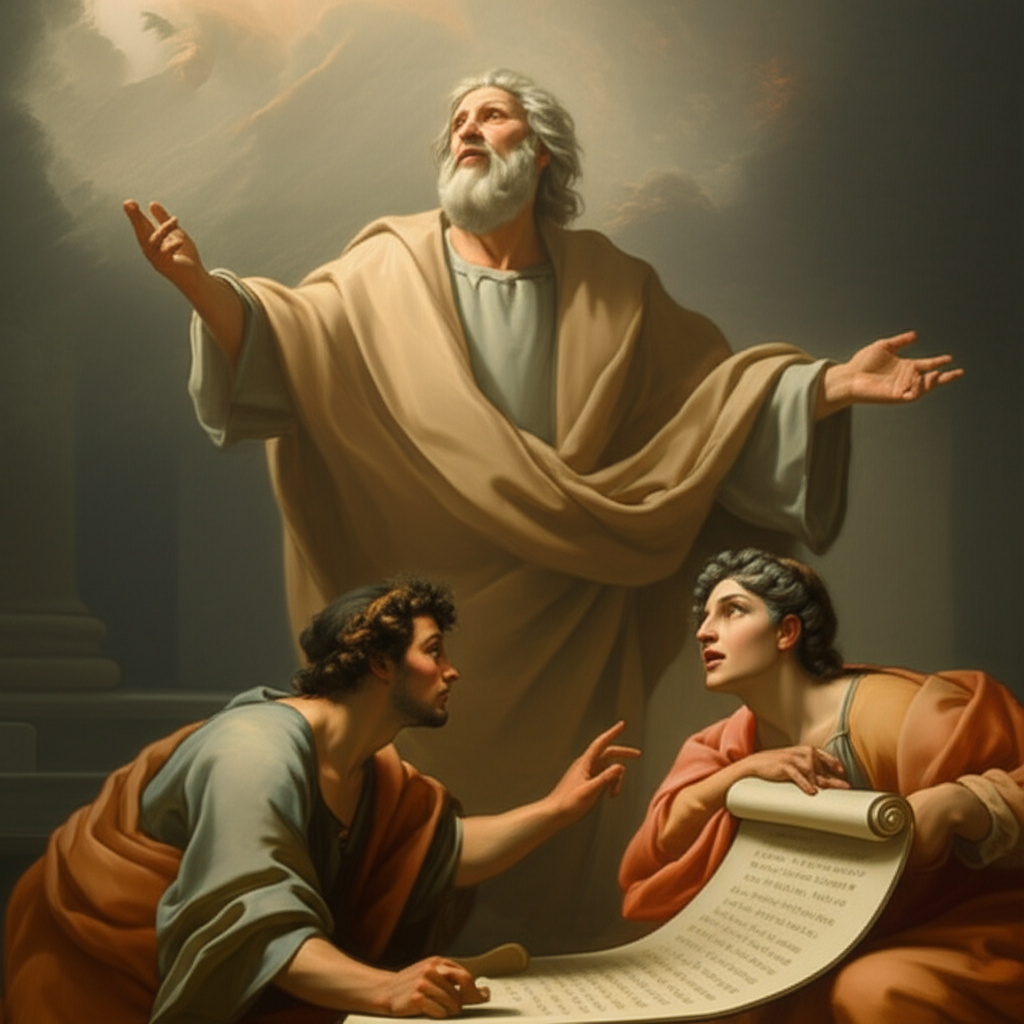
The Challenge of Autonomy: From Enlightenment to Existentialism
As the Western world transitioned from an era dominated by Theology to one increasingly shaped by scientific discovery and human reason, the foundational role of God in morality came under intense scrutiny.
Shifting Sands: When Morality Seeks a Human Anchor
The Enlightenment heralded a profound shift, with philosophers like Immanuel Kant arguing that morality must be derived from reason itself, not from external authority, divine or otherwise. In his Critique of Practical Reason, Kant posited the Categorical Imperative: act only according to that maxim whereby you can at the same time will that it should become a universal law. For Kant, moral duty arises from our rational nature, making us autonomous moral agents. God might exist, but morality's validity does not depend on Him; it depends on universal reason.
Later, the 19th and 20th centuries saw even more radical departures. Friedrich Nietzsche, in Thus Spoke Zarathustra, famously declared "God is dead," not as a literal statement about divine existence, but as an observation that the concept of God had lost its power to provide meaning and moral authority in Western culture. This pronouncement left a void, challenging humanity to create its own values beyond traditional Good and Evil, leading to a re-evaluation of all values.
Jean-Paul Sartre, a key figure in existentialism, pushed this further. For Sartre, "existence precedes essence," meaning there is no pre-ordained human nature or divine plan. We are condemned to be free, burdened with the responsibility of creating our own meaning and values in a universe devoid of inherent moral structure. In this view, God has no role in the moral universe because there is no inherent moral universe; only human choice and the radical freedom that defines us.
The Problem of Evil: A Theological Quandary
One of the most persistent and intellectually challenging obstacles for any Theology that posits a benevolent, omnipotent God is the existence of suffering and moral evil in the world.
If God is Good, Why is There Evil?
This "problem of evil" has been articulated in various forms, famously by Epicurus (as relayed by David Hume): "Is God willing to prevent evil, but not able? Then he is impotent. Is he able, but not willing? Then he is malevolent. Is he both able and willing? Then whence cometh evil?" This dilemma strikes at the heart of attributing Good and Evil to a divine source.
Classical responses to this problem, found in the Great Books, include:
- Free Will Defense: Articulated by Augustine in his Confessions, this argument suggests that moral evil originates from the free choices of rational beings (angels and humans) who choose to turn away from God's goodness. God, in His infinite wisdom, deemed the gift of free will, even with its potential for evil, to be a greater good than a world without it.
- Soul-Making Theodicy: This perspective, often associated with Irenaeus, suggests that suffering and challenges are necessary for human moral and spiritual development. A perfect world would offer no opportunity for growth, courage, or compassion.
- Limited Understanding: Philosophers like Boethius in The Consolation of Philosophy explored the idea that human understanding of divine providence is inherently limited. What appears as evil from our finite perspective might be part of a larger, ultimately good divine plan.
Despite these nuanced responses, the problem of evil remains a potent philosophical challenge, forcing a deeper reflection on the nature of God, His attributes, and the very definition of Good and Evil.
Secular Ethics and the Shadow of God
In the wake of challenges to divine authority, various ethical systems emerged that sought to ground morality in human reason, experience, or social contracts, completely independent of God.
Moral Frameworks Without Divine Fiat
These secular ethical frameworks, though often developed in opposition to or alongside religious thought, sometimes bear the implicit marks of their historical context.
- Aristotelian Virtue Ethics: Though pre-Christian, Aristotle's Nicomachean Ethics provides a profound framework for morality based on character, flourishing (eudaimonia), and the cultivation of virtues. For Aristotle, Good and Evil are understood in terms of actions that lead to or detract from human excellence and well-being, achievable through reason and practice.
- Utilitarianism: Proponents like John Stuart Mill, in his Utilitarianism, argued that the moral worth of an action is determined by its ability to produce the greatest good for the greatest number. Here, the focus shifts from divine command or individual duty to the consequences of actions, measured by their contribution to overall happiness and well-being.
- Contemporary Humanism: Many modern ethical systems emphasize human dignity, autonomy, and the pursuit of collective well-being through reason, empathy, and scientific understanding. These systems assert that morality is a human construct, evolving through societal development and philosophical inquiry, without recourse to God or religious dogma.
While these systems offer compelling alternatives, the question sometimes lingers: do they truly escape the "shadow of God," or do they simply re-articulate moral intuitions that were historically shaped by Theology and Religion?
The Enduring Dialogue: Can God and Morality Be Reconciled?
The journey through the role of God in the moral universe reveals a complex and evolving intellectual landscape. From absolute divine fiat to radical human autonomy, the relationship between the divine and Good and Evil remains a dynamic field of inquiry.
Finding Common Ground in a Pluralistic World
Today, the dialogue often seeks to bridge the chasm or to find points of convergence. Many religious thinkers now emphasize that faith is not blind obedience but a rational assent to a moral order that is both divinely instituted and rationally discernible. Conversely, many secular ethicists acknowledge the historical and cultural impact of Religion on moral development, even if they reject its metaphysical claims.
The table below summarizes some key perspectives on this intricate relationship:
| Perspective | Role of God in Morality | Key Proponents/Ideas |
|---|---|---|
| Divine Command Theory | Source and enforcer of all moral laws | Abrahamic religions, some theologians (e.g., William of Ockham) |
| Natural Law Theory | Creator of a rational, moral universe; discoverable by reason | Thomas Aquinas, Stoics |
| Kantian Ethics | Morality derived from reason, independent of God | Immanuel Kant |
| Existentialism | No inherent moral order; humans create values | Jean-Paul Sartre, Friedrich Nietzsche |
| Problem of Evil | Challenges God's goodness/omnipotence given evil | Epicurus, David Hume, Augustine (in response) |
| Secular Humanism | Morality is a human construct based on reason and empathy | John Stuart Mill, Aristotle (virtue ethics) |
Ultimately, whether God is seen as the ultimate legislator, the cosmic architect of a rational moral order, or an irrelevant concept in the pursuit of Good and Evil, the conversation continues to shape our understanding of ourselves, our responsibilities, and the very meaning of a moral life.
Conclusion
The role of God in the moral universe is not a static concept but a vibrant, evolving philosophical and Theology inquiry that has profoundly influenced the course of Western thought. From the foundational divine commands of ancient scriptures to Aquinas's sophisticated natural law, and further to the Enlightenment's call for human autonomy and existentialism's declaration of radical freedom, each epoch has wrestled with the question of where morality truly originates and how we ought to live.
The problem of evil continues to challenge traditional religious explanations, while secular ethical frameworks offer compelling alternatives for grounding Good and Evil in human reason and experience. Yet, the deep human yearning for meaning and a coherent moral framework persists, whether it finds its answers in Religion, philosophy, or a synthesis of both. The dialogue surrounding God, Theology, Religion, and Good and Evil is far from over; it is an ongoing testament to humanity's relentless quest to understand its place in the cosmos and the values that define its existence.
📹 Related Video: PLATO ON: The Allegory of the Cave
Video by: The School of Life
💡 Want different videos? Search YouTube for: ""Plato Euthyphro Dilemma Explained""
📹 Related Video: KANT ON: What is Enlightenment?
Video by: The School of Life
💡 Want different videos? Search YouTube for: ""Kant Categorical Imperative vs Divine Command""