

The Divine Architect of Morality: Exploring God's Role in the Moral Universe
The question of God's role in the moral universe is one of philosophy's most enduring and profound inquiries. From ancient covenants to modern ethical debates, humanity has grappled with whether morality is divinely ordained, inherently rational, or a product of human experience. This pillar page delves into the multifaceted perspectives from the "Great Books of the Western World," examining how the concept of God has shaped, challenged, and been challenged by our understanding of Good and Evil, the nature of Theology, and the practical implications for Religion and ethical living.
1. Introduction: The Enduring Question of Divine Morality
Does morality stem from a divine command, or is it an independent realm that God himself must adhere to? This fundamental question lies at the heart of countless philosophical and theological discussions, impacting how civilizations have structured their laws, educated their citizens, and understood the very purpose of existence. For centuries, the concept of God has been intrinsically linked to the foundations of Good and Evil, serving as either the ultimate source, the supreme enforcer, or a necessary postulate for a coherent moral order. Exploring this relationship forces us to confront our deepest assumptions about right and wrong, justice, and the meaning of human life.
2. Ancient Foundations: God as the Source of Moral Law
The earliest civilizations often saw their moral codes as direct emanations from the divine. Lawgivers were often prophets or divinely inspired figures, bringing down commandments from the heavens.
Plato's Euthyphro Dilemma: The Dawn of a Profound Question
One of the most foundational challenges to simple divine command theory comes from Plato's dialogue, Euthyphro. Socrates famously asks: "Is the pious loved by the gods because it is pious, or is it pious because it is loved by the gods?" This "Euthyphro Dilemma" presents two distinct possibilities for the relationship between God and Good and Evil:
- Divine Command Theory (DCT): Morality is entirely dependent on God's will. An action is good because God commands it, and evil because God forbids it. This view grants God ultimate sovereignty but raises concerns about the arbitrary nature of morality – could God command cruelty and make it good?
- Independent Morality: God commands what is good because it is inherently good. In this view, goodness exists independently of God's will, and God, being perfectly good, simply recognizes and upholds these eternal moral truths. This preserves the objectivity of morality but might seem to limit God's omnipotence.
This dilemma has echoed through millennia of Theology and philosophy, shaping debates about divine authority and the nature of ethical truth.
Aristotle's Teleology and the Prime Mover
While Aristotle, in works like Nicomachean Ethics, focused on human flourishing (eudaimonia) through virtue, his concept of a "Prime Mover" in Metaphysics provided a cosmological first cause. This Prime Mover, though not a moral legislator in the Abrahamic sense, represents the ultimate telos or end toward which all things strive. The natural order, guided by this ultimate purpose, implicitly suggests a rational structure that could be seen as a backdrop for moral reasoning, even if not directly dictating specific ethical rules.
Early Religious Codes and Divine Decrees
Across ancient religions, moral injunctions were often presented as direct pronouncements from deities. From the Ten Commandments in the Abrahamic traditions to the laws of Hammurabi, believed to be divinely inspired, the idea that God (or gods) provides the ultimate blueprint for human conduct was pervasive. These codes often covered everything from societal laws to personal ethics, establishing a clear link between divine will and human behavior, thereby defining Good and Evil for their adherents.
3. Medieval Synthesis: Natural Law and Divine Reason
The medieval period witnessed a profound effort to reconcile faith and reason, particularly concerning the role of God in establishing moral order.
Augustine of Hippo: The City of God and Divine Grace
In The City of God, Augustine wrestled with the problem of evil and the nature of human will. For Augustine, Good and Evil are not arbitrary; they are rooted in God's eternal nature. Human beings, fallen from grace, require divine illumination and grace to truly know and follow God's moral law. Morality is ultimately participation in God's perfect goodness, and true virtue is impossible without a relationship with the divine. He emphasized that God's justice is not merely punitive but restorative, guiding humanity towards its ultimate good.
Thomas Aquinas and Natural Law
Perhaps the most influential synthesis of divine command and rational ethics came from Thomas Aquinas in his Summa Theologica. Aquinas articulated the concept of Natural Law, arguing that God's eternal law is partially accessible to human reason. He distinguished between several types of law:
| Type of Law | Description | Relation to God |
|---|---|---|
| Eternal Law | God's rational governance of the entire universe; the divine blueprint for creation. | Fully known only to God. |
| Natural Law | The participation of rational creatures in the eternal law. Discoverable through human reason, it guides us toward our natural ends (e.g., preserving life, procreation, seeking truth, living in society). | Reflected in human nature; God's will is manifested in the inherent inclinations and rational capacities He has instilled in us. Serves as a foundation for understanding Good and Evil through reason. |
| Human Law | Specific laws enacted by human societies to apply natural law principles to particular circumstances. | Must be consistent with natural law to be just. |
| Divine Law | Revealed law (e.g., Ten Commandments, scriptures) that guides humanity toward supernatural ends (salvation) and clarifies aspects of natural law. | Directly revealed by God; necessary because human reason is imperfect and to direct us towards a higher, ultimate good beyond our natural capacities. Crucial for understanding specific aspects of Religion and Theology. |
Aquinas's framework provided a robust theology that saw God not just as a legislator but as the ultimate rational ground for morality, making Good and Evil objectively real and discoverable through both faith and reason.
4. The Enlightenment and Beyond: Reason, Autonomy, and the Divine
The Enlightenment brought a shift, emphasizing human reason and autonomy. While some philosophers sought to ground morality purely in reason, others found God still a necessary component for a complete moral picture.
Immanuel Kant: God as a Postulate of Practical Reason
In his Critique of Practical Reason, Immanuel Kant famously argued that morality must be grounded in pure practical reason, independent of any external authority, including God. His Categorical Imperative ("Act only according to that maxim whereby you can at the same time will that it should become a universal law") provides a universal, rational basis for Good and Evil.
However, Kant did not dismiss God. Instead, he posited God (along with freedom and immortality) as a "postulate of practical reason." For Kant, it is morally necessary to believe that there is a God who ensures that virtue is ultimately rewarded with happiness, creating a coherent moral universe where justice ultimately prevails. Without this postulate, the moral agent might despair, seeing no ultimate reconciliation between duty and happiness. Thus, God becomes a necessary condition for the full realization of the moral law, even if not its origin.
The Problem of Evil and its Moral Implications
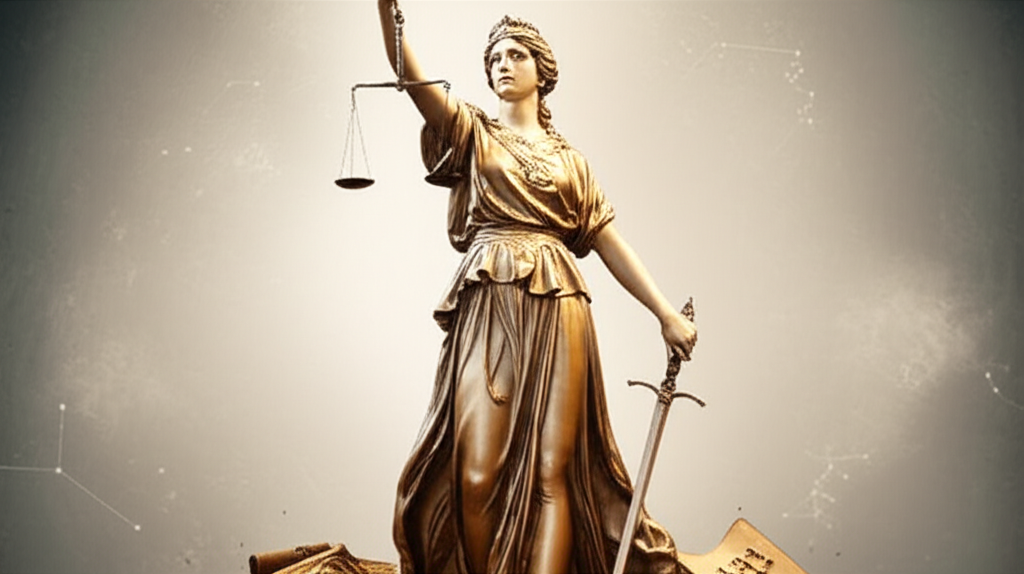
A persistent challenge to God's role as a benevolent moral architect is the problem of evil. How can an omnipotent, omniscient, and perfectly good God allow the existence of suffering and moral evil? This question, explored by Augustine and later by philosophers like Leibniz and Hume, forces a re-evaluation of divine attributes and their implications for human morality. Various theological and philosophical solutions (theodicies) have been proposed, but the tension between divine goodness and the reality of Good and Evil remains a potent area of inquiry.
5. Critiques and Challenges: The Retreat of the Divine Legislator
The 19th and 20th centuries saw significant challenges to the traditional understanding of God's role in morality, with many philosophers seeking to establish ethics on purely secular grounds.
Nietzsche's "God is Dead": Re-evaluation of All Values
Friedrich Nietzsche's pronouncement "God is dead" in Thus Spoke Zarathustra was not merely a statement about literal belief but a profound observation about the decline of traditional Christian religion and its moral framework in Western culture. Nietzsche argued that without God, the old values (like humility, compassion, and self-sacrifice) derived from Christianity would lose their foundation. This necessitated a "re-evaluation of all values," leading to the creation of new moral systems based on human will to power and the flourishing of the Übermensch. For Nietzsche, the traditional concept of Good and Evil was itself a product of a slave morality, and its divine grounding was a fiction.
Secular Humanism and Atheistic Ethics
With the rise of secular thought, many philosophers argued that morality could and should be derived from human reason, empathy, and the pursuit of human flourishing, entirely independent of God or religion. Thinkers like John Stuart Mill (utilitarianism) and later humanists proposed ethical systems based on maximizing happiness, promoting well-being, and respecting human rights, all without recourse to divine command. Good and Evil become constructs of human experience and rational deliberation, rather than transcendent decrees.
Dostoyevsky's Moral Abyss: "If God Does Not Exist, Everything Is Permitted"
Fyodor Dostoyevsky, particularly in The Brothers Karamazov, explored the profound moral implications of atheism. The character Ivan Karamazov famously asserts, "If God does not exist, everything is permitted." This statement captures the deep-seated fear that without a divine authority, morality would descend into relativism and nihilism, leading to a breakdown of social order and the justification of any action. Dostoyevsky's work highlights the psychological and societal vacuum that many believed would be left by the absence of a divine moral compass.
6. Contemporary Perspectives: Reconciling Faith and Ethics
In the modern era, the dialogue concerning God's role in the moral universe continues, often seeking bridges between diverse viewpoints.
The Continued Relevance of Religious Ethics
Despite secularization, religion continues to be a powerful source of moral guidance for billions worldwide. Religious ethics provide comprehensive worldviews, community structures, and traditions that inform moral decision-making, emphasizing virtues, duties, and the pursuit of ultimate meaning. Modern theology often engages with contemporary ethical dilemmas, demonstrating the adaptability and enduring influence of faith-based moral frameworks.
Dialogue Between Secular and Religious Ethics
Today, there is a growing recognition of common ground between secular and religious ethics. Both often value compassion, justice, human dignity, and the pursuit of a flourishing society. While their ultimate justifications may differ—one appealing to divine command or natural law, the other to human reason and collective well-being—they frequently converge on practical moral outcomes. This ongoing dialogue seeks to find universal values that can guide humanity in addressing shared challenges, whether or not they are explicitly attributed to God.
7. Conclusion: The Enduring Search for Moral Foundations
The journey through the history of philosophy and theology reveals a complex and evolving understanding of God's role in the moral universe. From the direct divine commands of ancient religions to Plato's probing questions, Aquinas's rational synthesis, Kant's moral postulates, and Nietzsche's radical critique, the relationship between the divine and Good and Evil has been endlessly re-examined.
Whether viewed as the ultimate legislator, the rational ground of objective morality, a necessary postulate for a coherent ethical system, or an illusion that must be overcome, the concept of God remains a potent force in our ongoing quest to understand the foundations of right and wrong. The human search for meaning and moral order, it seems, will forever grapple with the profound implications of a divine presence—or absence—in the fabric of our ethical lives.
YouTube Video Suggestions:
-
📹 Related Video: PLATO ON: The Allegory of the Cave
Video by: The School of Life
💡 Want different videos? Search YouTube for: ""Plato Euthyphro dilemma explained philosophy""
-
📹 Related Video: KANT ON: What is Enlightenment?
Video by: The School of Life
💡 Want different videos? Search YouTube for: ""Kant moral philosophy God existence""