

The Cradle of Citizenship: Exploring the Role of Family in the State
Summary: The family, often considered the most fundamental and ancient of human institutions, plays an indispensable role in the formation and perpetuation of the state. Far from being a mere private concern, the structure and function of the family profoundly influence the character of its citizens, thereby shaping the very fabric, values, and stability of the political community. From the transmission of ethics to the cultivation of civic virtue, understanding the dynamic interplay between family and state is crucial for comprehending the foundations of organized society.
The Family as the Primary Crucible of Society
Before the grand assemblies of the polis or the intricate laws of the state, there is the household. It is within this intimate sphere that individuals first encounter authority, responsibility, and the complex dynamics of human relationships. This foundational experience is not merely personal; it has profound implications for the wider political realm.
- Moral and Ethical Formation: The family is the initial educator. It instills the first lessons in right and wrong, empathy, sharing, and respect. These rudimentary ethical frameworks are the building blocks upon which more complex legal and moral systems of the state are later constructed.
- Transmission of Values and Culture: Language, traditions, cultural norms, and shared historical narratives are largely passed down through the family unit. This cultural continuity is vital for the cohesion and identity of any state.
- Socialization into Roles: Children learn about hierarchy, cooperation, and the division of labor within the family. These early lessons prepare them for their future role as active and contributing citizens.
As Aristotle, in his Politics, famously posited, the household (oikos) is the first natural community, formed for the satisfaction of daily needs. From the union of male and female for procreation, and master and slave for preservation, the household emerges. Villages then spring from households, and ultimately, the complete community, the polis or state, emerges from the aggregation of villages, aiming at the highest good. Thus, for Aristotle, the family is not just a precursor but an essential, organic component whose proper functioning is necessary for the flourishing of the state.
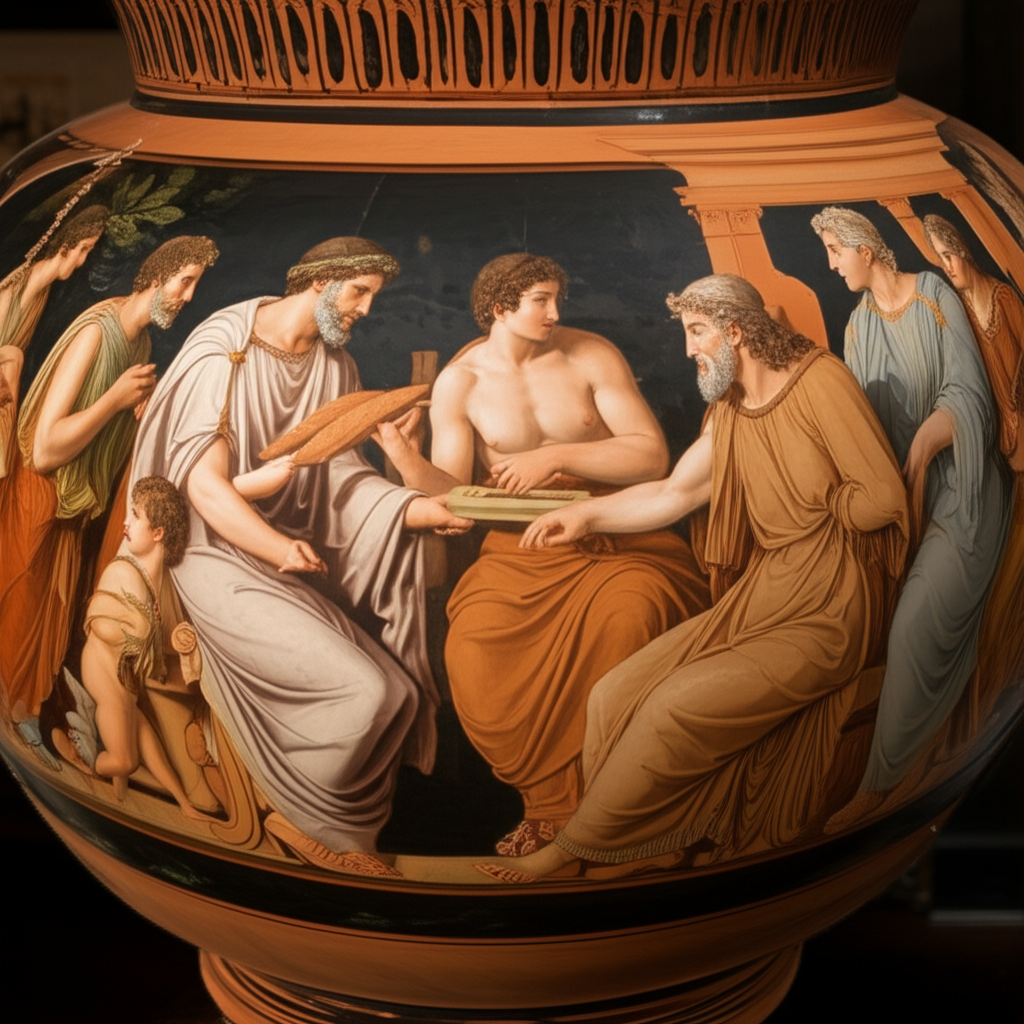
The State's Inherent Interest in the Family
While the family often operates in a private sphere, its functions are of direct consequence to the state. Rulers and philosophers throughout history have recognized this symbiotic relationship, often proposing various ways the state might interact with or even direct family life to achieve political ends.
Key Areas of State Concern:
- Reproduction and Perpetuation of the Citizenry: A state requires people – new generations to sustain its workforce, defend its borders, and contribute to its cultural life. The family is the primary institution responsible for procreation.
- Education and Instilling Civic Virtues: Beyond basic literacy, states depend on citizens who possess civic virtues: loyalty, responsibility, justice, and a willingness to participate. While schools play a part, the family lays the groundwork for these virtues. A child raised with discipline, respect for elders, and a sense of duty is more likely to become a responsible citizen.
- Maintaining Social Order and Stability: Stable families often contribute to stable communities. Conversely, family breakdown can correlate with social problems, increased crime, and a strain on state resources. The family unit acts as a crucial buffer and support system, reducing the burden on the state for welfare and social control.
Plato, in his radical vision for the ideal state outlined in The Republic, went so far as to propose the abolition of private family units for the guardian class. Children would be raised communally, ignorant of their biological parents, ensuring their primary loyalty was to the state alone, rather than to familial bonds. While extreme, Plato's proposal starkly illustrates the perceived power of the family to either reinforce or detract from the state's authority and unity.
Philosophical Perspectives: A Comparative Glance
The Great Books of the Western World offer diverse perspectives on the intricate relationship between the family and the state.
| Philosopher | View on Family's Role to the modern family, the fundamental question persists: What is the ideal relationship between the family and the state? Is the family a private refuge, or an arm of the state? The answers continue to shape contemporary policy and social thought.
Conclusion: The Indispensable Nexus
The role of the family in the state is not merely significant; it is foundational. From the very first lessons in morality and cooperation to the perpetuation of the species and the cultivation of civic virtue, the family shapes the raw material from which a state is built: its citizens. A strong, value-laden family unit fosters responsible, engaged individuals who contribute positively to the broader community. Conversely, a weakening of the family structure can ripple outwards, challenging the stability and moral fiber of the state itself.
Understanding this enduring interdependence is not just an academic exercise; it is a practical necessity for anyone concerned with the well-being and future of society. The health of our families is inextricably linked to the health of our republics.
YouTube Video Suggestions:
-
📹 Related Video: ARISTOTLE ON: The Nicomachean Ethics
Video by: The School of Life
💡 Want different videos? Search YouTube for: "Aristotle Politics Family State"
-
📹 Related Video: PLATO ON: The Allegory of the Cave
Video by: The School of Life
💡 Want different videos? Search YouTube for: "Plato Republic Family Guardians"