

The Enduring Role of Family in the Education of Habit
The family serves as the foundational crucible for the education of habit, a process critical for character development as understood by ancient and modern philosophers alike. Before formal schooling or societal institutions take their turn, the family unit undertakes the profound role of shaping an individual's ethical framework through the consistent cultivation of habits. This article explores how philosophers from the Great Books of the Western World illuminate the indispensable role of the family in instilling the repetitive actions and dispositions that ultimately define us, arguing that these early patterns are not merely behaviors, but the very architecture of virtue and a well-lived life.
The Cradle of Character: Why Family Matters First
We often speak of "education" in terms of schools, curricula, and academic achievements. But before the classroom, before the curriculum, there is the family. It's a truth often overlooked in our increasingly institutionalized world that the most fundamental education occurs within the home, a process far more pervasive and enduring than any textbook. Here, the raw material of a human being begins to take form, molded not just by genetics, but by the daily interactions, expectations, and consistent practices that lead to the formation of habits.
Philosophers, from the ancient Greeks to Enlightenment thinkers, recognized this primary role. They understood that character is not innate but acquired, built brick by brick through repeated actions and experiences. And who is primarily responsible for laying these initial bricks? The family.
Aristotle and the Architecture of Virtue: Habituation as the Path to Excellence
Perhaps no philosopher articulated the education of habit more clearly than Aristotle in his Nicomachean Ethics. For Aristotle, virtue is not innate; it is a disposition, a hexis, acquired through repeated action. We become just by doing just acts, temperate by doing temperate acts, and brave by doing brave acts. This process, known as habituation, is the cornerstone of his ethical philosophy.
- The Family as the First Moral Training Ground: Aristotle implicitly places the family at the heart of this process. Children, lacking full reason, learn primarily through imitation and repetition guided by their elders. Parents, therefore, are not merely providers but moral educators, responsible for guiding their children towards virtuous habits.
- Early Repetition is Key: The consistent encouragement to share, to be honest, to control one's temper, or to persevere through difficulty, instills these patterns before they are consciously chosen. These are the "good habits" that lay the foundation for future ethical decision-making. The family, therefore, is not merely a social unit but a moral training ground where the seeds of virtue are sown through consistent practice.
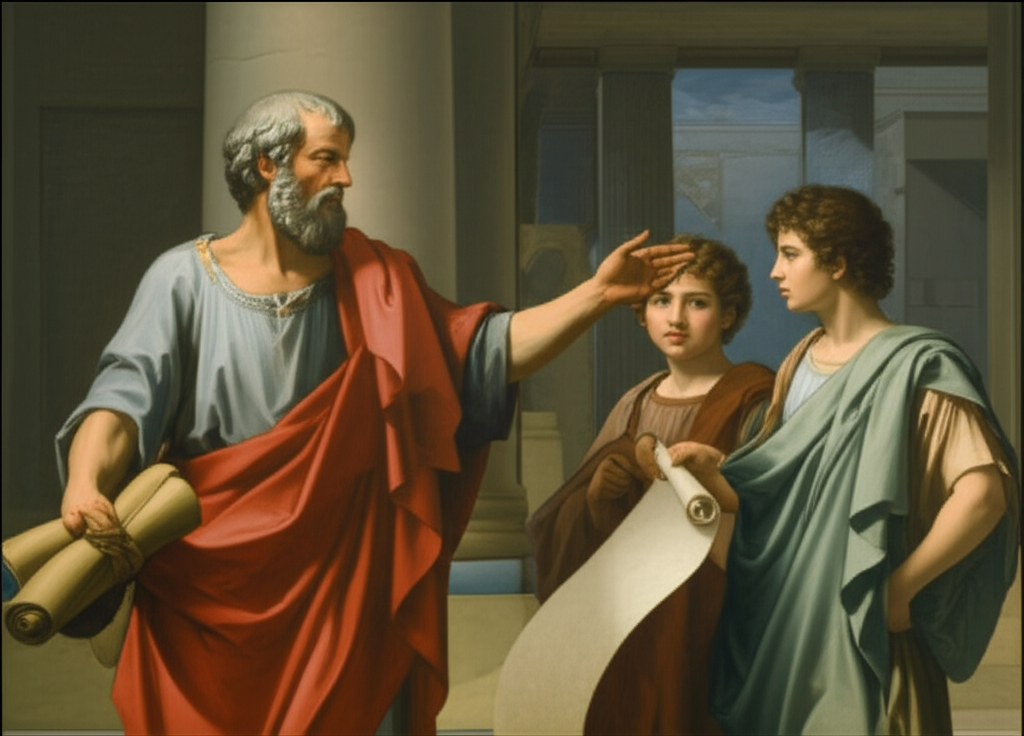
Plato's Vision: Shaping the Soul of the Citizen
Plato, in his Republic and Laws, also understood the profound impact of early experiences on the developing soul. While he famously envisioned a state-controlled education for guardians to ensure their loyalty and virtue, the initial role of the family in laying the groundwork of character was implicitly acknowledged as crucial.
- The Importance of Early Impressions: Plato emphasized the need to carefully curate the stories, music, and environment to which children are exposed. These early impressions, absorbed without critical faculty, shape their emotional and intellectual habits.
- Laying the Foundation for the State: A well-ordered soul, cultivated through early discipline and exposure to harmonious influences, was seen as essential for a well-ordered state. The family's initial role in providing this foundation of aesthetic and moral order is undeniable, even if the state later takes over more formal education.
Locke's Pragmatism: The Power of Early Impressions
Moving into the Enlightenment, John Locke, in Some Thoughts Concerning Education, reinforces this emphasis, arguing that the mind of a child is a tabula rasa—a blank slate—upon which experience writes. This makes the role of early education, especially within the family, paramount.
- Parents as Primary Architects: Locke believed that the family holds the primary role in inscribing the initial, and most durable, habits onto this blank slate. He stressed the importance of discipline, reason, and consistent parental example in forming good habits from childhood.
- Reason Through Habit: For Locke, good habits were not just about moral behavior but also about developing the capacity for reason itself. By teaching children self-control and rational conduct through consistent practice, parents prepare them to become rational adults. The earlier these habits are formed, the more deeply ingrained they become, making them easier to maintain throughout life.
The Mechanisms of Habit Formation in the Family
The family's role in the education of habit is multifaceted, operating through various mechanisms that are often subtle yet profoundly effective.
Here are some key ways families foster habits:
- Modeling Ethical Conduct: Children are keen observers. Parents and older siblings serve as primary examples, consciously and unconsciously demonstrating behaviors, values, and ways of interacting with the world. If parents consistently act with honesty, kindness, and perseverance, children are more likely to internalize these as desirable habits.
- Establishing Routines and Rituals: Daily routines—bedtime stories, mealtime manners, chores, morning greetings—are powerful tools for building habits. Consistency creates a predictable structure that helps children internalize expected behaviors without constant instruction. These rituals become the bedrock of discipline and self-management.
- Providing Guidance and Correction: Direct instruction, positive reinforcement, and gentle correction are vital. When a child makes a mistake, the family provides the initial context for understanding right from wrong, guiding them towards better choices and reinforcing the habit of reflection and improvement.
- Cultivating a Virtuous Environment: The overall atmosphere of the home—one of respect, empathy, responsibility, or conversely, neglect—significantly influences the habits children adopt. A supportive and loving environment encourages the habit of open communication and emotional intelligence.
Challenges and Modern Reflections
In contemporary society, the traditional role of the family is often challenged by external influences, digital distractions, and changing social structures. However, the philosophical insights from the Great Books remind us that despite these shifts, the fundamental human need for character formation through habituation remains. The family continues to be the most intimate and influential space for this crucial education, providing the consistent guidance, love, and repetition necessary to cultivate individuals of virtue.
Conclusion: A Legacy of Living Well
The philosophical discourse on the education of habit consistently points to the irreplaceable role of the family. From Aristotle's emphasis on habituation for virtue, to Plato's concern for early moral impressions, and Locke's insights into the mind's formative years, the message is clear: the family is the primary institution responsible for shaping who we become. It is within these intimate bonds that the repetitive actions, moral lessons, and consistent examples coalesce to form the enduring habits that not only define individual character but also lay the groundwork for a flourishing society. The legacy of a well-educated individual, rich in virtuous habits, begins at home.
📹 Related Video: ARISTOTLE ON: The Nicomachean Ethics
Video by: The School of Life
💡 Want different videos? Search YouTube for: ""Aristotle Nicomachean Ethics virtue habituation explained""
📹 Related Video: PLATO ON: The Allegory of the Cave
Video by: The School of Life
💡 Want different videos? Search YouTube for: ""John Locke Some Thoughts Concerning Education summary""