

The Cradle of Character: The Enduring Role of Family in the Education of Habit
The formation of character, a lifelong endeavor, finds its most fertile ground within the family unit. Far from being merely a domestic arrangement, the family serves as the fundamental institution for the education of habit, instilling the foundational practices that shape an individual's moral compass and practical engagement with the world. This article explores the profound and often underappreciated role of the family in cultivating habits, drawing insights from the philosophical tradition that understands habit as the very bedrock of virtue and flourishing.
Defining Habit and Its Cultivation: Beyond Mere Routine
When we speak of habit in a philosophical context, we refer to something far deeper than a simple routine. It is a settled disposition or tendency, a hexis as Aristotle termed it, that inclines an individual to act in a particular way. These are the ingrained patterns of thought, feeling, and action that, over time, sculpt our character. The education of these habits begins not in schools or formal institutions, but within the intimate confines of the family, where repeated actions and early experiences lay the groundwork for a lifetime of choices.
The Family as the Primary Educator of Character
From the moment of birth, the family is the primary environment where an individual begins to learn and internalize behaviors. Before formal schooling, before civic engagement, the child observes, imitates, and responds to the patterns established by their guardians. This early conditioning is crucial, as it imbues the child with a fundamental understanding of norms, values, and appropriate conduct. The role of the family here is irreplaceable; it is the first mirror reflecting the world, and the first sculptor of the nascent soul.
Aristotle and the Formation of Virtue Through Habituation
No philosopher articulated the significance of habit in character development more clearly than Aristotle in his Nicomachean Ethics. For Aristotle, virtue is not an innate quality but a state of character acquired through habituation. We become just by performing just acts, courageous by performing courageous acts, and temperate by performing temperate acts. The family provides the very first arena for this practice:
- Early Moral Practice: Children first learn to share, to respect elders, to manage impulses, and to speak truthfully within the family. These seemingly small acts, repeatedly performed, become the building blocks of moral virtues.
- The "Good" Example: Parents and older siblings serve as living exemplars, demonstrating what it means to be patient, kind, diligent, or honest. This observational learning is a powerful form of education.
Plato's Insights on Early Moral Conditioning
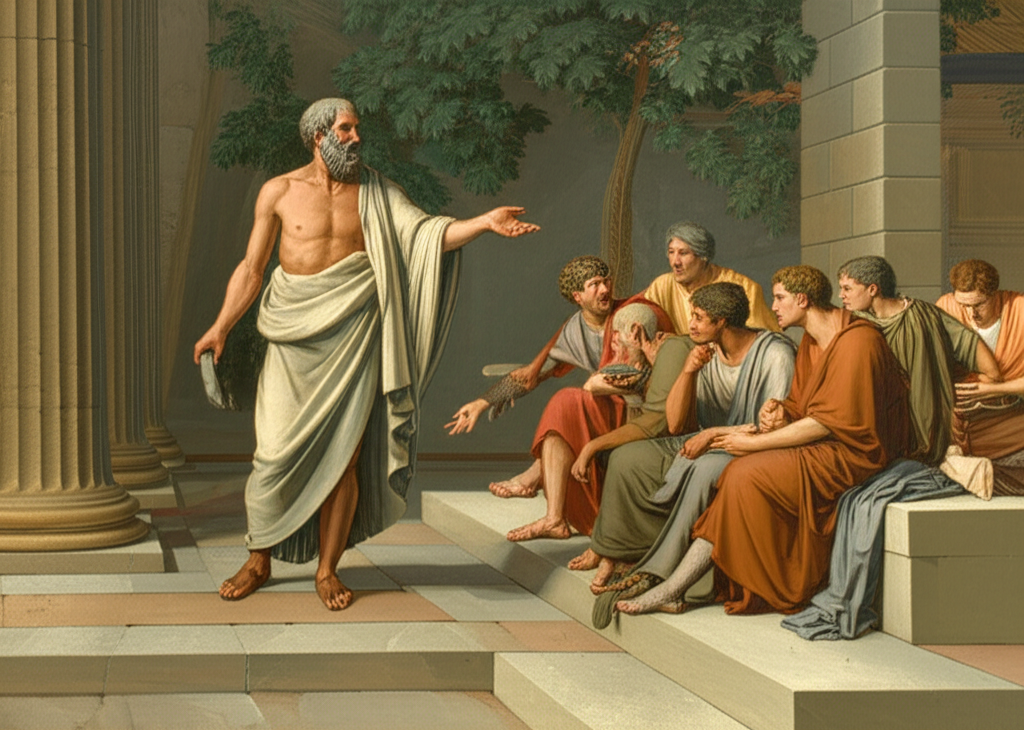
While Aristotle focused on the mechanics of habituation, Plato, in his Republic, underscored the profound importance of early education and environmental influence in shaping the soul. He stressed the necessity of exposing children to narratives and music that instill noble virtues and discourage vice. Although Plato envisioned a more state-controlled system, the underlying principle – that the earliest influences are paramount in forming character – speaks directly to the family's role. It is within the family that a child first encounters stories, songs, and values that either uplift or diminish their spirit, thus beginning the initial education of their moral habit.
Mechanisms of Familial Habit Education
The family employs several interwoven mechanisms to fulfill its role in the education of habit:
- Modeling: Parents and guardians are the primary role models. Children naturally mimic the behaviors, attitudes, and emotional responses they observe. If parents exhibit patience and diligence, these qualities are more likely to become ingrained habits in their children.
- Routine and Structure: Establishing consistent routines for meals, sleep, chores, and study instills discipline and a sense of order. These predictable structures create a framework within which good habits can flourish.
- Guidance and Correction: Direct instruction, praise for positive actions, and gentle correction for missteps are vital. This feedback loop helps children understand the consequences of their actions and guides them towards more virtuous behaviors.
- Encouragement and Support: Fostering a supportive environment where effort is valued, and resilience is encouraged helps children persist in developing challenging habits, such as perseverance or self-control.
The Enduring Legacy of Early Habits
The habits cultivated within the family have an enduring impact, often shaping an individual's trajectory long into adulthood. These foundational patterns influence how one approaches work, relationships, civic duties, and personal well-being. A child habituated to honesty and responsibility within the family is more likely to carry these virtues into their professional and social lives, contributing positively to the broader community. The education of habit in early life is, therefore, not just about individual development, but about the creation of virtuous citizens.
📹 Related Video: ARISTOTLE ON: The Nicomachean Ethics
Video by: The School of Life
💡 Want different videos? Search YouTube for: ""Aristotle Nicomachean Ethics virtue habituation""
Conclusion: The Unseen Architect of Our Selves
The role of the family in the education of habit is a profound and fundamental aspect of human development. It is within these intimate bonds that the raw potential of a child is first shaped, molded by repeated actions, moral examples, and consistent guidance. From the classical insights of Aristotle and Plato, we glean that our hexis, our very state of character, is largely an artifact of this early conditioning. The family acts as the unseen architect of our selves, instilling the habits that determine not just what we do, but ultimately, who we become.
📹 Related Video: PLATO ON: The Allegory of the Cave
Video by: The School of Life
💡 Want different videos? Search YouTube for: ""Plato's philosophy of education character formation""