

The Crucible of Character: The Family's Indispensable Role in Shaping Habit
The role of the family in the education of habit is not merely significant; it is foundational. This article explores how the family unit, as the primary social incubator, instills the patterns of thought and action that define an individual's character and contribute to the moral fabric of society. Drawing upon the wisdom of the Great Books of the Western World, we will argue that the deliberate and often unconscious cultivation of habits within the home is an irreplaceable aspect of human development, laying the groundwork for virtue, reason, and responsible citizenship.
The Crucible of Character: Family as the First Educator
From the earliest moments of life, the family serves as the primary laboratory for human development, a concept deeply rooted in classical philosophy. Long before formal schooling begins, children absorb the rhythms, values, and behavioral norms of their household, forming the bedrock of their character. This initial environment is where the education of habit truly begins, shaping everything from our table manners to our moral compass.
- The Socratic Hearth: Early Lessons in Virtue
Socrates, through Plato's dialogues, often emphasized the importance of early training in virtue, suggesting that a well-ordered soul begins with well-ordered habits. While not explicitly detailing family life, the implication is clear: the first teachers are those who surround us in our formative years. It is within the family that children first learn patience, sharing, obedience, and the consequences of their actions. These are not abstract lessons but lived experiences, reinforced daily through parental guidance and example. The consistent encouragement of truthfulness, for instance, slowly but surely cultivates the habit of honesty.
The Unseen Curriculum: Daily Rhythms and Moral Muscle
The education of habit within the family is often an unseen curriculum, taught not through textbooks but through routine, example, and expectation. Every shared meal, every bedtime story, every chore assigned contributes to the formation of deeply ingrained patterns. Aristotle, in his Nicomachean Ethics, famously argued that "moral excellence comes about as a result of habit; we become just by doing just acts, temperate by doing temperate acts, brave by doing brave acts." This profound insight underscores the role of repeated actions in shaping character.
Consider the following examples of habits primarily cultivated within the family:
- Social Habits:
- Sharing and empathy
- Respect for elders
- Politeness and good manners
- Active listening
- Personal Habits:
- Cleanliness and orderliness
- Punctuality
- Self-discipline (e.g., completing tasks)
- Reading for pleasure
- Ethical Habits:
- Honesty and integrity
- Responsibility for one's actions
- Perseverance through challenges
- Compassion for others
These habits, whether consciously taught or unconsciously absorbed, become the default settings of an individual's personality. They are the "moral muscle memory" that guides reactions and decisions throughout life.
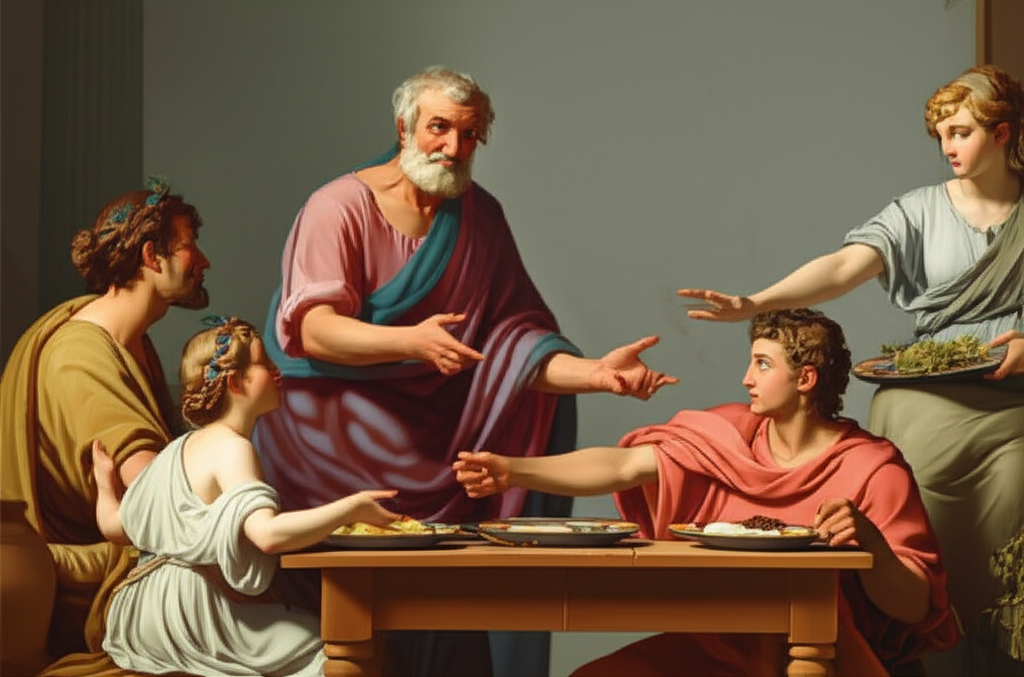
Weaving the Tapestry: Intergenerational Transmission of Virtue
The family acts as a vital conduit for the intergenerational transmission of values and wisdom. This is where the role of education extends beyond mere instruction to encompass the very fabric of cultural and ethical inheritance. Through shared traditions, stories, and the consistent modeling of behavior, parents impart a framework for living that has been refined over generations.
- From Plato's Republic to Our Living Rooms: The Role of Early Exposure
Plato, in his Republic, envisioned a highly structured society where children's early education was carefully controlled to ensure the development of virtuous citizens. While his ideal state is far removed from the modern family, the underlying principle remains potent: early exposure to certain kinds of stories, music, and ways of living profoundly shapes the soul. In our living rooms, parents are the curators of this initial exposure, choosing what narratives are shared, what forms of entertainment are consumed, and what ethical dilemmas are discussed, thereby shaping the habit of critical thinking and moral discernment. The values embodied in daily interactions—how conflicts are resolved, how success is celebrated, how failure is managed—become the blueprints for a child's own approach to life.
Navigating Modernity: Challenges to the Family's Educational Role
In our rapidly evolving world, the role of the family in the education of habit faces unprecedented challenges. The pervasive influence of digital media, the fragmentation of communities, and shifting societal norms can dilute the consistent messaging and direct mentorship that traditionally characterized family life. Yet, precisely because of these external pressures, the family's intentional efforts to cultivate positive habits—such as critical media literacy, focused attention, and resilient problem-solving—become even more crucial. It is within the security of the home that children can learn to navigate a complex world with a strong moral compass, forged by good habits.
Conclusion: The Enduring Legacy of Family Habits
Ultimately, the role of the family in the education of habit is an enduring and irreplaceable aspect of human flourishing. It is the primary sphere where individuals learn the fundamental patterns of thinking, feeling, and acting that will govern their lives. By understanding and actively embracing this profound responsibility, families not only shape virtuous individuals but also contribute to the very foundation of a just and thriving society. The legacy we leave our children is not just material wealth, but the wealth of character, built brick by brick through the diligent cultivation of good habits.
YouTube Video Suggestions:
-
📹 Related Video: ARISTOTLE ON: The Nicomachean Ethics
Video by: The School of Life
💡 Want different videos? Search YouTube for: "Aristotle Nicomachean Ethics Habits Virtue"
2. ## 📹 Related Video: PLATO ON: The Allegory of the Cave
Video by: The School of Life
💡 Want different videos? Search YouTube for: "Plato Republic Early Education Character Development"