

The Cradle of Character: Unpacking the Family's Pivotal Role in the Education of Habit
The formation of character, often understood as the intricate tapestry of our ingrained dispositions and tendencies, begins not in the hallowed halls of academia, but within the intimate confines of the family unit. This article explores the profound and often underestimated role of the family in the education of habit, arguing that it serves as the primary crucible where individuals first acquire the virtues and vices that will shape their lives. Drawing upon insights from the Great Books of the Western World, we will see how ancient philosophers understood the critical importance of early training in shaping not just behavior, but the very essence of a person's moral and intellectual being.
The Primacy of the Family in Character Formation
From the moment of birth, a child is immersed in a complex web of interactions, expectations, and observations within their family. This environment is not merely a backdrop; it is an active agent in the shaping of the nascent self. The consistent routines, the spoken and unspoken rules, the emotional responses, and the examples set by parents and siblings all contribute to the education of habit.
Habit as Second Nature: An Aristotelian View
Aristotle, in his Nicomachean Ethics, famously posited that virtue is not innate but acquired through habit. He argued that we become just by performing just acts, temperate by performing temperate acts, and courageous by performing courageous acts. This process of habituation, or ethos, is precisely where the family exerts its most significant role. It is within this initial social structure that a child first encounters:
- Consistent Reinforcement: Repeated exposure to certain behaviors and their consequences.
- Moral Modeling: Observing parents and elders demonstrate specific virtues (or vices).
- Emotional Regulation: Learning to manage feelings through parental guidance and example.
- Social Norms: Internalizing the unwritten rules of interaction, sharing, and respect.
This early, continuous exposure plants the seeds of character, making certain actions feel natural and others alien. It is, in essence, the foundation upon which all future moral and intellectual development is built.
Cultivating Virtue: Early Lessons in Practical Wisdom
The education of habit within the family is not always an explicit curriculum; more often, it is an organic process of living and learning. Consider the practical virtues that are first nurtured (or neglected) at home:
| Virtue/Habit | Family Context | Philosophical Link |
|---|---|---|
| Honesty/Truthfulness | Learning to tell the truth, even when difficult; witnessing parental integrity. | Plato's emphasis on truth as a foundational virtue. |
| Temperance/Self-Control | Sharing toys, waiting for turns, managing desires for food or screen time. | Aristotle's mean between excess and deficiency. |
| Courage/Resilience | Facing minor fears, persisting through challenges, learning from mistakes. | Stoic emphasis on enduring hardship and developing inner strength. |
| Generosity/Empathy | Sharing resources, comforting siblings, understanding others' feelings. | Christian ethics, emphasis on love and charity. |
| Diligence/Responsibility | Completing chores, attending to schoolwork, contributing to the household. | Protestant work ethic, a value emphasized by Locke. |
From Imitation to Internalization
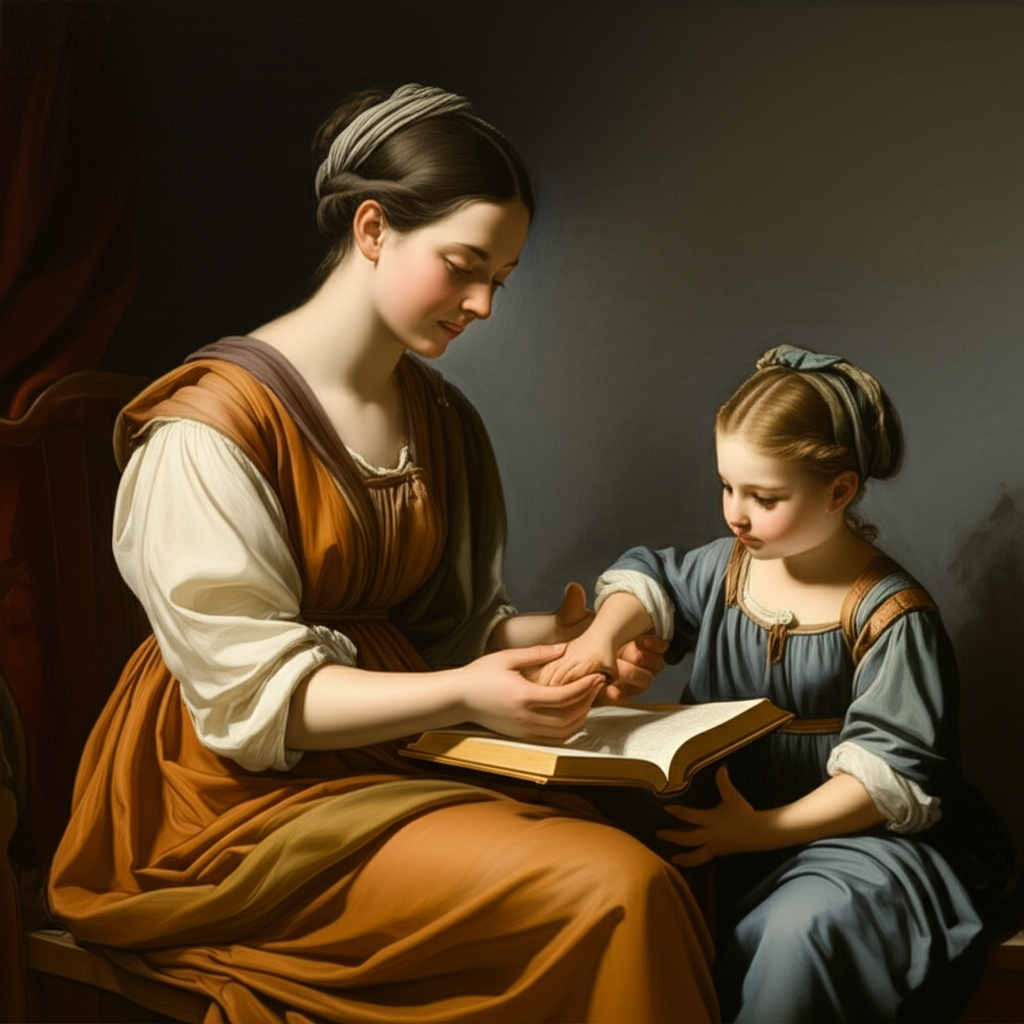
Children initially learn by imitation. They mimic the speech patterns, gestures, and reactions of their primary caregivers. Over time, these imitated actions, when consistently practiced and reinforced, transform into internalized habits. The family acts as the first school of education where these behaviors are not just observed but actively practiced and refined. The gentle correction, the encouraging word, the consistent expectation—these are the tools of this profound, lifelong education.
The Enduring Legacy: Shaping the Citizen and the Soul
The role of the family in the education of habit extends far beyond the individual's personal moral compass. Philosophers from Plato to Locke recognized that well-habituated individuals are the bedrock of a stable and flourishing society. A child who learns respect, responsibility, and self-control within the family is more likely to become a productive and virtuous citizen. Conversely, a lack of such fundamental education in habit can lead to societal challenges.
The Great Books consistently highlight that the cultivation of good habits is not merely about obedience, but about developing practical wisdom (phronesis) – the ability to discern the right course of action in complex situations. This wisdom is nurtured through repeated exposure to moral choices and the guidance provided by the family. The values instilled, the routines established, and the character traits forged in these early years form an enduring legacy, profoundly influencing an individual's trajectory throughout life.
Ultimately, the family is the foundational institution for the education of habit, laying the groundwork for personal integrity, social responsibility, and the pursuit of a virtuous life. Its role is irreplaceable, shaping not just what we do, but fundamentally, who we are.
📹 Related Video: ARISTOTLE ON: The Nicomachean Ethics
Video by: The School of Life
💡 Want different videos? Search YouTube for: ""Aristotle Nicomachean Ethics Virtue Ethics Habits""
📹 Related Video: PLATO ON: The Allegory of the Cave
Video by: The School of Life
💡 Want different videos? Search YouTube for: ""Plato's Republic Education and Character Formation""