

The Enduring Crucible: The Role of Family in Civic Education
The family, often considered the bedrock of society, plays an indispensable and often underestimated role in shaping the citizen. Before formal schooling or engagement with the broader political sphere, the home serves as the primary academy where individuals first encounter the principles of custom and convention, moral responsibility, and the fundamental tenets of community. This pillar page explores how the intimate dynamics of family life lay the groundwork for civic virtue, fostering the habits and dispositions essential for a flourishing public life. It is within the family that the earliest forms of education take root, preparing us not just for personal success, but for responsible participation in the larger human enterprise.
The Family: Humanity's First Polis
Long before the grand pronouncements of state or the structured curricula of schools, the family unit served as humanity's initial laboratory for social interaction and moral development. Aristotle, in his Politics, famously posits that the household (oikos) is the foundational unit from which the village, and ultimately the city-state (polis), emerge. It is here that individuals first learn the rudiments of cooperation, responsibility, and the delicate balance between individual needs and collective welfare.
Within this primal sphere, children are initiated into the world of custom and convention. They learn:
- Shared Resources: The give-and-take of communal living, sharing food, space, and attention.
- Authority and Obedience: Understanding hierarchies and the necessity of rules for order.
- Reciprocity: The idea of mutual obligation and support.
- Conflict Resolution: Navigating disagreements and finding common ground.
These are not abstract lessons but lived experiences, ingrained through daily interaction. The education received in the family is therefore not merely intellectual, but profoundly existential, shaping the very character of the nascent citizen.
Laying the Moral Foundation: Character and Virtue
The most profound contribution of the family to civic education lies in its capacity to instill fundamental moral virtues. Plato, in his Republic, stresses the paramount importance of early education and the stories children are told, arguing that these narratives shape their souls and their understanding of justice. Similarly, Aristotle emphasizes the role of habituation in developing virtue; one becomes just by performing just acts, courageous by performing courageous acts. The family is where these habits are first cultivated.
Consider the following table illustrating how family interactions foster civic virtues:
| Family Interaction | Corresponding Civic Virtue | Description |
|---|---|---|
| Sharing chores and responsibilities | Responsibility | Learning accountability for one's actions and contributions to the collective. |
| Listening to parents and elders | Respect for Authority/Wisdom | Understanding legitimate authority and valuing experience. |
| Resolving sibling disputes | Fairness & Compromise | Developing empathy, negotiation skills, and a sense of justice. |
| Celebrating traditions | Community & Identity | Fostering a sense of belonging and appreciation for shared heritage. |
| Caring for sick family members | Compassion & Altruism | Cultivating empathy and the willingness to act for the well-being of others. |
This informal education in virtue is critical. Without a foundational understanding of fairness, compassion, and responsibility, the more complex lessons of civics and governance taught in schools would lack fertile ground. The family provides the emotional and ethical framework within which a true citizen can emerge.
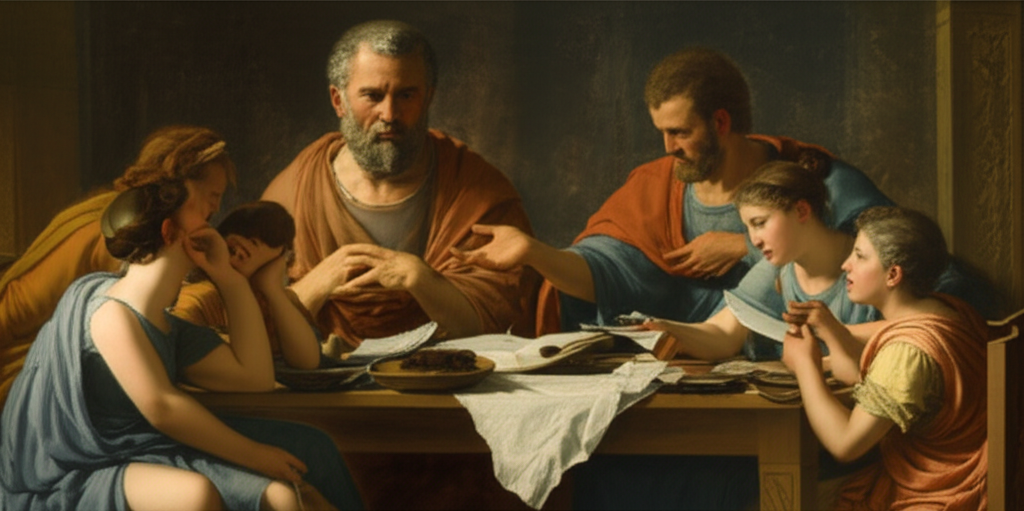
Transmitting Culture: Language, Narrative, and Identity
Beyond moral instruction, the family is the primary conduit for cultural transmission. Language itself, the very tool of thought and communication, is first mastered within the family home. Through stories, rituals, and shared experiences, children learn the customs and conventions of their particular culture, gaining a sense of their place within a larger historical and social narrative.
Think of the narratives passed down through generations – tales of ancestors, national heroes, or even simple family anecdotes. These stories, whether grand or humble, impart values, illustrate consequences, and provide models of behavior. They shape a child's understanding of their identity, their community, and their nation. This process is a subtle yet powerful form of civic education, grounding individuals in a shared past and preparing them for a collective future. John Locke, in Some Thoughts Concerning Education, speaks to the importance of early impressions and the environment in shaping the child's mind, a task primarily undertaken by the family.
The Interplay of Family, School, and State
While the family serves as the initial crucible for civic formation, it does not operate in a vacuum. Its efforts are ideally complemented by the formal institutions of school and the broader directives of the state.
- Family's Role: Instills foundational virtues, customs, and personal responsibility.
- School's Role: Provides formal education in civics, history, government structures, and critical thinking; broadens social horizons.
- State's Role: Establishes laws, maintains order, and defines the rights and duties of a citizen, often supporting family and school through policies.
Ideally, these three pillars work in concert. The values learned at home provide a stable base for the more abstract concepts taught at school, which in turn prepare the individual to engage with the demands and opportunities of the state. When these institutions are aligned, the result is a well-rounded and engaged citizen. However, when there are disconnects – conflicting values, inadequate resources, or a breakdown in communication – the development of civic virtue can be significantly hampered.
Modern Challenges and Enduring Importance
In our increasingly complex and globalized world, the family unit faces numerous pressures. Economic shifts, technological advancements, and evolving social structures can challenge the traditional roles and capacities of families in civic education. Yet, the fundamental need for human connection, moral guidance, and the transmission of values remains undiminished.
Reaffirming the family's role in civic education is not about romanticizing a past ideal, but about recognizing an enduring truth articulated by philosophers from antiquity to modernity: the health of the polis is intrinsically linked to the health of its constituent households. A society of responsible, empathetic, and engaged citizens is built one family at a time, through the patient and persistent efforts of parents and guardians who impart the lessons of custom and convention, virtue, and communal living.
📹 Related Video: ARISTOTLE ON: The Nicomachean Ethics
Video by: The School of Life
💡 Want different videos? Search YouTube for: ""Aristotle Politics Family State Education""
📹 Related Video: PLATO ON: The Allegory of the Cave
Video by: The School of Life
💡 Want different videos? Search YouTube for: ""Plato Republic Civic Virtue Early Education""
In conclusion, the family is not merely a private institution; it is a vital public good, the first and arguably most influential school for shaping the kind of citizen capable of sustaining a free and just society. Its role in civic education is irreplaceable, serving as the primary forge where custom and convention are internalized, virtues are cultivated, and the very spirit of responsible citizenship is first awakened.