

The Sculptor of Self: How Experience Forges the Chains (and Keys) of Habit
Our lives are largely a tapestry woven from habits, both conscious and unconscious. This article explores the profound philosophical relationship between experience and the formation of habit, arguing that our repeated interactions with the world fundamentally reshape our mind, ultimately dictating much of our behavior, character, and even the fabric of custom and convention in society. Drawing on insights from the Great Books, we'll see how experience isn't just something we have, but something that makes us.
The Mind as a Canvas: Where Experience Paints Its Patterns
Imagine the human mind not as a pre-programmed machine, but as a dynamic canvas, constantly being painted upon by the brushstrokes of experience. Early philosophers grappled with this very notion. John Locke, in his An Essay Concerning Human Understanding, famously posited the mind as a tabula rasa—a blank slate—at birth, upon which all knowledge and, by extension, all patterns of thought and action, are inscribed through sensory experience.
- Sensory Input: Every sight, sound, touch, taste, and smell contributes to our experiential data, forming the raw material for our understanding of the world.
- Repeated Action: Beyond mere sensation, our actions themselves become experiences. Each time we perform a task, interact with others, or even entertain a thought, we reinforce a neural pathway, making the next instance slightly easier, slightly more automatic.
This constant influx of experience isn't just about accumulating facts; it's about shaping the very architecture of our inner world. The mind learns to anticipate, to connect, and eventually, to automate. This automation is the very essence of habit.
From Deliberate Action to Automatic Response: The Mechanics of Habit Formation
How does a conscious decision transform into an unconscious habit? It’s a fascinating journey from effortful cognition to effortless execution. Initially, any new action requires significant mental resources: attention, deliberation, problem-solving. Think about learning to ride a bicycle or play a musical instrument; every movement is slow, deliberate, and often clumsy.
However, with each repetition, something remarkable happens. The brain, in its incredible efficiency, begins to streamline the process. The neural pathways associated with that action become stronger, more direct. What was once a series of conscious steps becomes a fluid, integrated sequence.
Stages of Habit Formation:
- Conscious Effort: The initial phase where the action requires full attention and deliberate thought.
- Repetition and Reinforcement: Repeated performance of the action, often with a consistent cue and reward.
- Automation: The action becomes increasingly automatic, requiring less conscious thought and effort.
- Integration: The habit becomes deeply ingrained, often triggered by specific environmental cues, and feels like a natural part of one's routine.
This process highlights how experience—specifically, repeated experience—is the fundamental engine driving the formation of habit. It’s not just about doing something once, but doing it again and again until it becomes "second nature."
Habit as Second Nature: Aristotle's Virtue Ethics
Perhaps no philosopher articulated the role of experience in forming habit more profoundly than Aristotle. In his Nicomachean Ethics, he argues that virtue itself is a habit. It’s not enough to know what is good; one must do what is good, repeatedly, until it becomes ingrained in one's character.
Aristotle's concept of ethos (character) is directly linked to habituation. He believed that we become just by performing just acts, temperate by performing temperate acts, and courageous by performing courageous acts. Virtue, for Aristotle, is a disposition, a settled state of character, formed through repeated actions.
- “We are what we repeatedly do. Excellence, then, is not an act, but a habit.”
This quote, often attributed to Aristotle, beautifully encapsulates the idea that our moral character is not an inherent trait but an acquired one, sculpted by our choices and experiences over time. The mind is not just a receptor of habits, but an active participant in their cultivation, especially when guided by reason and a pursuit of the good.
The Societal Loom: Custom and Convention as Collective Habits
The influence of experience and habit extends far beyond the individual. Societies themselves are shaped by collective habits, which we often refer to as custom and convention. These are the shared ways of doing things, the unspoken rules, and the established norms that govern group behavior.
Consider the Great Books and their discussions of the polis (city-state). Plato, in his Republic, explores how the education and environment of citizens shape their character and, by extension, the character of the state. These societal habits—from legal systems to etiquette, from religious practices to economic structures—are the cumulative result of generations of shared experience.
- Customs: Long-standing practices or usages of a group of people, often passed down through generations. They arise from repeated collective experiences that prove beneficial or simply become entrenched.
- Conventions: Agreed-upon standards or rules, often explicit but sometimes implicit, that guide social interactions. They emerge from shared understanding and repeated adherence within a community.
For instance, the convention of driving on a particular side of the road, the custom of celebrating certain holidays, or the widely accepted forms of address—these are all habits on a grand scale. They simplify social interaction, provide stability, and reflect the collective mind of a culture, all forged through shared experiences and their subsequent reinforcement.
Breaking and Making Habits: The Conscious Mind's Agency
While experience is a powerful force in forming habit, we are not entirely passive recipients. The human mind possesses the unique capacity for self-reflection and conscious choice, allowing us to not only cultivate desirable habits but also to critically examine and break undesirable ones.
This involves a conscious intervention in the natural process of habituation. It requires:
- Awareness: Recognizing the cues and rewards associated with a habit.
- Deliberation: Reflecting on the habit's impact and choosing whether to reinforce or alter it.
- Substitution: Replacing an old habit with a new, more beneficial one through conscious effort and repeated practice.
This agency underscores a fundamental philosophical tension: are we products of our experiences, or are we the architects of our own character? The truth, as often is the case, lies in a dynamic interplay. Our experiences provide the raw material, but our conscious mind holds the potential to sculpt that material into a desired form.
Conclusion: The Enduring Legacy of Experience
The journey from fleeting experience to ingrained habit is a testament to the profound adaptability of the human mind. From the individual's morning routine to the grand tapestry of custom and convention that binds societies, habits are the invisible architects of our lives. They are not merely mechanical repetitions but deeply philosophical phenomena, revealing how our interactions with the world literally make us.
By understanding this intricate relationship, as explored by the great thinkers of the Western world, we gain not only insight into ourselves but also the power to deliberately shape our future selves and, perhaps, even contribute to the reshaping of our collective habits for the better. The sculptor is not just the external world; it is also the thoughtful and reflective individual, wielding the chisel of conscious choice.
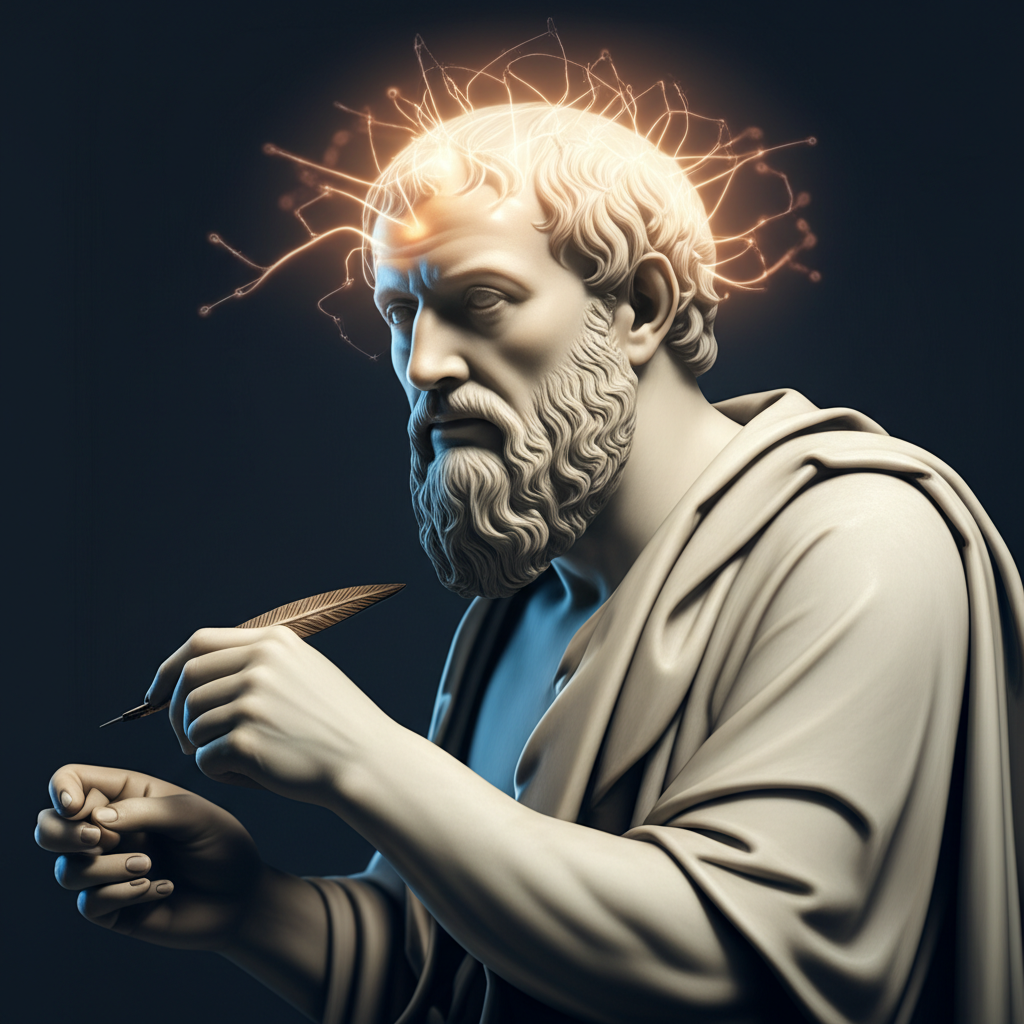
📹 Related Video: ARISTOTLE ON: The Nicomachean Ethics
Video by: The School of Life
💡 Want different videos? Search YouTube for: ""Aristotle Nicomachean Ethics habit virtue" and "John Locke tabula rasa experience mind""