

The Forge of Being: Experience and the Architecture of Habit
The very fabric of who we are, from our simplest routines to our deepest moral inclinations, is meticulously woven by the threads of experience. Far from being mere passive recipients of external stimuli, our minds actively engage with, interpret, and internalize these encounters, solidifying them into the powerful, often unconscious, patterns we call habits. This article explores the profound and intricate relationship between our lived experience and the formation of habit, examining how repeated actions, thoughts, and interactions shape not only individual character but also the broader landscape of custom and convention that defines societies.
The Iterative Nature of Experience: Building Blocks of Being
At the heart of habit formation lies experience. We are born into a world of sensory input, a tabula rasa as John Locke might describe it, where every sight, sound, touch, and interaction begins to etch impressions upon our minds. These initial, often chaotic, experiences gradually coalesce into recognizable patterns. Consider the simple act of learning to walk. It's a series of falls, wobbles, and tentative steps – each an experience that provides feedback, informing the next attempt.
- Sensory Input: Direct engagement with the environment.
- Cognitive Processing: The mind interprets and categorizes this input.
- Motor Response: The body reacts, leading to an outcome.
- Feedback Loop: The outcome informs subsequent actions, refining the process.
This continuous loop is the fundamental engine of habit. We learn not by abstract instruction alone, but by doing, by experiencing the consequences of our actions, and by adjusting accordingly.
From Repetition to Reflex: The Mechanics of Habit Formation
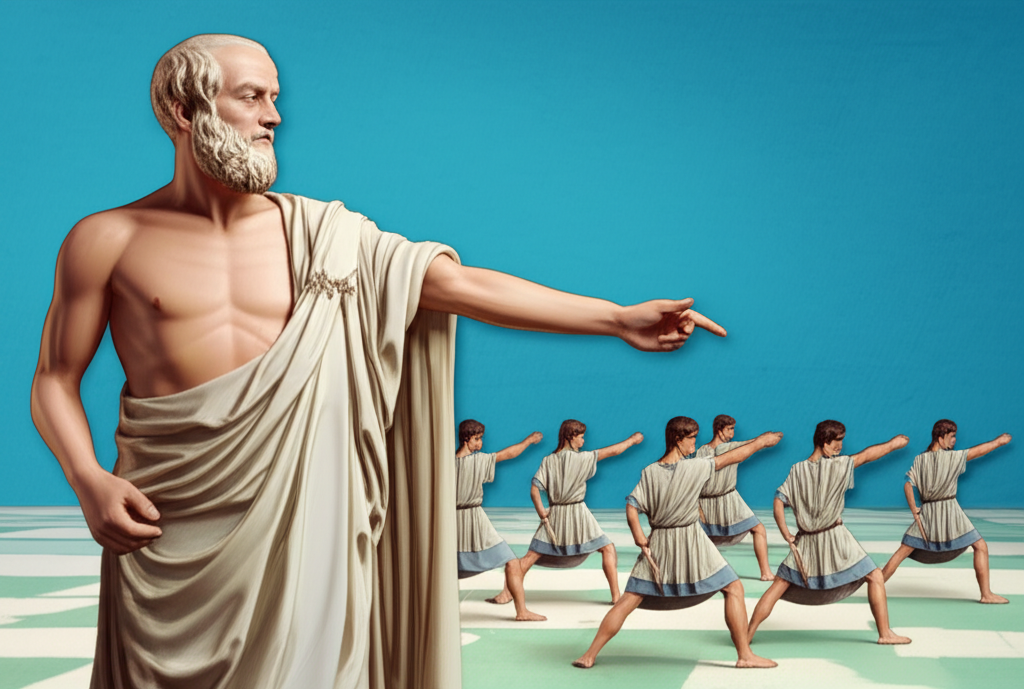
The transformation of a conscious act into an unconscious habit is a testament to the power of repetition. Aristotle, in his Nicomachean Ethics, eloquently articulated this principle, stating that "we become just by doing just acts, temperate by doing temperate acts, brave by doing brave acts." For Aristotle, virtue itself is a habit, a disposition formed through repeated action. It's not enough to know what is good; one must habitually perform good deeds.
| Stage of Habit Formation | Description | Philosophical Link |
|---|---|---|
| Initial Exposure | First encounter with an action or thought. | Locke's primary qualities, sensory data. |
| Conscious Repetition | Deliberate, effortful practice of the action. | Aristotle's emphasis on practice for virtue. |
| Automaticity | Action becomes less effortful, often performed without conscious thought. | Hume's idea of custom leading to belief and expectation. |
| Integration | The habit becomes part of one's character or routine, shaping behavior. | Plato's concept of habituated character. |
This process is deeply rooted in the plasticity of the mind. Each repetition strengthens neural pathways, making the execution of the habit more efficient and less demanding on conscious resources. This is why brushing our teeth or driving a familiar route can be done almost on autopilot, freeing our minds for other thoughts.
The Mind's Labyrinth: Processing and Internalizing Experience
The mind is not a mere receptacle; it's an active processor that filters, interprets, and consolidates experience into meaningful patterns. David Hume, in his A Treatise of Human Nature, argued that even our most fundamental beliefs, such as the principle of causality, stem from custom and habit. We observe constant conjunctions of events – one thing following another – and through repeated experience, our minds form a habit of expecting the effect to follow the cause. This expectation, born of experience, becomes the foundation of our understanding of the world.
The way our minds categorize and associate experiences is crucial. If an experience is consistently followed by a positive outcome, the likelihood of repeating the action increases. Conversely, negative outcomes tend to diminish the habit. This intricate dance between action, outcome, and mental association is what solidifies our behavioral patterns, making some actions feel natural and others repugnant.
The Social Tapestry: Custom, Convention, and Collective Habit
Individual habits do not exist in a vacuum. They are constantly interacting with, and often shaped by, the broader social environment. This is where custom and convention enter the picture. A society's customs are essentially collective habits – shared ways of behaving, thinking, and interacting that have been solidified over generations through repeated experience.
Plato, in The Republic, emphasized the importance of early education and the consistent exposure to certain forms and narratives in shaping the character of citizens. By instilling habits of virtue, discipline, and civic duty from a young age, a society ensures the perpetuation of its customs and conventions. These societal habits provide a framework for individual behavior, often guiding our actions even when we're not consciously aware of their influence.
Consider the convention of greeting someone with a handshake. It's a learned habit, reinforced by countless experiences of social interaction. Deviating from such a custom can feel awkward or even disrespectful, highlighting the powerful, often unspoken, rules that collective habits impose. Our minds are not only shaped by our personal history of experience but also by the shared history of our communities.
Conclusion: The Conscious Architecture of Self
The role of experience in forming habit is undeniable and deeply philosophical. From the earliest sensory inputs that build our understanding of the world to the complex moral actions that define our character, experience is the constant architect of our being. Our minds, through repetition and association, transform these raw encounters into the ingrained patterns that guide our lives.
Understanding this dynamic empowers us to become more deliberate in shaping our own habits. By consciously choosing our experiences, reflecting on their outcomes, and intentionally repeating actions that align with our values, we can sculpt not only our individual selves but also contribute to the evolution of positive customs and conventions within our societies. The forge of being is always active, and experience is its ceaseless fire.
YouTube Video Suggestions:
-
📹 Related Video: ARISTOTLE ON: The Nicomachean Ethics
Video by: The School of Life
💡 Want different videos? Search YouTube for: ""Aristotle Nicomachean Ethics Habit Virtue""
2. ## 📹 Related Video: KANT ON: What is Enlightenment?
Video by: The School of Life
💡 Want different videos? Search YouTube for: ""John Locke Empiricism Tabula Rasa Experience""