

The Passions of Persuasion: Emotion's Enduring Role in Political Opinion
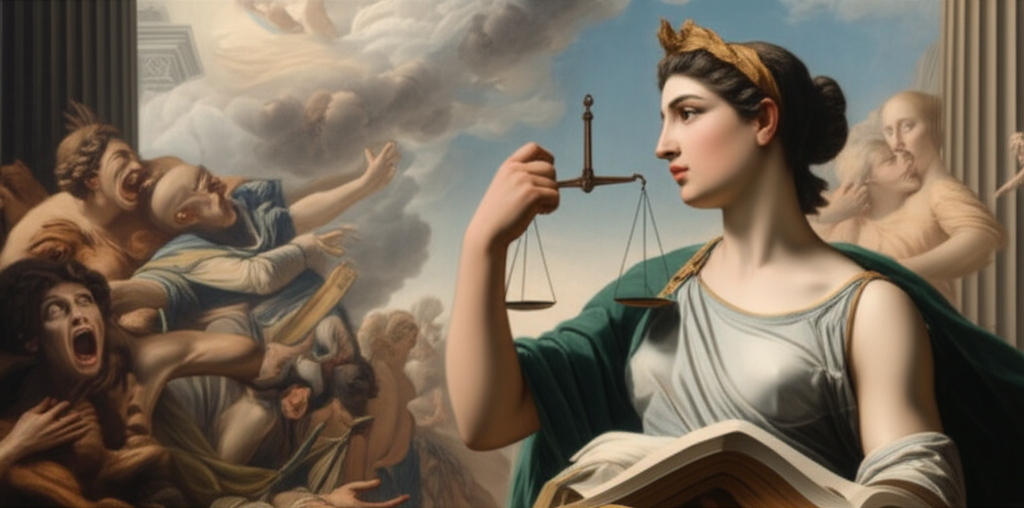
Political discourse often presumes a rational public, carefully weighing facts and policies to form reasoned opinions. However, this ideal overlooks a fundamental truth explored by philosophers for millennia: emotion is not merely a disruptive force but an intrinsic, often dominant, component in shaping political opinion. From the classical understanding of human nature to modern rhetoric, the capacity to appeal to, understand, and sometimes manipulate human passions remains central to political influence. This article delves into how emotions drive our political perspectives, how they are harnessed by leaders, and why recognizing their power is crucial for a discerning citizenry.
The Ancient Roots: Reason, Spirit, and the Political Man
The tension between reason and emotion is hardly a modern discovery. Philosophers within the Great Books of the Western World have grappled with the nature of the Man and his susceptibility to passions.
-
Plato's Tripartite Soul: In The Republic, Plato famously describes the soul as having three parts: the rational (reason), the spirited (thumos, associated with honor, anger, and courage), and the appetitive (desires for food, sex, wealth). For Plato, true justice and a well-ordered state depend on reason guiding the spirited and appetitive parts. When emotions, particularly the appetites, dominate, both the individual and the state fall into disorder. Political opinion, then, can be swayed by base desires if reason is not at the helm.
-
Aristotle and the Art of Rhetoric: Perhaps no philosopher articulated the role of emotion in political persuasion more thoroughly than Aristotle in his Rhetoric. He recognized that while logos (logical argument) and ethos (credibility of the speaker) are vital, pathos (appealing to the audience's emotions) is equally essential for effective persuasion. Aristotle meticulously categorized emotions like anger, pity, fear, and love, explaining how they are aroused and how they can influence judgment. He understood that a speaker must not only present facts but also put the audience in the right frame of mind to accept those facts. For Aristotle, the Man is a political animal, and his opinion is inextricably linked to his emotional state.
- Rhetoric, for Aristotle, was not inherently manipulative but a neutral tool that could be used for good or ill. Its mastery required understanding human psychology.
The Modern Turn: Passions, Power, and the State
The Renaissance and Enlightenment periods brought new perspectives, often emphasizing reason, but never fully dismissing the power of emotion in the political sphere.
-
Machiavelli's Pragmatism: Niccolò Machiavelli, in The Prince, offered a starkly realistic view of politics, advising rulers to understand the nature of Man – often driven by self-interest and fear – to maintain power. He argued that it is "much safer to be feared than loved," recognizing fear as a more reliable emotion for securing obedience and preventing rebellion. For Machiavelli, manipulating public opinion often meant playing on the populace's anxieties and desires for security.
-
Hobbes's State of Nature: Thomas Hobbes, in Leviathan, posited that in the state of nature, life is "solitary, poor, nasty, brutish, and short," driven by the primal emotions of fear and the desire for self-preservation. It is this profound fear that compels individuals to form a social contract, surrendering freedoms to an absolute sovereign in exchange for security. Here, a fundamental emotion directly dictates the very structure of political life and the formation of collective opinion regarding governance.
Emotion as a Cornerstone of Political Rhetoric
Today, the principles outlined by Aristotle remain profoundly relevant. Political rhetoric is a sophisticated art that masterfully employs emotional appeals to shape public opinion.
-
Targeting Core Emotions: Politicians and campaigns frequently target specific emotions to galvanize support or opposition.
- Fear: Warnings about economic collapse, national security threats, or social decay are potent drivers of opinion. Fear can lead to calls for strong leadership or drastic policy changes.
- Hope: Promises of a better future, economic prosperity, or social justice inspire optimism and motivate voters to support a particular vision.
- Anger/Resentment: Appeals to injustice, perceived grievances, or the failures of opponents can mobilize strong opposition and encourage a desire for change.
- Pride/Identity: National pride, group solidarity, or appeals to shared values can foster loyalty and a sense of common purpose.
-
Narrative and Empathy: Beyond direct appeals, political narratives are crafted to evoke empathy and identification. Stories of personal struggle, triumph, or injustice resonate deeply, making abstract policies feel tangible and emotionally charged. The Man in the audience sees himself, his family, or his community reflected in these narratives, influencing his political opinion far more than dry statistics might.
The Dual Nature of Emotional Appeals in Politics
While essential, the reliance on emotion in political discourse presents both opportunities and significant risks.
| Aspect | Benefits of Emotional Appeals | Risks of Emotional Appeals |
|---|---|---|
| Motivation | Can inspire action for positive change (e.g., social justice). | Can lead to impulsive, irrational decisions. |
| Engagement | Makes complex issues accessible and relatable to a broader public. | Can oversimplify nuanced problems, obscuring facts. |
| Solidarity | Fosters a sense of community, shared purpose, and collective identity. | Can lead to tribalism, division, and demonization of "the other." |
| Memory | Emotionally charged messages are more memorable and impactful. | Can be used for manipulation, propaganda, and demagoguery. |
| Values | Connects policies to deeply held moral and ethical values. | Can exploit prejudices and biases. |
Conclusion: Navigating the Emotional Landscape of Politics
The enduring insights from the Great Books of the Western World remind us that emotion is not a peripheral player but a central actor in the drama of political opinion. From Plato's tripartite soul to Aristotle's comprehensive analysis of pathos, and from Machiavelli's cynical pragmatism to Hobbes's fear-driven social contract, philosophers have consistently highlighted the deep connection between human passions and political behavior.
Understanding this dynamic is paramount for the contemporary Man navigating the complexities of modern politics. Recognizing how rhetoric targets our fears, hopes, and identities allows us to critically evaluate political messages, rather than being passively swayed. A truly informed citizenry strives not to eliminate emotion from politics – an impossible task – but to cultivate a discerning awareness of its role, ensuring that our collective opinion is guided by both reason and a conscious understanding of our own and others' passions.
YouTube Suggestions:
- "Aristotle Rhetoric Pathos Ethos Logos Explained"
- "Plato's Republic: The Soul and the City"
📹 Related Video: What is Philosophy?
Video by: The School of Life
💡 Want different videos? Search YouTube for: "The Role of Emotion in Political Opinion philosophy"