

The Unseen Current: Emotion as the Lifeblood of Poetry
Poetry, at its core, is far more than an arrangement of words on a page; it is a profound engagement with the human spirit, a conduit through which the deepest currents of experience flow. The role of emotion in poetry is not merely ornamental but foundational, acting as both the primary impetus for creation and the essential medium for its reception. It is the very force that animates verse, allowing it to transcend mere communication and instead resonate within the mind of the reader, forging a powerful, often ineffable, connection between the poet's inner world and our own. This article explores how emotion functions as the catalytic agent, the expressive instrument, and the interpretive key in the realm of poetic art.
Emotion as Catalyst: The Genesis of Poetic Expression
From the earliest epic chants to the most intricate modern verse, the impulse to create poetry often springs directly from an overwhelming emotional state. Whether it is love, sorrow, joy, awe, or righteous anger, these powerful sentiments compel the poet to seek expression beyond the confines of ordinary language. The mind grappling with intense feeling finds solace and purpose in the structured beauty of poetry.
Ancient thinkers, as explored in the Great Books of the Western World, recognized this fundamental connection. Plato, in his Ion, speaks of divine inspiration, suggesting that poets are not fully in their right mind when composing, but are rather vessels for a higher power, moved by an external emotion. While we might interpret this differently today, the underlying truth remains: a profound emotional experience often serves as the initial spark, the role of which is to ignite the creative process. It is the internal pressure of feeling that seeks external form, shaping raw experience into articulate beauty.
The Poetic Dialectic: Expressing and Evoking Emotion
Once kindled, emotion takes on a new role within the poem itself: it becomes both the subject matter and the very fabric through which the poem communicates. Poets employ a myriad of techniques to not only express their own feelings but also to evoke similar or complementary emotions in the reader. This is the poetic dialectic – a conversation between the poet's felt experience and the reader's imaginative engagement.
Consider the following mechanisms through which poetry wields emotion:
| Poetic Device | Primary Emotional Impact | Example |
|---|---|---|
| Imagery | Vivid sensory details creating a mental picture, invoking specific feelings (e.g., warmth, fear, beauty). | The red wheelbarrow / glazed with rain / water / beside the white / chickens. (William Carlos Williams) Evokes simplicity, stillness, perhaps a quiet appreciation. |
| Metaphor/Simile | Drawing parallels between disparate things, enriching understanding and emotional resonance. | My love is like a red, red rose / That's newly sprung in June. (Robert Burns) Conveys freshness, beauty, passion. |
| Rhythm and Meter | The flow and beat of the lines, influencing mood and energy. | A fast, irregular rhythm might suggest excitement or anxiety; a slow, regular one, contemplation or sorrow. |
| Diction (Word Choice) | Specific words chosen for their connotations and emotional weight. | Comparing "house" to "home" – one is structural, the other carries warmth, family, belonging. |
| Sound Devices (Alliteration, Assonance, etc.) | The musicality of language, creating auditory textures that can soothe, disturb, or emphasize. | The silent sea sobs softly. (Alliteration of 's' can create a hushed, melancholic tone). |
Through the skillful manipulation of these elements, the poet constructs an emotional landscape, inviting the reader to journey through its terrain.
The Reader's Resonance: Emotion and the Mind's Reception
The true power of poetry lies not just in its creation or its inherent structure, but in its capacity to resonate within the reader's mind. When we read a poem, we engage in an act of imaginative empathy, allowing the poet's emotion to stir our own. Aristotle, in his Poetics, spoke of catharsis – the purging of emotions like pity and fear through tragic drama. This concept extends powerfully to poetry, where the reader experiences a release or clarification of their own feelings by encountering them artfully expressed.
The mind processes poetic language not merely logically, but affectively. A well-crafted poem can bypass intellectual barriers, speaking directly to our subconscious, activating memories, associations, and dormant feelings. This deep engagement is what makes poetry such a potent tool for self-discovery and understanding. It allows us to feel less alone in our experiences, finding universal truths mirrored in another's specific emotion.
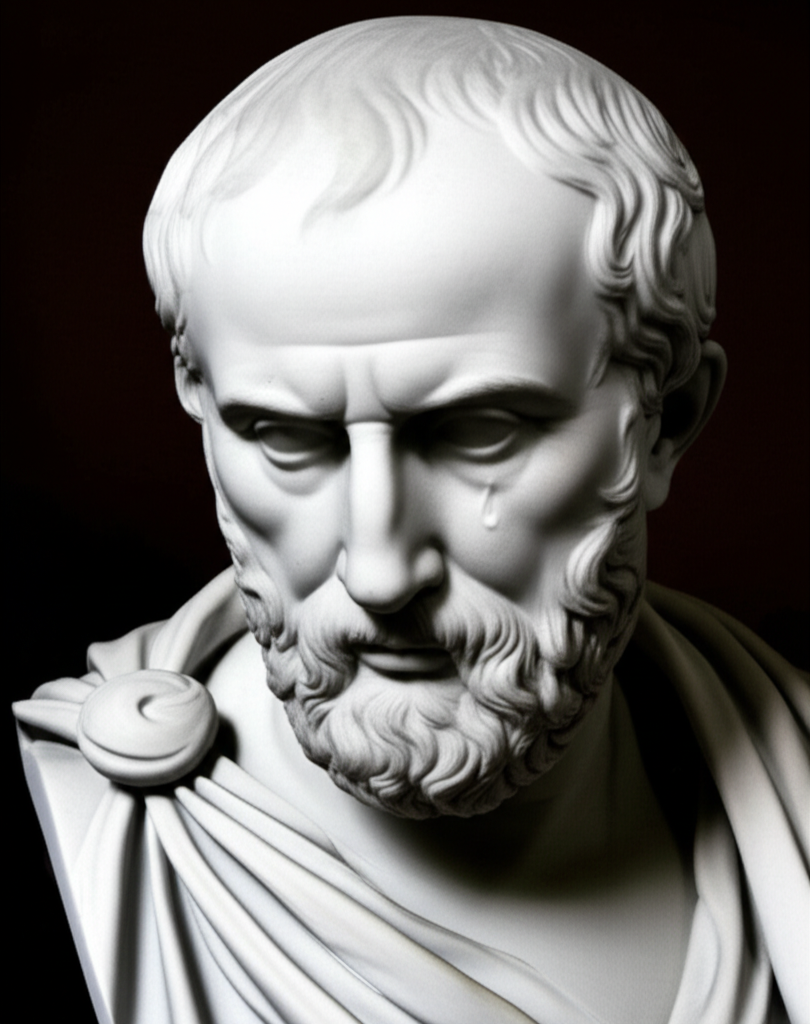
Beyond Sentiment: The Philosophical Role of Emotion in Poetry
The role of emotion in poetry extends beyond mere sentimentality; it holds significant philosophical weight. Poetry, through its emotional core, becomes a means of exploring fundamental questions of existence, morality, and human nature. It offers a unique lens through which to examine what it means to live, to love, to suffer, and to hope.
By presenting emotion in a distilled and artful form, poetry encourages introspection and critical reflection. It challenges our perceptions, expands our capacity for empathy, and helps us to articulate experiences that might otherwise remain inchoate. In this sense, poetry is not just an art form, but a philosophical endeavor, using the raw material of human feeling to construct meaning and understanding. It acts as a mirror, reflecting the complexities of the mind and heart, and as a lamp, illuminating paths to deeper insight. The Great Books consistently remind us that the pursuit of truth and wisdom often involves confronting our deepest emotions and understanding their place in the human condition.
Conclusion
The role of emotion in poetry is multifaceted and indispensable. It is the initial spark that ignites creation, the nuanced language that shapes expression, and the resonant chord that vibrates within the reader's mind. Far from being a mere embellishment, emotion is the very essence that gives poetry its enduring power, allowing it to connect disparate souls across time and space. Through its careful cultivation and articulation, poetry continues its vital role in helping us understand the intricate landscape of our inner lives and the shared humanity that binds us all.
YouTube Video Suggestions:
-
📹 Related Video: ARISTOTLE ON: The Nicomachean Ethics
Video by: The School of Life
💡 Want different videos? Search YouTube for: "Aristotle Poetics Catharsis Explained"
2. ## 📹 Related Video: What is Philosophy?
Video by: The School of Life
💡 Want different videos? Search YouTube for: "Philosophy of Emotion and Art"