

Our experience of beauty, whether in a breathtaking landscape, a profound piece of art, or a simple melody, is rarely a purely intellectual exercise. Instead, it is deeply, inextricably interwoven with our emotions. This article explores how our feelings are not mere bystanders to aesthetic judgment but are, in fact, fundamental to how we perceive, understand, and value what we deem beautiful. From ancient philosophical inquiries into the nature of the sublime to modern interpretations of artistic impact, the human heart has always been a primary sense organ for discerning beauty.
The Heart of Aesthetic Experience: Emotion as the Unseen Architect of Beauty
The perception of beauty is a profoundly human phenomenon, often described as a universal language yet experienced with intense personal resonance. At the core of this experience lies emotion. It is the immediate, visceral response that transforms mere observation into a meaningful encounter. Without emotion, beauty would remain an inert concept, devoid of the power to move, inspire, or challenge us. This article delves into the indispensable role emotion plays in shaping our aesthetic judgments and enhancing our appreciation of art and the world around us.
Beyond Intellect: The Sense of Beauty
For centuries, philosophers have grappled with the nature of beauty. From Plato's transcendent Forms, which evoke a longing for the ideal, to Aristotle's emphasis on proportion and harmony, which nonetheless elicit pleasure, the undercurrent of emotional response has always been present. Later, thinkers like David Hume highlighted the role of sentiment in aesthetic judgment, arguing that beauty resides not in the object itself but in the emotion it excites in the beholder. Immanuel Kant, while stressing "disinterested pleasure," still acknowledged a feeling of delight that accompanies the apprehension of the beautiful, a feeling distinct from mere sensory gratification.
What these diverse perspectives underscore is that our engagement with beauty is not solely a rational appraisal. It's a holistic experience that engages our entire being, particularly our capacity for emotion. When we encounter something beautiful, we don't just think it's beautiful; we feel it. This feeling is often immediate, bypassing conscious deliberation, and it manifests in a myriad of ways: a gasp of awe, a pang of longing, a serene sense of peace, or even a melancholic reflection. This immediate, felt quality is what makes beauty so potent and personal.
Art as an Emotional Conduit
Art, in all its forms, stands as a testament to the profound connection between emotion and beauty. Artists are masters of evoking emotion, using color, form, sound, and narrative to bypass the intellect and speak directly to the soul. A painting might stir a sense of tranquility, a symphony might evoke sorrow or triumph, and a poem might ignite a spark of wonder.
Consider the role of catharsis in Greek tragedy, as discussed by Aristotle in the Poetics. The experience of pity and fear, far from being merely unpleasant, leads to an emotional cleansing, a deep and profoundly beautiful resolution. This demonstrates that aesthetic pleasure isn't limited to 'positive' emotions; the profound resonance of tragedy, the unsettling power of the grotesque, or the poignant sadness of a requiem can all contribute to a rich aesthetic experience.
Table: Emotional Responses to Art and Beauty
| Emotional Category | Description | Examples in Art/Beauty |
|---|---|---|
| Awe/Wonder | Overwhelmed by grandeur or majesty. | Grand landscapes, sublime architecture, cosmic imagery |
| Joy/Delight | Pure pleasure, upliftment, contentment. | Vibrant paintings, uplifting music, idyllic scenes |
| Melancholy/Sorrow | Poignant sadness, reflective grief. | Tragic narratives, elegiac music, somber portraits |
| Serenity/Peace | Calmness, tranquility, inner harmony. | Minimalist art, natural vistas, meditative music |
| Admiration/Inspiration | Respect for skill, motivation to emulate. | Masterpieces, heroic sculptures, profound literature |
| Discomfort/Unease | Challenging conventional beauty, provoking thought. | Avant-garde art, unsettling narratives, abstract forms |
The Spectrum of Emotional Engagement with Beauty
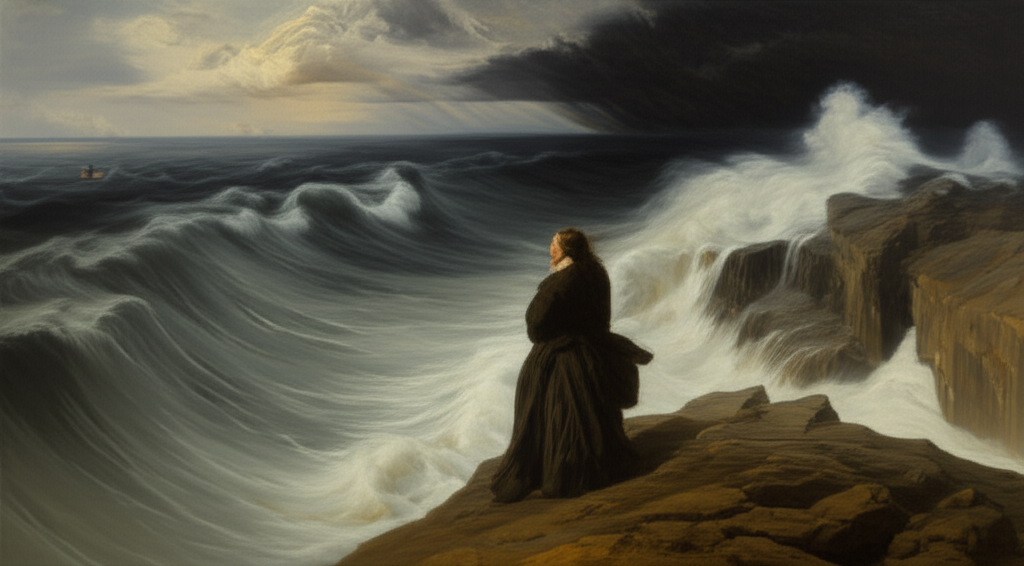
The idea that beauty must always evoke pleasant emotions is a narrow one. While joy and delight are common responses, the true breadth of aesthetic experience encompasses a far wider emotional palette. The "sublime," a concept explored by Edmund Burke and Kant, describes an aesthetic quality that evokes a mixture of awe, terror, and wonder, often in the face of immense power or scale. A stormy sea, a towering mountain, or a vast, star-filled sky can be profoundly beautiful precisely because they stir a sense of our own smallness and vulnerability, alongside a feeling of grandeur.
This demonstrates that emotions like fear, sadness, or even discomfort are not necessarily antithetical to beauty. Instead, they can enrich our aesthetic understanding, prompting deeper reflection and a more complex engagement with the object or art in question. The beauty of a sorrowful piece of music lies in its ability to articulate and resonate with our own experiences of grief, offering a form of emotional catharsis and connection.
Subjectivity, Universality, and the Emotional Core
The debate between objective and subjective beauty often hinges on the role of emotion. If beauty is purely in the eye of the beholder, influenced by individual feelings, how can we account for widespread agreement on certain aesthetic qualities? Conversely, if beauty is an inherent property of an object, why do our emotional responses vary so widely?
The Great Books tradition, while diverse, often points to a synthesis. While personal emotion undeniably shapes individual taste, there are also shared human experiences and universal structures of perception that lead to common emotional responses. The human sense for harmony, balance, and narrative coherence, for instance, often elicits positive emotions across cultures. Thus, emotion serves as both a personal lens and a unifying bridge in our appreciation of beauty, connecting us through shared human feeling while allowing for unique individual experiences.
Conclusion: The Indispensable Heartbeat of Beauty
In conclusion, the role of emotion in aesthetics is not merely supplementary; it is foundational. Beauty is not just seen; it is felt. Our emotions are the primary instruments through which we truly apprehend, appreciate, and are transformed by art and the beautiful elements of our world. From the immediate sense of delight to the profound stirrings of awe, melancholy, or wonder, emotion provides the vibrant, living heartbeat of our aesthetic experience. To understand beauty is to understand the intricate dance between the object, our senses, and the powerful emotions it ignites within us.
📹 Related Video: KANT ON: What is Enlightenment?
Video by: The School of Life
💡 Want different videos? Search YouTube for: ""Aesthetics Philosophy Emotion" or "Beauty and the Sublime Kant Hume""