

In the grand tapestry of human civilization, few threads are as vital and enduring as the Role of Education in Progress. This article explores how education, far from being a mere transmission of facts, serves as the fundamental engine driving individual enlightenment, societal advancement, and the very evolution of human thought. Drawing insights from the Great Books of the Western World, we will examine how philosophers across millennia have understood education as the crucible in which raw potential is forged into informed action, critical thinking, and a deeper understanding of our place in the cosmos, ultimately propelling humanity towards ever-new forms of Progress.
The Unfolding Mind: Education as the Catalyst for Progress
Education is not simply the accumulation of facts; it is the deliberate cultivation of the mind, character, and spirit. It is the process by which individuals come to understand themselves, their world, and their capacity to shape both. This transformative journey is inextricably linked to Progress, which we define not solely as technological advancement, but as the continuous improvement in human understanding, moral reasoning, social justice, and the overall quality of life. From ancient academies to modern universities, the pursuit of Knowledge through education has consistently been the bedrock upon which all meaningful progress is built, challenging existing paradigms and fostering innovative solutions.
The Socratic Imperative: Education as Self-Discovery
Ancient Greek thought, a cornerstone of the Great Books, offers profound insights into the foundational role of education. For figures like Plato, education was less about imparting information and more about guiding the soul towards truth. In his seminal work, The Republic, Plato introduces the concept of paideia, a holistic system of education designed to cultivate ideal citizens. His famous Allegory of the Cave vividly illustrates this:
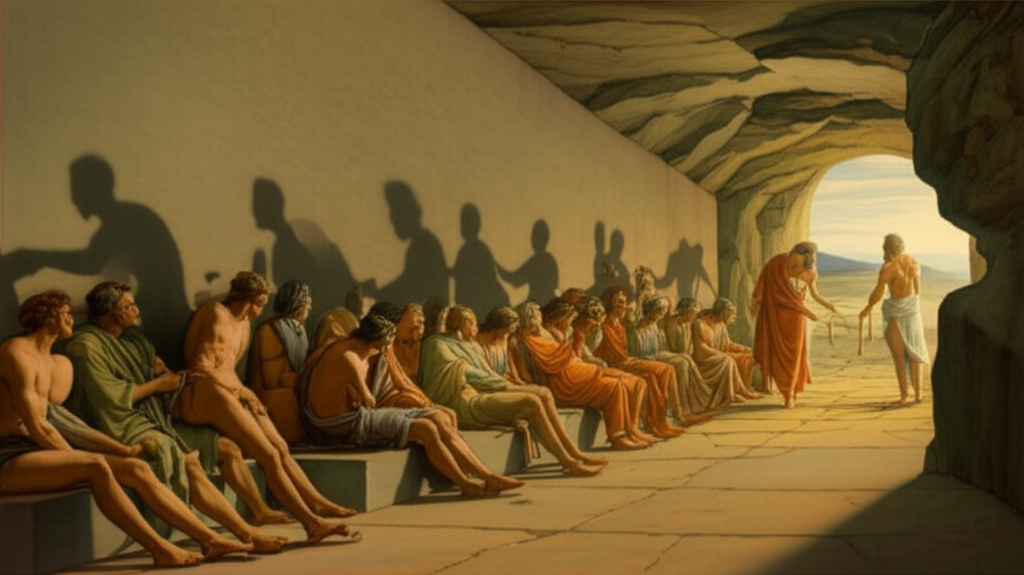
Plato argued that true Knowledge is not acquired passively but actively remembered or discovered by turning the soul towards enlightenment. For the philosopher-kings, education was paramount, equipping them with the wisdom and virtue necessary to lead the State justly. This emphasis on critical inquiry and the pursuit of fundamental truths remains a timeless aspiration for educational systems today.
Shaping the Citizen: Education and the State
Aristotle, another giant of ancient philosophy, expanded upon the political dimension of education. In his Politics, he asserts that "education should be regulated by law and be an affair of the State." For Aristotle, the purpose of education was to cultivate virtuous citizens capable of participating effectively in the polis. This meant instilling not only intellectual virtues but also moral character, practical wisdom (phronesis), and a deep understanding of justice.
Key Aims of Aristotelian Education for the State:
- Fostering Civic Virtue: Ensuring citizens understand and uphold the laws and customs of the community.
- Promoting Social Cohesion: Creating a shared cultural and moral framework.
- Developing Practical Wisdom: Equipping individuals to make sound judgments in public and private life.
- Ensuring Political Stability: A well-educated populace is less prone to radicalism and more capable of self-governance.
This perspective highlights the direct link between a robust educational system and the health and Progress of the collective, underscoring the State's enduring responsibility in its provision.
The Enlightenment's Promise: Knowledge as Liberation
The Enlightenment, a period richly documented in the Great Books, marked a pivotal shift in the understanding of education. Thinkers like John Locke and Immanuel Kant championed the power of individual reason and empirical observation. Locke's concept of tabula rasa (blank slate) in An Essay Concerning Human Understanding suggested that the mind is shaped by experience, placing immense importance on the quality and content of education. It implied that through proper instruction, individuals could be molded into rational, autonomous beings.
Kant, in his essay What is Enlightenment?, famously declared, "Sapere aude!"—"Dare to know!" He saw enlightenment as humanity's emergence from self-imposed immaturity, a process driven by the courageous use of one's own reason without guidance from another. This intellectual liberation, fueled by the widespread dissemination of Knowledge and critical thinking, was seen as the ultimate engine for human Progress. Education, in this view, was not merely about civic duty but about individual emancipation and the realization of human potential.
Education in the Modern Age: Navigating Progress
Today, the role of education in driving Progress is more multifaceted than ever. From scientific breakthroughs that revolutionize medicine and technology to the fostering of empathy and global understanding, education remains the primary tool for navigating complex challenges. It equips us with:
- Critical Thinking Skills: To discern truth from falsehood in an age of information overload.
- Innovation and Creativity: To solve new problems and adapt to rapidly changing environments.
- Ethical Reasoning: To ensure that technological and scientific advancements are guided by moral principles.
- Global Citizenship: To understand and address interconnected global issues.
The continuous evolution of educational methodologies, from traditional pedagogy to digital learning, reflects an ongoing commitment to harnessing Knowledge for the betterment of humanity. The State, alongside private institutions, continues to grapple with how best to structure and fund education to meet these evolving demands, ensuring equitable access and fostering the intellectual capital necessary for sustained Progress.
Ultimately, the insights gleaned from the Great Books of the Western World consistently affirm that education is not merely a means to an end, but an end in itself—the cultivation of a fully realized human being. It is the enduring legacy of our intellectual heritage and the most potent force we possess for shaping a future defined by Progress, enlightenment, and a deeper understanding of what it means to be human.
YouTube Video Suggestions:
-
📹 Related Video: PLATO ON: The Allegory of the Cave
Video by: The School of Life
💡 Want different videos? Search YouTube for: "Plato's Allegory of the Cave explained philosophy"
2. ## 📹 Related Video: What is Philosophy?
Video by: The School of Life
💡 Want different videos? Search YouTube for: "History of Western Philosophy Education"