

The Indispensable Link: Unpacking the Role of Education in Liberty
Summary: The pursuit and preservation of liberty, both individual and societal, are inextricably tied to the quality and accessibility of education. Far from being a mere luxury, education stands as a fundamental prerequisite for self-governance, critical thought, and the informed participation essential to a truly free society. This article explores the profound role of education in cultivating and safeguarding liberty, examining philosophical perspectives on how an enlightened populace forms the bedrock of a just and autonomous state.
The Foundational Pillars of Freedom: Why Education Matters
True liberty transcends the simple absence of external constraint; it encompasses the capacity for informed choice, moral reasoning, and active engagement in the shaping of one's own destiny and community. Without education, individuals remain susceptible to manipulation, unable to discern truth from falsehood, or to articulate their interests effectively. This intellectual vulnerability is a profound impediment to genuine freedom.
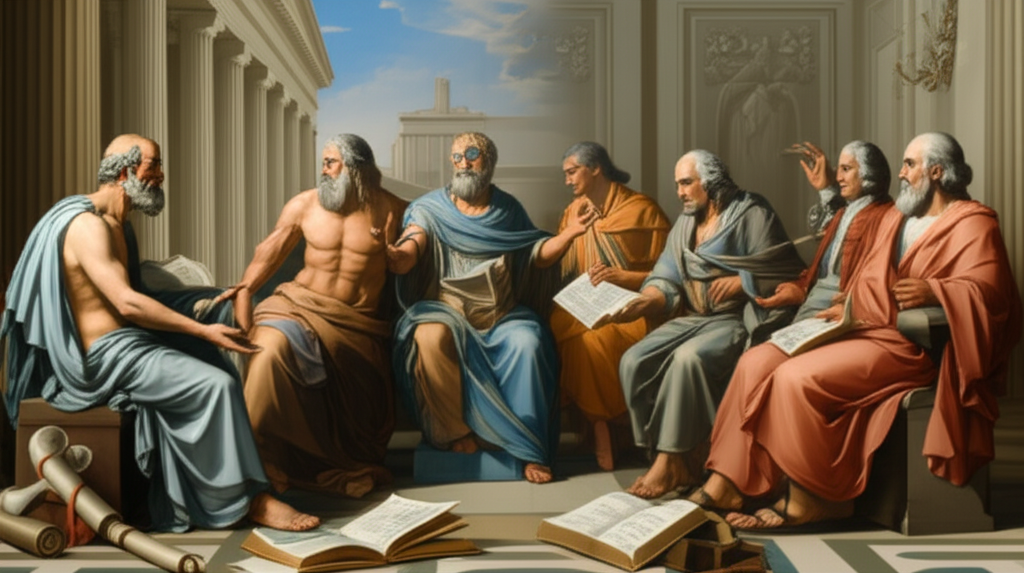
Throughout the annals of Western thought, as chronicled in the Great Books of the Western World, philosophers have consistently grappled with the intricate relationship between knowledge and freedom. From ancient Athens to the Enlightenment salons, the consensus has been clear: an ignorant populace cannot sustain liberty.
Historical Perspectives: Education as the Engine of Emancipation
The concept of education's role in fostering liberty has evolved, yet its core importance has remained constant.
Ancient Foundations: Virtue and the Polis
- Plato's Republic: Plato, in his seminal work, envisioned an educational system meticulously designed to cultivate philosopher-kings capable of leading the state justly. For the citizens, education was to instill civic virtue, ensuring a harmonious and stable society where each individual understood their role and contributed to the collective good. While his system was highly structured and hierarchical, the underlying principle was that a well-ordered state required well-educated citizens, even if their liberty was conceived within strict societal bounds.
- Aristotle's Politics: Aristotle similarly stressed the importance of public education for citizenship. He argued that the state has a responsibility to educate its youth, not merely for practical skills, but to develop moral character and intellectual virtues necessary for participation in the polis. For Aristotle, a citizen's liberty was intrinsically linked to their capacity to reason and deliberate on matters of common good.
Enlightenment Ideals: Autonomy and Self-Governance
The Enlightenment brought a sharper focus on individual autonomy and rights, elevating the role of education as a tool for personal and political emancipation.
- John Locke's "Of Education": Locke posited that individuals are born with a tabula rasa and that education is crucial for shaping rational beings capable of self-governance. His emphasis on reason and individual judgment laid the groundwork for modern democratic ideals, where an educated populace could challenge arbitrary authority and assert their natural rights. The state, in Locke's view, existed to protect these rights, and an educated citizenry was essential to holding the state accountable.
- Jean-Jacques Rousseau's "Emile, or On Education": Rousseau, while advocating a more naturalistic approach to education, nonetheless saw it as vital for developing moral autonomy and preparing individuals for the social contract. For him, true liberty was found in obedience to laws one prescribed for oneself, and education was the process by which individuals could become rational, moral agents capable of participating in such a system.
Modern Conceptions: Critical Thinking and Informed Participation
In the modern era, thinkers like John Stuart Mill further refined the understanding of education's role in liberty.
- John Stuart Mill's "On Liberty": Mill argued passionately for freedom of thought and expression, recognizing that a vibrant marketplace of ideas was crucial for societal progress and individual development. Education, for Mill, was not just about imparting knowledge but about fostering critical thinking, intellectual curiosity, and the ability to engage in reasoned debate. These capacities are indispensable for individuals to make truly free choices and for a democratic state to thrive. An uncritical mind, no matter how free from external chains, remains enslaved by prejudice and ignorance.
The State's Delicate Balance: Fostering Education Without Suppressing Liberty
The state's role in education is a complex and often contentious issue. While it is broadly agreed that the state has a responsibility to ensure access to education for all its citizens, the nature and extent of this involvement can either promote or hinder liberty.
Table 1: The Dual Role of the State in Education
| Aspect | Promoting Liberty | Potential Pitfalls (Hindering Liberty) |
|---|---|---|
| Access & Equity | Provides universal, free, and quality education for all. | Creates elitist systems or neglects marginalized communities. |
| Curriculum | Encourages critical thinking, diverse perspectives, open inquiry. | Imposes narrow ideologies, censors information, discourages dissent. |
| Funding | Invests adequately to ensure high standards and resources. | Underfunds public schools, leading to educational disparities. |
| Teacher Autonomy | Empowers educators to innovate and adapt to student needs. | Imposes rigid mandates, stifles creativity, disempowers teachers. |
| Purpose | Cultivates informed, engaged citizens capable of self-governance. | Produces compliant subjects, skilled workers without critical thought. |
The ideal state fosters an education system that equips individuals with the tools to question, analyze, and participate meaningfully, rather than merely conform. It creates an environment where intellectual liberty flourishes, recognizing that a truly free state is composed of truly free minds.
Cultivating an Educated Citizenry for Enduring Liberty
To ensure that education continues to play its vital role in securing liberty, several principles must be upheld:
- Universal Access: Education must be available and accessible to all, regardless of socio-economic status, background, or location. This ensures that the foundations of liberty are spread broadly across society.
- Critical Thinking: Curricula must prioritize the development of analytical skills, logical reasoning, and the ability to evaluate information independently. Rote memorization, without understanding or critique, does not lead to liberty.
- Intellectual Diversity: Exposure to a wide range of ideas, philosophies, and perspectives is crucial. This fosters open-mindedness and inoculates against dogmatism, which is antithetical to liberty.
- Civic Engagement: Education should prepare individuals not just for personal success, but for active and responsible participation in the democratic process, understanding their rights and duties within the state.
- Lifelong Learning: The pursuit of knowledge should not end with formal schooling. A truly free individual is one who continuously seeks to understand the world and their place within it.
In conclusion, the role of education in cultivating and sustaining liberty is not merely significant; it is paramount. As history and philosophy consistently demonstrate, an uneducated populace is an inherently vulnerable one, easily swayed and less capable of asserting its fundamental freedoms. Only through robust, critical, and accessible education can individuals truly realize their potential for autonomy, and only then can a state genuinely claim to be free.
YouTube: "Plato's Republic Education" or "John Locke Philosophy of Education"
📹 Related Video: What is Philosophy?
Video by: The School of Life
💡 Want different videos? Search YouTube for: "The Role of Education in Liberty philosophy"