

The Pursuit of Profound Understanding: Education's Indispensable Role in Achieving Wisdom
True Wisdom is not merely the accumulation of facts, but a deeply nuanced understanding of the world, ourselves, and our place within it – a state of profound insight that guides our judgment and actions. This article asserts that Education is not just a path, but arguably the most vital and structured journey towards this exalted state. It is through dedicated intellectual Progress, built upon a foundation of Knowledge and refined by critical inquiry, that we ascend from mere information to genuine sagacity, echoing the perennial quest found within the Great Books of the Western World.
Beyond Mere Accumulation: The Essence of Education
When we speak of Education, we often first picture classrooms, textbooks, and examinations. However, its philosophical essence transcends these tangible forms. Education, in its truest sense, is the systematic cultivation of the mind, a deliberate process designed to expand our horizons, challenge our assumptions, and deepen our capacity for understanding. It's about learning how to think, not just what to think.
The distinction between Knowledge and Wisdom is crucial here. Knowledge is the acquisition of information, facts, and theories. It's knowing that something is the case. Wisdom, on the other hand, is the ability to apply that knowledge judiciously, to discern its true value, to understand its implications, and to use it for the good. It involves insight, judgment, and a profound grasp of context. The journey from knowledge to wisdom is where education truly shines, guiding our intellectual Progress beyond the superficial.
Knowledge as a Foundation, Not a Destination
The vast repository of human thought, particularly as captured in the Great Books of the Western World, serves as an unparalleled foundation for this journey. From Plato's Republic to Aristotle's Nicomachean Ethics, from Descartes' Meditations to Kant's Critique of Pure Reason, these texts offer structured Knowledge – insights into ethics, metaphysics, politics, and the human condition that have shaped civilizations.
But simply reading these works, or memorizing their arguments, does not automatically confer Wisdom. It provides the raw material, the intellectual scaffolding upon which wisdom can be built. The real Progress begins when we engage with this knowledge, questioning, comparing, and synthesizing.
Consider the stages of intellectual development:
- Information Gathering: Acquiring raw data and facts.
- Comprehension: Understanding the meaning and context of information.
- Application: Using knowledge in specific situations.
- Analysis: Breaking down complex ideas into their constituent parts.
- Synthesis: Combining different elements of knowledge to form new wholes or perspectives.
- Evaluation: Judging the value, truth, or significance of information.
- Wisdom: The integrated capacity to apply knowledge and understanding with sound judgment, ethical insight, and a deep appreciation for the complexities of life.
Education is the process that actively moves us through these stages, transforming raw Knowledge into refined understanding and ultimately, Wisdom.
The Transformative Power of Critical Inquiry
At the heart of an education geared towards Wisdom lies critical inquiry. It's not enough to absorb information; we must learn to scrutinize it, to question its premises, to understand its limitations, and to consider alternative viewpoints. This is the Socratic method in action, a relentless pursuit of clarity and truth through rigorous questioning.
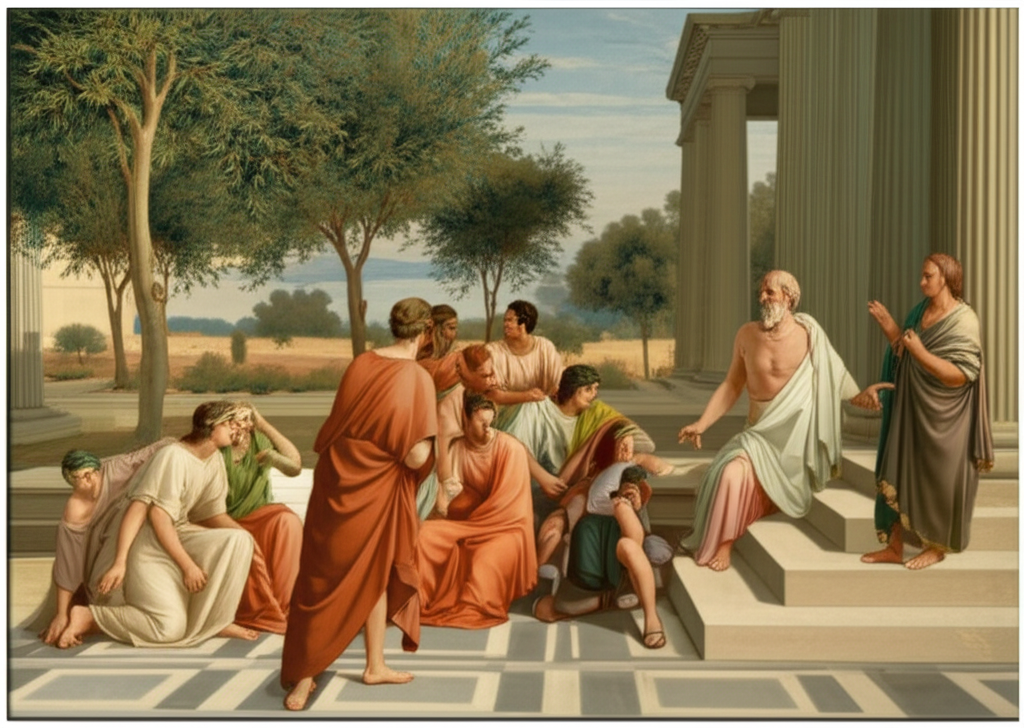
By engaging with diverse perspectives, especially those preserved in the Great Books, we develop intellectual humility and the capacity for nuanced thought. We learn that complex problems rarely have simple answers, and that Progress in understanding often comes from embracing ambiguity and continually refining our positions. This critical engagement is what elevates Education from mere instruction to a transformative force, directly contributing to the development of practical Wisdom.
Wisdom: The Synthesis of Knowledge and Experience
Wisdom, as philosophers often describe it, is not purely theoretical. It is deeply practical, manifesting as phronesis or practical wisdom – the ability to make sound judgments in concrete situations, to act virtuously, and to live a flourishing life. Education plays a pivotal role in cultivating this by:
- Exposing us to moral exemplars and ethical frameworks: The dilemmas explored in literature and philosophy (from Sophocles to Dostoevsky) provide a laboratory for ethical reasoning.
- Developing empathy and perspective-taking: Understanding different historical and cultural contexts broadens our worldview and enhances our ability to relate to others.
- Fostering self-reflection: Philosophical inquiry encourages introspection, helping us understand our own biases, motivations, and values.
Through this synthesis of Knowledge (gained from study) and the experience of applying critical thought to life's challenges, we make significant Progress towards acquiring true Wisdom. It's a continuous feedback loop where what we learn informs how we live, and how we live refines what we understand.
Education as a Continuous Journey of Progress
The pursuit of Wisdom through Education is never truly finished. It is a lifelong endeavor, a constant process of intellectual Progress. The world changes, new Knowledge emerges, and our own understanding deepens with each passing year and experience. A truly educated person recognizes this ongoing need for learning and adaptation.
This commitment to continuous Education not only benefits the individual but also contributes to the collective Wisdom of society. A populace that values deep understanding, critical thinking, and ethical judgment is better equipped to address complex global challenges, fostering a more thoughtful, just, and sustainable future.
In essence, Education is the engine of intellectual Progress, the structured discipline that transforms raw Knowledge into profound Wisdom. It equips us with the tools for critical inquiry, broadens our understanding of the human condition through the timeless insights of the Great Books, and ultimately guides us toward a more reflective, insightful, and purposeful existence.
📹 Related Video: PLATO ON: The Allegory of the Cave
Video by: The School of Life
💡 Want different videos? Search YouTube for: ""Plato's Allegory of the Cave explained" for an exploration of knowledge vs. reality"
📹 Related Video: What is Philosophy?
Video by: The School of Life
💡 Want different videos? Search YouTube for: ""What is wisdom? Philosophy definition" for a discussion on the nature of wisdom"