

The Unseen Architect: How Desire Shapes Our Moral Landscape
Desire, often misconstrued as merely a base impulse, stands as a fundamental, morally neutral force within the human psyche. Its role in shaping virtue and vice is not inherent but determined by its direction, moderation, and the guiding hand of will and reason. Properly understood and directed, desire can be the engine of noble pursuits; left unchecked or misdirected, it becomes the wellspring of moral failing. To navigate the intricate pathways of human conduct, we must first comprehend this powerful, protean force.
The Primordial Urge: Desire as a Universal Impulse
From the immediate craving for sustenance to the profound yearning for truth or beauty, desire is an inescapable facet of human existence. Philosophers throughout the ages, from Plato to Freud, have grappled with its pervasive influence. In the classical understanding, particularly as articulated by Plato in his Republic, the soul is often depicted as having distinct parts: the appetitive, the spirited, and the rational. The appetitive part, the seat of our raw desires for food, drink, and sensual pleasure, is a powerful, often unruly, force.
Aristotle, in his Nicomachean Ethics, similarly acknowledges the irrational part of the soul, which includes desires and appetites. He posits that while these impulses are not inherently rational, they are capable of being obedient to reason. This distinction is crucial: desire itself is not evil, but its unbridled nature or its misdirection can lead us astray. It is a potent energy, awaiting the impress of our higher faculties.
The Guiding Hand: Reason and the Will's Dominion
The transformation of raw desire into something morally significant occurs at the crossroads of reason and will. It is here that humanity distinguishes itself, possessing the capacity not merely to feel but to choose how to act upon those feelings.
- Reason's Illumination: Reason provides the necessary judgment, discerning between desires that lead to genuine good and those that offer only fleeting pleasure or harm. It is reason that helps us understand the long-term consequences of our actions and the true nature of human flourishing.
- The Will's Command: The will acts as the executive power, enabling us to either embrace or resist the urgings of desire. As St. Augustine eloquently explored in Confessions, the will is central to moral agency. It is the faculty through which we assent to or reject temptations, through which we commit to a course of action even when it conflicts with immediate gratification. Immanuel Kant, in his Groundwork of the Metaphysics of Morals, further emphasizes the good will as the only thing good without qualification, acting from duty rather than mere inclination or desire.
Without the guiding hand of reason and the firm resolve of the will, desire remains a blind force, capable of immense good or profound destruction.
The Ascent to Virtue: When Desire Serves the Good
When desires are properly ordered and guided by reason and a strong will, they become instrumental in the cultivation of virtue. Consider the following:
| Virtue | Underlying Desire | Rational Direction & Willpower |
|---|---|---|
| Temperance | Desire for pleasure (food, drink, sex) | Moderation, self-control, seeking pleasure in due measure |
| Courage | Desire for safety, aversion to pain/death | Facing danger for a noble cause, overcoming fear for principle |
| Justice | Desire for personal gain, advantage | Upholding fairness, respecting others' rights, seeking common good |
| Generosity | Desire for possessions, security | Willingness to share, giving for the benefit of others |
| Diligence | Desire for ease, comfort | Sustained effort, perseverance in worthy tasks |
A virtuous person does not simply suppress all desires; rather, they cultivate desires for the right things, at the right time, and in the right measure. Aristotle's concept of the "mean" illustrates this beautifully: courage is the mean between the vice of foolhardiness (excessive desire for risk) and cowardice (excessive desire for safety). The truly virtuous individual finds pleasure in acting virtuously, indicating a harmony between their desires and their reason.
The Descent into Vice: When Desire Becomes Master
Conversely, when desires are unchecked, misdirected, or allowed to dominate reason and will, they lead inexorably to vice. Gluttony arises from an unbridled desire for food, avarice from an insatiable desire for wealth, and lust from an unmoderated desire for carnal pleasure. In these instances, the individual becomes enslaved by their appetites, acting not out of deliberate choice but out of compulsion.
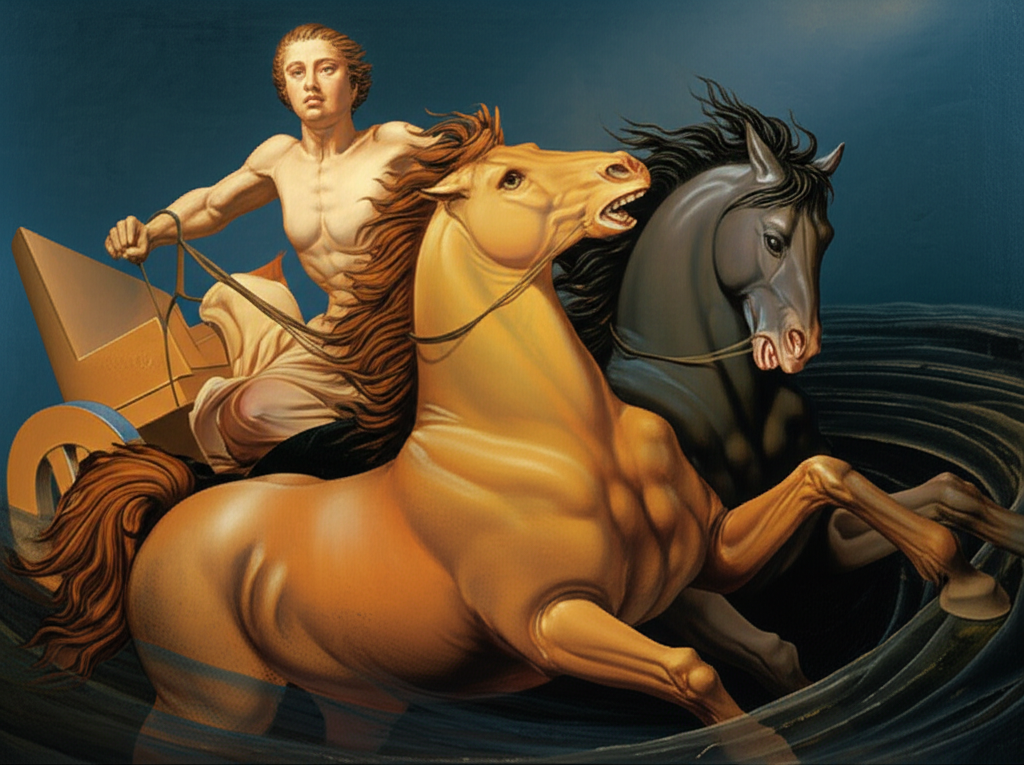
The ancient Greeks recognized akrasia, or "weakness of will," as a significant moral failing. This occurs when an individual knows what is good or right but, overcome by desire, fails to act accordingly. The tragic hero often falls prey to this, understanding the proper course but succumbing to a powerful, destructive longing. The path to vice is often paved with good intentions overridden by the clamor of untamed desires.
The Ongoing Struggle: Cultivating Character
The interplay of desire, reason, and will is not a static condition but an ongoing dynamic. The cultivation of virtue is a lifelong endeavor, requiring constant vigilance and the habitual practice of good choices. We are not born virtuous; we become so through repeated acts that align our desires with our rational understanding of the good.
The Great Books remind us that humanity's unique capacity lies in its ability to reflect upon its desires, to judge them, and to direct them towards higher ends. Our desires are the raw material of our moral lives; our reason and will are the sculptors. The masterpiece or the ruin that emerges depends entirely on how we wield these tools.
YouTube Video Suggestions:
-
📹 Related Video: ARISTOTLE ON: The Nicomachean Ethics
Video by: The School of Life
💡 Want different videos? Search YouTube for: "Aristotle Nicomachean Ethics Desire Virtue"
2. ## 📹 Related Video: KANT ON: What is Enlightenment?
Video by: The School of Life
💡 Want different videos? Search YouTube for: "Kant Moral Philosophy Will Duty Desire"