

The Enduring Tapestry: The Role of Custom in Family Life
Summary: Custom, often an unseen architect, plays a fundamental role in shaping the very essence of family life. From daily rituals to deeply ingrained moral tenets, these shared practices, or conventions, provide structure, transmit values, and forge identity, acting as a crucial bridge between the individual family unit and the broader fabric of society. This article explores how custom, often inherited and sometimes consciously crafted, underpins the stability, meaning, and continuity of our most intimate associations.
The Unseen Architect: Custom's Pervasive Influence
In the grand narrative of human experience, as chronicled in the Great Books of the Western World, few forces are as pervasive yet as frequently unexamined as custom. We are born into a world already rich with established ways of doing, thinking, and relating. For the family, this inheritance is particularly potent, forming the foundational layer upon which individual lives are built and collective identities are forged. Custom, in this context, is not merely tradition for tradition's sake, but a dynamic, living force that dictates everything from our mealtime habits to our most profound ethical understandings.
The ancient philosophers, from Plato to Aristotle, recognized the profound impact of habituation and convention on human character and the functioning of the polis. Aristotle, in his Nicomachean Ethics, famously argued that moral virtues are acquired through habit, through repeatedly performing just and temperate acts. This process of habituation begins, almost exclusively, within the family. It is here that the initial role of custom is most acutely felt, shaping the nascent individual long before they fully engage with society at large.
Custom as the Fabric of Family Identity and Cohesion
The family unit, irrespective of its specific structure across cultures and epochs, relies heavily on a shared repertoire of customs to maintain its internal coherence and distinctive character. These customs manifest in various forms, each contributing to the family’s unique ethos.
- Daily Rituals: From morning routines to evening goodnights, these predictable sequences provide a sense of security and order, especially for children. They are the unspoken rules that govern the flow of domestic life.
- Celebrations and Commemorations: Birthdays, holidays, anniversaries – these events are often steeped in specific family customs, from particular recipes to unique storytelling traditions. They are moments of collective memory-making, reinforcing bonds and shared history.
- Moral and Ethical Transmissions: Perhaps the most significant role of custom within the family is the informal education in values. How disagreements are resolved, how respect is shown, how responsibility is taught – these are often conveyed not through explicit lectures, but through observed and practiced family conventions.
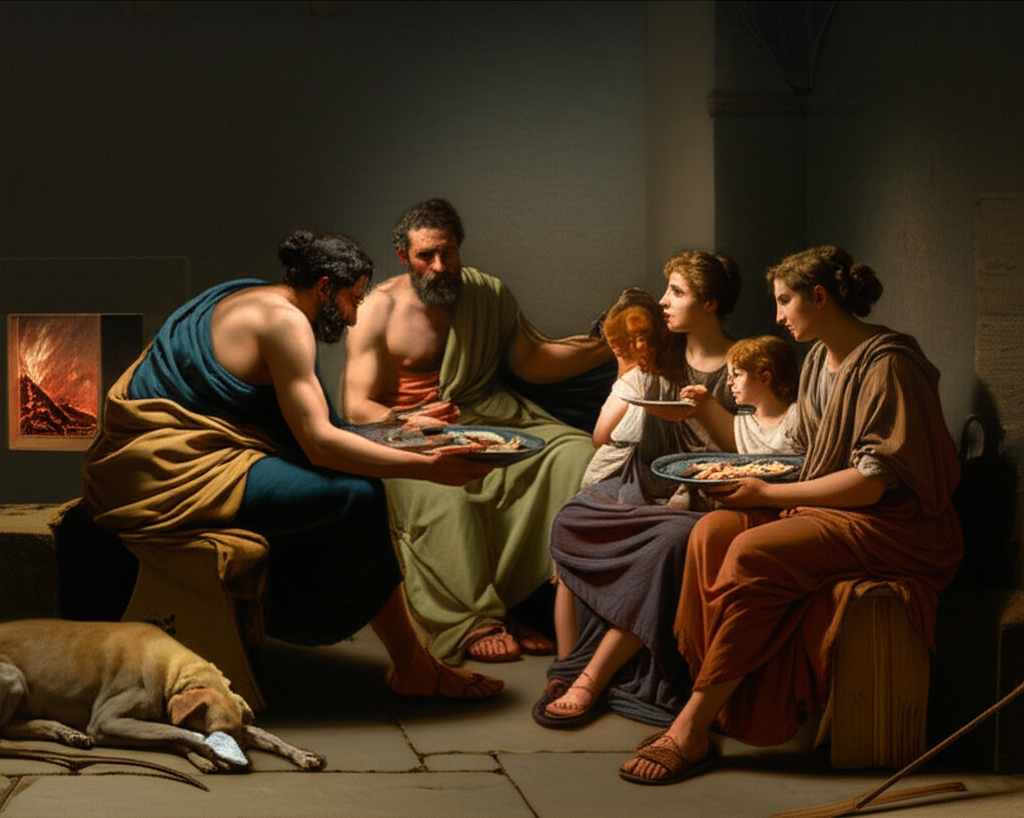
These internal customs, while seemingly small, accumulate to form the very identity of the family. They differentiate one family from another, creating a unique micro-culture that fosters a sense of belonging and continuity.
The Interplay: Family Custom and Broader Society
The role of custom extends beyond the confines of the home, acting as a vital link between the family and society. Families are not isolated islands; they are foundational units that both contribute to and are influenced by the larger societal framework.
Table 1: The Reciprocal Relationship between Family Custom and Society
| Aspect | Family’s Contribution to Society | Society’s Influence on Family Custom |
|---|---|---|
| Value Transmission | Instills fundamental virtues (honesty, empathy, work ethic) | Shapes acceptable behaviors, moral frameworks (e.g., legal norms) |
| Socialization | Prepares individuals for social interaction and civic duties | Provides models for family structure, gender roles, education |
| Cultural Continuity | Preserves traditions, language, and heritage across generations | Introduces new conventions, technologies, and global influences |
| Stability | Contributes to social cohesion through shared understanding | Establishes legal and institutional support for family structures |
As Locke posited in his Two Treatises of Government, the family is the first society, and its structure and conventions invariably lay the groundwork for understanding broader political and social organization. The customs practiced within the home become the building blocks for the conventions that govern the public sphere. When families consistently uphold values like respect for elders or the importance of collective well-being, they are, in essence, preparing citizens for a well-ordered society.
Conversely, society exerts a powerful influence on family customs. Legal frameworks, religious institutions, economic pressures, and popular culture all shape how families organize themselves, how they celebrate, and even how they communicate. The evolving nature of societal conventions means that family customs are rarely static; they adapt, transform, and sometimes resist, reflecting the dynamic tension between tradition and innovation.
The Philosophical Significance: Custom as a Source of Meaning
Beyond mere habit, the philosophical significance of custom lies in its capacity to imbue life with meaning and stability. In a world often characterized by flux and uncertainty, established customs offer a comforting predictability. They provide a narrative, a sense of belonging to something larger and older than oneself.
From a pragmatic standpoint, customs reduce the cognitive load of daily decision-making. By establishing routines and expected behaviors, they free up mental energy for more complex challenges. More profoundly, however, customs often carry symbolic weight, connecting individuals to their ancestors, their community, and even their understanding of the sacred. Whether it's a specific prayer before a meal or a family story told around a campfire, these customs transcend mere action; they become rituals that affirm shared identity and purpose.
The challenge, as explored by thinkers from Rousseau to Edmund Burke, lies in discerning when customs are beneficial and when they become restrictive or unjust. Burke, in particular, championed the wisdom embedded in long-standing traditions and conventions, arguing that they represent the accumulated experience of generations and should not be lightly discarded. Yet, critical philosophical inquiry also demands that we question customs that perpetuate inequality or hinder progress. The role of custom, therefore, is not just to preserve, but also to be subject to thoughtful re-evaluation within the context of evolving ethical understanding.
Conclusion: Custom as the Enduring Thread
The role of custom in family life is undeniably profound. It is the invisible hand that guides daily interactions, the silent teacher of values, and the enduring thread that weaves individuals into a cohesive unit. From the intimate rituals of a household to the broader conventions that bind society, custom provides structure, fosters identity, and transmits the wisdom (and sometimes the folly) of generations past. As we navigate the complexities of modern life, a thoughtful appreciation of custom allows us to understand better not only where we come from but also the deep-seated forces that continue to shape who we are, both as individuals and as members of a family and a society.
YouTube Video Suggestions:
-
📹 Related Video: ARISTOTLE ON: The Nicomachean Ethics
Video by: The School of Life
💡 Want different videos? Search YouTube for: ""Aristotle Nicomachean Ethics habit virtue family""
2. ## 📹 Related Video: PLATO ON: The Allegory of the Cave
Video by: The School of Life
💡 Want different videos? Search YouTube for: ""Plato Republic education custom society""