

The Unseen Architects: Exploring the Enduring Role of Custom in Family Life
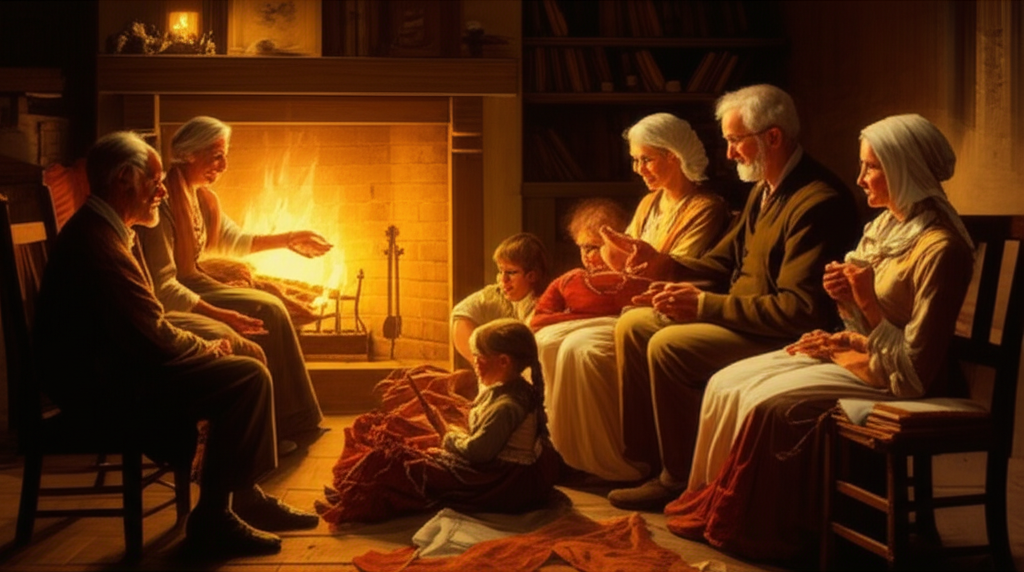
The fabric of family life, often perceived as a spontaneous interplay of individual personalities, is in fact deeply woven with the threads of custom and convention. These inherited practices, rituals, and unspoken rules play an indispensable role in shaping individual identity, fostering communal bonds, and transmitting values across generations. Far from being mere archaic remnants, customs are the living, breathing architecture of our most intimate social unit, providing stability, meaning, and a shared sense of belonging that extends from the hearth to the broader society.
Custom and Convention: Distinctions and Intersections
While often used interchangeably, it is valuable for our philosophical inquiry to distinguish between custom and convention, even as we acknowledge their profound interrelation within the family.
- Custom: Refers to long-established practices, often unwritten and deeply embedded in a group's way of life. They are typically passed down through generations, carrying with them a sense of tradition, moral weight, and often an emotional resonance. Think of holiday rituals, specific family greetings, or the way certain meals are prepared.
- Convention: Implies more of an agreement or consensus on how things are done, which might be more explicit or subject to change. While conventions can become customs, they often relate to matters of expediency, politeness, or social agreement rather than deeply ingrained historical practice. For instance, the convention of saying "please" and "thank you" is a social agreement that, through repeated practice, becomes a family custom.
In the family unit, these two concepts merge seamlessly. A family’s specific way of celebrating a birthday might begin as a convention, but over years, it solidifies into a cherished custom, defining what it means to be part of that family.
The Family: A Living Tapestry of Custom
The family is arguably the primary crucible where customs are forged, transmitted, and sometimes creatively reinterpreted. It is here that individuals first encounter the structured rhythms of collective living.
Transmission and Formation
From the moment of birth, children are immersed in a world shaped by parental and familial customs. These are not merely taught but lived.
- Daily Routines: Bedtime stories, morning rituals, mealtimes.
- Celebrations: Birthdays, holidays, anniversaries, often with unique family traditions.
- Mourning Practices: How a family copes with loss and remembers loved ones.
- Communication Styles: The ways affection is shown, disagreements are handled, or silence is observed.
These practices, repeated over time, become the bedrock of individual and collective memory, creating a shared history and identity that transcends individual experiences.
The Moral Landscape
Beyond mere routine, customs within the family often carry significant moral weight. They instill values, define right and wrong, and delineate acceptable behavior. The way a family shares resources, helps neighbors, or respects elders are all customs that contribute to the moral education of its members. They are the practical application of abstract principles, making philosophical concepts like justice, generosity, and responsibility tangible.
From Hearth to Polis: Family Customs and Society
The role of custom within the family extends far beyond its immediate confines, acting as a vital link to the broader society. Families, through their customs, serve as micro-societies, preparing individuals for the larger social order.
- Socialization: Family customs teach children how to navigate social interactions, understand hierarchy, and participate in collective endeavors.
- Cultural Preservation: Families are repositories of cultural memory. Linguistic nuances, culinary traditions, and storytelling all pass through the family unit, preserving a society's unique character.
- Civic Virtue: Customs of respect, cooperation, and responsibility practiced within the family lay the groundwork for civic virtues essential for a functioning democracy.
- Social Cohesion: Shared family customs contribute to a sense of national identity and collective memory, reinforcing bonds within communities and across generations.
Philosophical Reflections on Custom's Authority
The significance of custom has been a recurring theme throughout the Great Books of the Western World, with philosophers grappling with its power, its wisdom, and its potential limitations.
Aristotle on Habituation and Virtue
In his Nicomachean Ethics, Aristotle profoundly emphasizes the role of habituation in the formation of character and the attainment of virtue. For Aristotle, we become just by doing just acts, temperate by doing temperate acts. This process of habituation is fundamentally rooted in custom, particularly those established within the family and early education.
"Moral virtue comes about as a result of habit, whence also its name (ethike) is one that is formed by a slight variation from the word ethos (habit)."
The customs of a household—the expectations placed upon children, the examples set by parents, the routines of discipline and praise—are the primary mechanisms through which virtues are cultivated. The family, therefore, is not merely a place of birth but the first school of character, where repeated customary actions mold the soul.
Burke on the Wisdom of Generations
Edmund Burke, in his Reflections on the Revolution in France, championed the profound wisdom embedded in inherited traditions and customs. He viewed society not as a mere contract between living individuals but as a partnership between the living, the dead, and those yet to be born. Customs, for Burke, are the accumulated wisdom of generations, providing a stable foundation that guards against the fleeting whims of the present.
He argued against radical departures from established customs, seeing them as the product of slow, organic development, far more reliable than abstract reason alone. For Burke, the family unit, with its own particular customs, serves as a vital miniature of this larger societal wisdom, instilling reverence for the past and a sense of continuity.
Navigating the Evolving Rhythms of Custom
While customs provide stability and meaning, they are not immutable. Families, like societies, are dynamic entities, and customs must evolve to remain relevant. This often involves a delicate balance:
- Preservation: Honoring the customs that connect us to our past and provide a unique family identity.
- Adaptation: Modifying customs to suit changing circumstances, beliefs, or the needs of new family members.
- Creation: Forging new customs that reflect contemporary values or address new challenges.
The ongoing dialogue within a family about its customs—which to keep, which to change, which to create—is a powerful expression of its living, breathing nature. It reflects the constant interplay between tradition and innovation, stability and growth.
Conclusion: The Enduring Legacy
The role of custom and convention in family life is both profound and pervasive, often operating beneath the surface of conscious thought. From the simple routines of daily life to the grand rituals that mark life's milestones, customs provide structure, meaning, and a deep sense of belonging. They are the invisible architects that shape our individual selves, bind us to our loved ones, and ultimately connect us to the broader society and the sweep of human history. As the Great Books remind us, understanding custom is not merely an academic exercise, but a path to understanding ourselves, our communities, and the enduring human quest for order and meaning.
YouTube Video Suggestions:
-
📹 Related Video: ARISTOTLE ON: The Nicomachean Ethics
Video by: The School of Life
💡 Want different videos? Search YouTube for: "Aristotle Nicomachean Ethics habituation virtue custom"
2. ## 📹 Related Video: What is Philosophy?
Video by: The School of Life
💡 Want different videos? Search YouTube for: "Edmund Burke tradition custom society philosophy"