

The Unseen Architecture: How Custom Weaves the Fabric of Family Life
Summary: This article explores the profound role of custom and convention in shaping the fundamental unit of society: the family. Drawing insights from the Great Books of the Western World, we delve into how established practices, rituals, and shared norms provide stability, transmit values, and forge identity across generations, examining both their enduring necessity and their potential for evolution. We contend that customs, far from being mere habits, are the very sinews that bind families, offering a framework for meaning, belonging, and the initial lessons in living within a larger society.
The Enduring Echoes of Habit
In the grand tapestry of human existence, few threads are as pervasive, yet as often overlooked, as custom and convention. These unwritten rules, inherited practices, and shared rituals form the bedrock upon which society is built, and nowhere is their role more intimately felt than within the family. From the daily rhythm of meals to the grand celebrations of life's milestones, customs imbue our domestic lives with meaning, predictability, and a sense of continuity. They are the silent architects of our personal and collective identities, shaping our understanding of the world long before we ever encounter formal education or explicit philosophical discourse.
For those who delve into the Great Books of the Western World, the significance of custom is not a novel concept. Philosophers, poets, and historians alike have grappled with its power, recognizing its capacity to both uphold virtue and perpetuate vice, to foster order and to resist change. Yet, in our modern, rapidly evolving world, the deliberate consideration of custom's role in family life often takes a backseat to more immediate concerns. It is precisely this oversight that warrants our attention, for to understand the family is to understand the customs that define it.
Defining Custom and Convention in the Family Sphere
Before we can fully appreciate its role, it is crucial to delineate what we mean by custom and convention within the context of the family. These terms refer to the established ways of behaving, believing, and interacting that are passed down, often implicitly, from one generation to the next. They are the "we've always done it this way" of life, the inherited practices that lend a unique character to each household.
From the Polis to the Hearth: What the Great Thinkers Say
The wisdom gleaned from the Great Books offers a rich vocabulary for understanding these phenomena:
- Aristotle, in his Nicomachean Ethics, emphasizes the role of habituation in character formation. For him, virtues are not innate but cultivated through repeated actions, largely within the formative environment of the family and early society. Family customs, therefore, are the primary training grounds for moral development.
- Plato, in The Republic, speaks of the importance of tradition and established norms in shaping the ideal citizen. While his focus is on the state, the principles of early education and the transmission of values through consistent practice resonate deeply with the function of family customs.
- John Locke, in his Two Treatises of Government, explores the transition from a state of nature to civil society, highlighting the conventions that govern human interaction and the role of paternal power within the family. Even as he champions individual rights, the necessity of established order, even in the domestic sphere, is implicit.
- Edmund Burke, a staunch defender of tradition in his Reflections on the Revolution in France, articulated the profound wisdom embedded in inherited practices. He argued that customs represent the accumulated experience and prudence of generations, offering a robust, if often unarticulated, guide for living. This sentiment applies equally to the micro-cosmos of the family.
These thinkers, among many others, remind us that customs are not arbitrary; they are the distillation of countless trials and errors, the accumulated wisdom – or sometimes folly – of those who came before.
The Subtle Power of Shared Practice
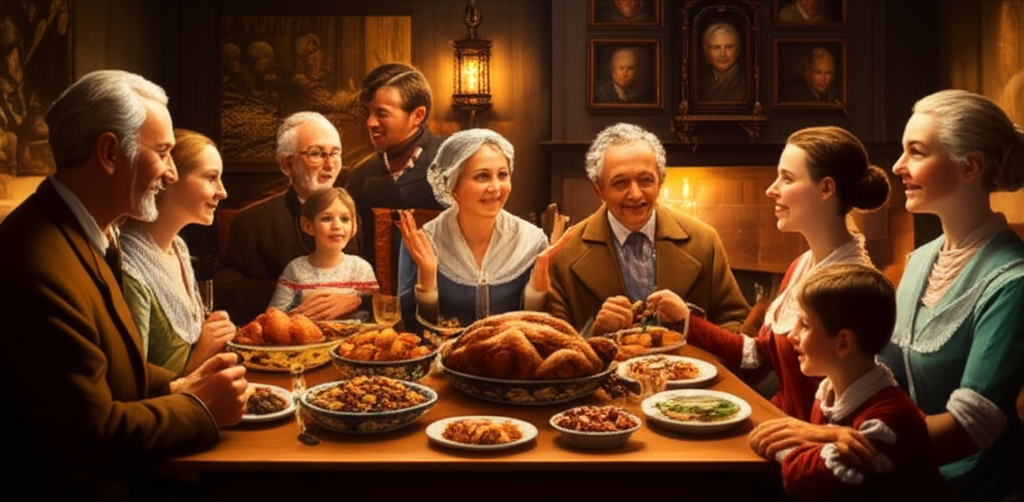
Within the family, customs manifest in countless ways: the specific dishes prepared for holidays, the bedtime stories read, the manner in which disagreements are resolved, the shared jokes, the unspoken rules of deference or intimacy. These are not merely habits; they are conventions that define relationships, establish expectations, and contribute to a shared sense of identity. They offer a script, however flexible, for the ongoing drama of family life.
The Multifaceted Role of Custom in Family Life
The role of custom and convention within the family is multifaceted, touching upon stability, identity, and social integration.
Here are some key functions:
- A. Pillars of Stability and Predictability:
- Customs provide a sense of order and routine, reducing uncertainty and fostering a feeling of security, especially for children. Knowing what to expect, from meal times to holiday rituals, creates a stable environment.
- They offer anchors in times of change or crisis, providing familiar touchstones that connect individuals to a stable past and a predictable future.
- B. Transmitters of Values and Identity:
- Family customs are primary vehicles for the informal education of moral and ethical values. How a family celebrates, grieves, or resolves conflict implicitly teaches its members about right and wrong, respect, and responsibility.
- They forge a unique family identity, distinguishing one household from another. This shared heritage contributes to a strong sense of belonging and kinship, answering the fundamental question, "Who are we?"
- Through stories, traditions, and shared experiences, customs connect individuals to their ancestral past, providing a narrative continuity that enriches personal identity.
- C. Architects of Social Cohesion:
- Customs strengthen bonds between family members by creating shared experiences and common memories. These shared practices are often the basis for inside jokes, collective nostalgia, and a deeper emotional connection.
- They prepare individuals for their role in the broader society. Learning to adhere to family conventions is often the first lesson in understanding social contracts, compromise, and the give-and-take necessary for communal living.
- Family customs often serve as a bridge to wider cultural or religious conventions, integrating the individual into larger social structures and communities.
The Dynamic Nature of Family Customs
While the role of custom is crucial for stability, it is equally important to recognize that customs are not immutable. They are dynamic, subject to the forces of change, migration, technological advancement, and evolving societal values.
Tradition vs. Transformation: When Customs Evolve
The tension between preserving cherished traditions and adapting to new realities is a perennial challenge. Families often find themselves navigating this delicate balance, deciding which customs to uphold, which to modify, and which to respectfully let go. This evolution is natural and necessary for the health and continued relevance of the family unit. A custom that once served a vital purpose might, in a different era, become an impediment or a source of conflict.
The Ethical Imperative: Discernment and Adaptation
Here, the philosophical lens becomes particularly valuable. Just as society must critically examine its conventions, so too must families reflect upon their customs. Is a particular custom still serving its intended purpose? Does it foster connection and well-being, or does it inadvertently create division or undue burden? The wisdom of the Great Books teaches us not blind adherence, but thoughtful engagement with tradition. As Montaigne observed in his Essays, the sheer variety of human customs across different cultures reveals that many practices are conventional rather than naturally ordained, inviting a critical, yet empathetic, consideration of their value.
Conclusion: The Living Legacy of Family Custom
The role of custom and convention in family life is an intricate dance between the inherited past and the evolving present. These shared practices are far more than mere habits; they are the invisible architecture that provides structure, meaning, and identity. They are the primary schools where individuals learn their first lessons in belonging, responsibility, and the complex art of living within a society.
To overlook their significance is to miss a fundamental aspect of human flourishing. By understanding, appreciating, and thoughtfully engaging with the customs that define our families, we not only preserve a vital part of our heritage but also consciously shape the legacy we pass on to future generations, ensuring that the unseen threads continue to weave a rich and vibrant tapestry of human connection.
YouTube Video Suggestions:
- "The Philosophy of Tradition and Custom"
- "Aristotle on Virtue, Habit, and Character"
📹 Related Video: What is Philosophy?
Video by: The School of Life
💡 Want different videos? Search YouTube for: "The Role of Custom in Family Life philosophy"