

In the grand, intricate tapestry of Nature, where life unfurls in myriad forms, few concepts stir as much philosophical debate as the profound role of chance in evolution. Far from being a mere anomaly, chance is an indispensable architect, shaping the very pathways of life's progression and profoundly influencing the diversity we observe. This article explores how random events, from molecular mutations to cosmic catastrophes, are not just incidental to evolution but are fundamental, challenging our perceptions of natural design and purpose.
The Unpredictable Hand: Understanding Chance in Evolution
At its core, evolution is often understood through the lens of natural selection – a process where advantageous traits are favored, leading to adaptation. However, this seemingly deterministic march is fundamentally underpinned by a constant influx of randomness. Without the unpredictable, the selective forces would have nothing new to work with, nothing to sculpt.
Key Manifestations of Chance:
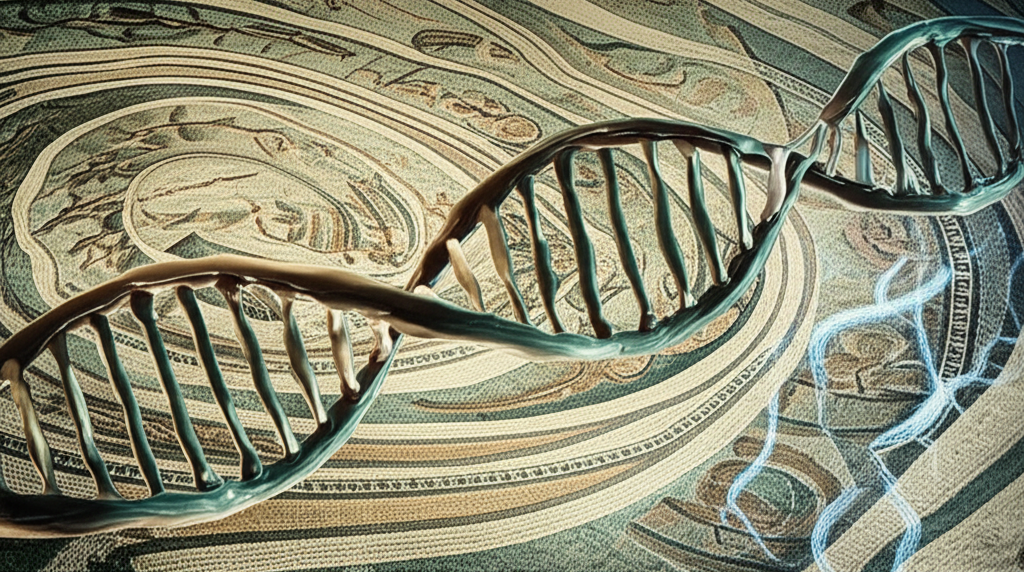
- Genetic Mutation: The most fundamental role of chance in evolution begins at the molecular level. Random changes in DNA sequences (mutations) introduce novel genetic variations. These are not directed towards any specific outcome; they are simply errors or alterations in the genetic code. While most are neutral or deleterious, a tiny fraction can provide a selective advantage, becoming the raw material for adaptation.
- Genetic Drift: In populations, especially small ones, gene frequencies can fluctuate randomly from one generation to the next, independent of natural selection. This "sampling error" can lead to the loss or fixation of certain traits purely by chance, even if they are not particularly advantageous or disadvantageous.
- Environmental Catastrophes: Major geological or astronomical events – asteroid impacts, volcanic eruptions, ice ages – act as powerful, random filters. These events can drastically alter ecosystems, leading to mass extinctions and creating new ecological niches, thereby redirecting the course of evolution in unpredictable ways. The survival of certain lineages during such events can be largely a matter of pure chance.
- Sexual Recombination: The shuffling of genes during sexual reproduction creates unique combinations of alleles in offspring. While not strictly "random mutation," the specific combination an individual receives is a matter of chance, contributing significantly to phenotypic diversity within a species.
Chance Versus Necessity: A Philosophical Dance Through History
The tension between chance and necessity has been a cornerstone of philosophical inquiry since antiquity. The "Great Books of the Western World" offer numerous insights into how thinkers grappled with the idea of randomness in an ordered cosmos.
- Ancient Perspectives:
- Aristotle, for instance, distinguished between tyche (chance events that could have had a purpose but didn't achieve it) and automaton (pure spontaneity, without any inherent purpose). While not directly addressing biological evolution, his framework provided categories for understanding events that deviate from predictable causation. For Aristotle, Nature generally acted "for the sake of something," but recognized exceptions.
- Lucretius, in his De Rerum Natura, posited the clinamen – a tiny, unpredictable "swerve" of atoms from their predetermined paths. This atomic swerve introduced an element of indeterminacy into a largely mechanistic universe, providing a philosophical precursor to the idea that true randomness can be a fundamental driver of change, rather than just an illusion of our ignorance.
In modern evolutionary thought, this philosophical dance continues. Natural selection, with its seemingly directional force, can be seen as a form of necessity, sifting and refining. Yet, it is utterly dependent on the random variations provided by chance. Without the "swerve" of mutation, there would be no raw material for selection to act upon, no new forms to emerge.
The Creative Power of the Unforeseen
The role of chance in evolution is not merely that of a disruptive force; it is profoundly creative. It opens up avenues for life that would otherwise remain unexplored, leading to novel adaptations and entirely new species. The history of life is replete with examples where a seemingly random event – a gene duplication, a sudden environmental shift – became the pivot point for a major evolutionary leap.
This understanding profoundly impacts our philosophical view of Nature. It challenges purely teleological (purpose-driven) interpretations, suggesting that the intricate complexity and apparent "design" we see in living organisms are not solely the product of a grand, pre-ordained plan. Instead, they arise from a dynamic interplay between the blind, undirected forces of chance and the directional, sifting power of natural selection.
Implications for Our Worldview
Embracing the significant role of chance in evolution encourages a more nuanced and perhaps more humble perspective on our place in the cosmos. It suggests a universe that is not entirely predictable or pre-scripted, but one that is constantly emerging, innovating, and surprising itself through the interplay of deterministic laws and unpredictable events.
It invites us to consider:
- The nature of agency: If much of life's evolution is influenced by chance, what does this imply about the agency of organisms or even the concept of a guiding hand?
- The meaning of purpose: Can purpose arise from purposeless origins? Evolutionary biology suggests that functional roles and adaptations emerge from non-purposeful genetic variations.
- The limits of predictability: While we can model and understand many aspects of evolution, the inherent randomness means that the exact future trajectory of life remains fundamentally unpredictable.
Ultimately, the role of chance in evolution is a testament to the dynamic, open-ended character of Nature. It's a reminder that even in the most ordered systems, the unpredictable can be a powerful engine of creation, constantly redefining the possibilities of life.
YouTube Video Suggestions:
-
📹 Related Video: What is Philosophy?
Video by: The School of Life
💡 Want different videos? Search YouTube for: "Philosophy of Chance in Evolution"
2. ## 📹 Related Video: ARISTOTLE ON: The Nicomachean Ethics
Video by: The School of Life
💡 Want different videos? Search YouTube for: "Aristotle Chance Lucretius Clinamen Evolution"