

The Unscripted Dance: Unpacking the Profound Role of Chance in Evolution
The evolutionary narrative, often simplified to the inexorable march of natural selection, harbors a deeper, more intricate truth: the role of chance. Far from being a mere footnote, chance is a fundamental architect of life's diversity, challenging deterministic views of Nature and pushing us to reconsider the very mechanisms by which species adapt and thrive. This article explores the multifaceted influence of randomness in shaping life, from the molecular level to the grand sweep of biodiversity, revealing how an appreciation for the contingent reshapes our philosophical understanding of existence itself.
The Many Faces of Chance in Evolution
When we speak of chance in the context of evolution, we're not referring to a singular phenomenon but rather a constellation of random events that collectively steer the course of life. These elements introduce an unpredictable dynamism, ensuring that the path of evolution is rarely, if ever, a straight line.
Mutation: The Unscripted Genesis
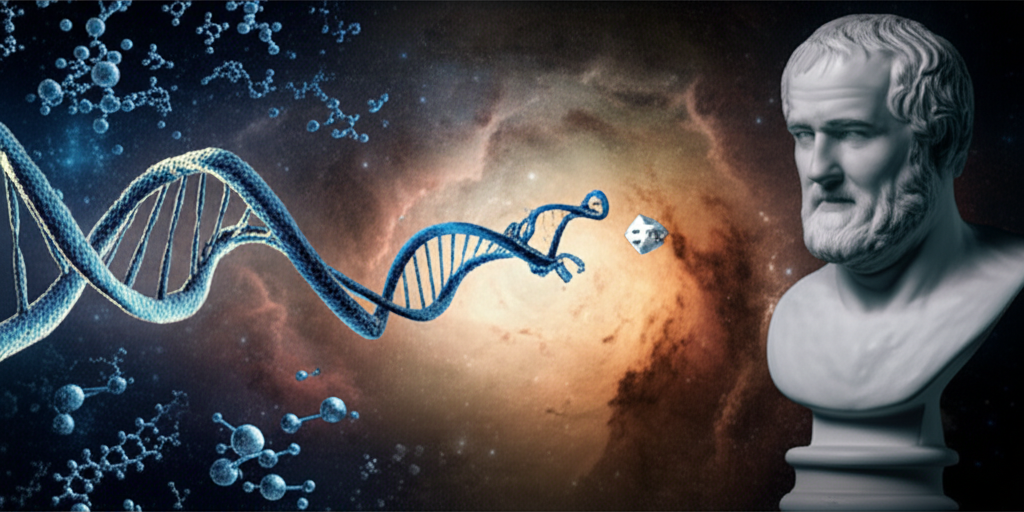
At the genetic core of all life, mutations are the ultimate source of novelty. These spontaneous changes in DNA sequences – errors during replication, environmental damage, or viral insertions – occur without foresight or purpose. While many mutations are neutral or deleterious, some confer a selective advantage, providing the raw material upon which natural selection can act. It is this indiscriminate generation of variation that underscores the profound role of pure randomness in initiating evolutionary change. Without these chance molecular alterations, the canvas for adaptation would remain blank.
Genetic Drift: A Random Walk Through Generations
Beyond the emergence of new traits, the frequency of existing traits within a population can fluctuate due to chance alone, a phenomenon known as genetic drift. This is particularly pronounced in small populations, where random sampling of gametes during reproduction can lead to significant changes in allele frequencies from one generation to the next, entirely independent of selection. A trait that is selectively neutral or even slightly disadvantageous can become fixed, or conversely, a beneficial trait can be lost, simply due to the whims of statistical probability. This "random walk" illustrates how chance can dictate the genetic makeup of a species, sometimes overriding the pressures of natural selection.
Environmental Flux: Nature's Whims and Catastrophes
The external environment, too, introduces a powerful element of chance. Unpredictable events like asteroid impacts, volcanic eruptions, sudden climate shifts, or even localized floods and fires can drastically alter selection pressures or decimate populations indiscriminately. These environmental stochasticities can lead to bottlenecks, where only a random subset of a population survives, or create new niches that favor previously neutral traits. The very fabric of Nature, in its unpredictable grandeur, thus plays a critical role in shaping evolutionary trajectories through these contingent, often catastrophic, events.
Philosophical Implications: Beyond Determinism
The pervasive role of chance in evolution carries profound philosophical weight, challenging long-held deterministic worldviews and forcing us to reconsider the nature of causation, purpose, and even free will. For centuries, thinkers from the Great Books of the Western World have grappled with the concept of chance, often contrasting it with necessity or divine providence.
Aristotle's "Chance" (Tyche and Automaton)
Aristotle, in works like his Physics, distinguished between tyche (chance in human affairs, implying intention but an unforeseen outcome) and automaton (spontaneous chance, particularly in natural events where there is no intention). While his framework predates modern evolutionary theory, his recognition of events occurring "for nothing" or "for no end" resonates with the non-teleological nature of genetic mutation and environmental accidents. The role of chance in evolution aligns more closely with Aristotle's automaton, where events happen without inherent purpose, yet lead to significant effects. This contrasts sharply with a view of Nature as inherently striving towards a specific, preordained goal.
Lucretius and Epicurean Swerve
Perhaps a more direct ancient precursor to understanding evolutionary chance can be found in Lucretius's On the Nature of Things. Drawing from Epicurean philosophy, Lucretius proposed the concept of the clinamen, or "swerve" – an uncaused, unpredictable deviation of atoms from their predetermined paths. This atomic "swerve" was essential for explaining the diversity of the world and the possibility of free will, breaking from strict determinism. In a sense, the unpredictable nature of genetic mutation and environmental events acts as a modern biological clinamen, introducing an element of uncaused variation that is crucial for the ongoing evolution of life.
The Interplay of Chance and Necessity
It's crucial to understand that the role of chance does not negate the power of natural selection; rather, it provides the raw material upon which selection operates. Chance provides the variations, but selection filters them, preserving those that confer a reproductive advantage in a given environment. This interplay creates a dynamic tension:
- Chance introduces novelty and diversity.
- Nature (via natural selection) imposes constraints and directs adaptation.
This relationship suggests that while the specific path of evolution is largely unpredictable due to chance, the overall direction towards adaptation is often guided by environmental pressures (a form of necessity). Life is thus an ongoing experiment, constantly generating new forms through random processes, which are then rigorously tested by the environment.
Redefining "Nature" Through Chance
Embracing the profound role of chance in evolution compels us to redefine our understanding of Nature. It moves us away from a view of a perfectly engineered, teleological system – one designed with a specific end in mind – towards a more dynamic, contingent, and experimental reality. Nature, in this light, is not a grand designer but a grand opportunist, working with whatever random variations are presented.
This perspective emphasizes:
- Contingency: The specific forms of life we see are not inevitable but are the result of a particular sequence of chance events and selective pressures. Had the dice rolled differently, life on Earth might look vastly different.
- Lack of Predetermined Purpose: The beauty and complexity of life emerge not from an inherent purpose or design, but from the iterative process of random variation and differential survival.
This philosophical shift encourages humility and wonder at the sheer improbability and resilience of life, born from a cosmic dance of order and randomness.
Conclusion
The role of chance in evolution is not merely a scientific detail; it is a profound philosophical statement about the fundamental nature of existence. From the unscripted genesis of mutations to the random walk of genetic drift and the unpredictable whims of environmental forces, chance is an indispensable architect of life's intricate tapestry. It challenges our deterministic inclinations, echoing ancient philosophical debates about randomness, and compels us to view Nature not as a meticulously planned masterpiece, but as an ever-evolving improvisation. Understanding this interplay of chance and necessity enriches our appreciation for the astonishing journey of life, reminding us that the deepest truths often lie in the most unexpected places.
📹 Related Video: What is Philosophy?
Video by: The School of Life
💡 Want different videos? Search YouTube for: ""The Role of Chance in Evolution Philosophy""
📹 Related Video: What is Philosophy?
Video by: The School of Life
💡 Want different videos? Search YouTube for: ""Genetic Drift Explained Philosophy""