

The Unpredictable Tapestry: Unpacking the Role of Chance in Biological Evolution
A Summary of Fortuity's Foundation in Life
Biological evolution, often perceived as a grand march of progress driven by natural selection, is profoundly shaped by the unpredictable currents of chance. Far from being a mere footnote, randomness, operating at the molecular and population levels, introduces variability that selection then acts upon. This article explores how chance mechanisms, from quantum fluctuations influencing mutations to the vagaries of genetic drift, are not just incidental but fundamental to the very fabric of life's unfolding. We delve into the philosophical implications of this unpredictability, connecting modern scientific understanding with ancient inquiries into causality and Nature as documented in the Great Books of the Western World, ultimately revealing a universe where both necessity and fortuity conspire to create the astonishing diversity we observe.
Introduction: The Dice Roll of Life
When we speak of evolution, our minds often gravitate towards the elegant logic of natural selection – the survival of the fittest, a process seemingly driven by an inexorable push towards adaptation. Yet, beneath this veneer of directed progress lies a deep, pervasive element of chance. How much of life's intricate design, its startling diversity, and its unique trajectory is a result of predictable forces, and how much is merely the outcome of a cosmic dice roll? This question bridges the realms of biology, physics, and philosophy, inviting us to reconsider the very essence of Nature and our place within it.
Mechanisms of Randomness: Where Chance Takes Root
The influence of chance in biological evolution manifests through several key mechanisms:
- Genetic Mutation: At the most fundamental level, evolution begins with changes to an organism's DNA. These mutations are largely random events, not directed towards improving fitness. They can arise from errors during DNA replication, exposure to radiation, or chemical mutagens. From the perspective of physics, these molecular alterations can sometimes be traced back to quantum uncertainties, underscoring the deep connection between the very small and the grand sweep of life.
- Genetic Drift: Particularly significant in small populations, genetic drift refers to random fluctuations in the frequencies of alleles (gene variants) from one generation to the next. Imagine a small group of beetles; if a few individuals are accidentally stepped on, their unique genes might be lost from the population, not because they were unfit, but simply due to bad luck. This random sampling effect can lead to significant evolutionary changes without the direct hand of natural selection.
- Gene Flow: The movement of genes between populations can introduce new variability or alter existing frequencies purely by random migration patterns, rather than adaptive pressures.
- Environmental Stochasticity: External events, such as asteroid impacts, volcanic eruptions, or sudden climate shifts, are often unpredictable and can drastically alter the course of evolution by creating new selective pressures or causing mass extinctions, thereby resetting the evolutionary playing field in arbitrary ways.
These mechanisms highlight that the raw material for selection – the variation within a population – is itself a product of chance.
Philosophical Echoes: Chance, Determinism, and Nature's Grand Plan
The acknowledgment of chance in evolution compels us to revisit ancient philosophical debates. Thinkers from the Great Books of the Western World, such as Democritus and Epicurus, grappled with the concept of atomic clinamen – a random swerve of atoms that introduced unpredictability into an otherwise deterministic universe. While their atomic theories were vastly different from modern physics, their recognition of an irreducible element of randomness resonates with our current understanding of mutation and drift.
- Aristotle, in his Physics, distinguished between chance (τυχη, tychē) and spontaneity (αὐτόματον, automaton), exploring events that happen without a specific purpose or intention. While Aristotle saw Nature as largely purposeful, he acknowledged events that occurred outside of this teleological framework. Modern evolutionary biology suggests that many of the raw inputs for evolution are precisely these kinds of spontaneous, non-purposeful events.
- Lucretius, in De Rerum Natura, eloquently argued for a universe governed by atoms and void, where the "swerve" (clinamen) was essential for creation and freedom from absolute determinism. This concept, though metaphorical in a biological context, mirrors how random mutations provide the raw material that allows life to explore diverse paths, rather than being locked into a single, predetermined trajectory.
This interplay challenges a purely deterministic view of Nature. If chance plays such a pivotal role, then the specific forms of life we see today are not the inevitable outcome of a grand plan, but rather one of many possible outcomes from a vast, probabilistic space of possibilities.
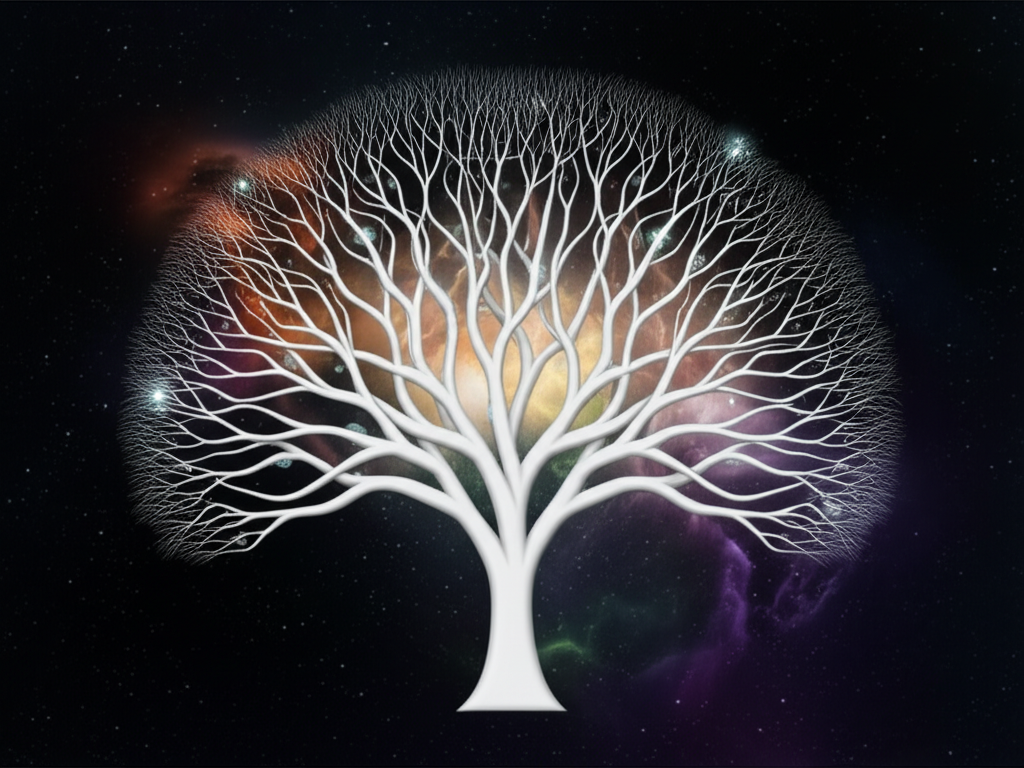
The Dance of Chance and Necessity
It is crucial to understand that acknowledging chance does not negate the power of natural selection. Instead, they operate in a dynamic partnership:
| Element of Evolution | Role of Chance | Role of Necessity (Selection) |
|---|---|---|
| Variation | Random mutations, genetic drift, gene flow create it | Selection acts upon existing variation |
| Adaptation | Random mutations provide novel traits | Beneficial traits are favored and spread in a population |
| Trajectory | Unpredictable events (extinctions) can reset paths | Environment consistently shapes organisms towards fitness |
| Innovation | Serendipitous combinations of genes | Retention and refinement of advantageous innovations |
Natural selection provides the direction and refinement, sifting through the chaotic outputs of chance to preserve what is advantageous in a given environment. Without chance, there would be no novelty, no raw material for selection to work with. Without selection, chance alone would lead to a chaotic, non-adaptive accumulation of traits. Together, they weave the intricate tapestry of life.
Conclusion: Embracing the Unforeseen
The role of chance in biological evolution is not a weakness of the theory but a profound insight into the unpredictable, dynamic nature of life. It compels us to move beyond simplistic notions of progress and embrace a more nuanced understanding of Nature – one where the laws of physics permit, and indeed necessitate, an element of randomness that fuels creativity and diversity. From the quantum fluctuations that spark a mutation to the random drift of genes through generations, chance is an indispensable architect of the living world. It reminds us that while life strives for survival, its journey is often shaped by the roll of the dice, making every species, every adaptation, and every moment of existence a testament to the astonishing power of the unforeseen.
📹 Related Video: What is Philosophy?
Video by: The School of Life
💡 Want different videos? Search YouTube for: ""Chance and Necessity in Evolution philosophy""
📹 Related Video: ARISTOTLE ON: The Nicomachean Ethics
Video by: The School of Life
💡 Want different videos? Search YouTube for: ""Great Books of the Western World on Causality and Randomness""