

The Unseen Hand: Exploring the Profound Role of Chance in Biological Evolution
The grand tapestry of life, with its myriad forms and astonishing adaptations, often evokes a sense of purpose or design. Yet, beneath the veneer of intricate order, lies a deep, pervasive element of unpredictability: chance. This article delves into how random occurrences, from the microscopic dance of molecules to vast environmental shifts, are not mere footnotes but fundamental architects of biological evolution. We will explore how chance operates, its philosophical implications, and how it challenges our traditional notions of destiny in the natural world, drawing insights from both modern science and the wisdom found in the Great Books of the Western World.
Defining Chance in the Evolutionary Tapestry
When we speak of chance in the context of evolution, we are not suggesting that evolution is entirely random or without direction. Rather, we acknowledge specific points where randomness injects novelty and variability into the evolutionary process. This isn't a rejection of natural selection, which is a non-random process sorting beneficial traits, but an understanding that the raw material upon which selection acts is often generated by chance events.
- Mutation: The ultimate source of all new genetic variation. These changes in DNA sequences are largely random with respect to their selective advantage. A mutation might occur that is beneficial, deleterious, or neutral, but its initial appearance isn't "chosen" by the organism or its environment.
- Genetic Drift: Particularly potent in small populations, genetic drift refers to random fluctuations in the frequencies of gene variants (alleles). Some alleles might become more common or disappear entirely purely by chance, not because they confer any survival advantage.
- Gene Flow: The random migration of individuals between populations can introduce or remove alleles, altering genetic diversity by chance.
- Environmental Stochasticity: Unpredictable environmental events—such as meteor strikes, volcanic eruptions, or sudden climate shifts—can drastically alter selective pressures or wipe out populations irrespective of their fitness, creating new evolutionary trajectories.
Echoes from the Ancients: Chance and Necessity
The philosophical contemplation of chance is hardly new. The Great Books of the Western World reveal a long-standing debate concerning the interplay of chance and necessity in shaping reality. Ancient Greek philosophers, for instance, grappled with this very concept.
- Aristotle, in his Physics, distinguished between events that happen "always or for the most part" (necessity) and those that happen "by chance." For him, chance (tyche) and spontaneity (automaton) were real causes, albeit accidental ones, arising from the intersection of independent causal chains. He wouldn't have applied it to a grand, undirected biological process, but his framework acknowledges the existence of unpredetermined outcomes.
- The Atomists, like Democritus and later Lucretius in De Rerum Natura (On the Nature of Things), offered a more mechanistic, though still chance-laden, view. They posited that the universe was composed of atoms moving randomly in the void, occasionally clinching (swerving) to form macroscopic structures. While their explanation for life wasn't evolutionary in the modern sense, their emphasis on random atomic motion as the basis for existence resonates with the role of chance at a fundamental level.
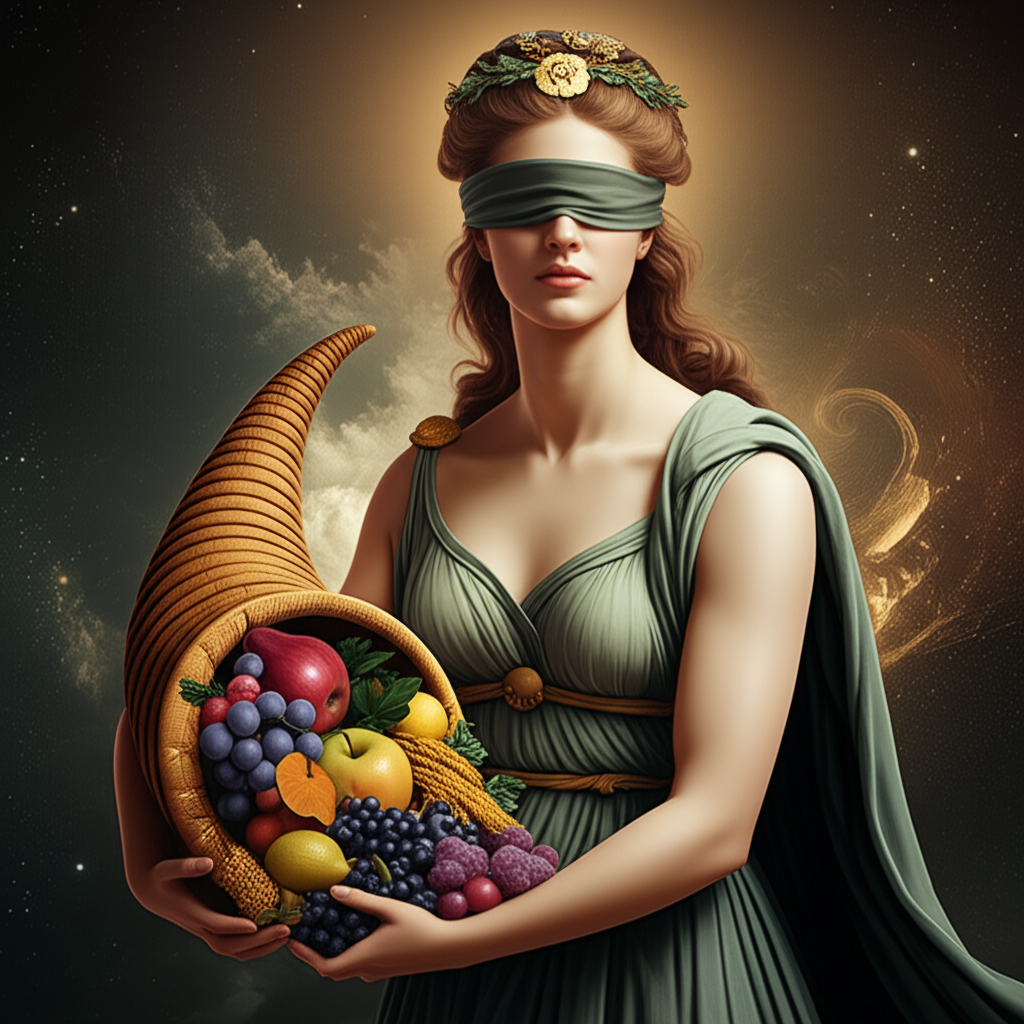
The Physics of Randomness: From Quantum to Chaos
Our modern understanding of Physics further deepens the appreciation for fundamental randomness. At the quantum level, events like radioactive decay or the precise moment a photon strikes an electron are inherently probabilistic. While these micro-level uncertainties don't directly translate to macro-evolutionary events, they underscore that indeterminacy is woven into the fabric of reality.
Furthermore, chaos theory, though deterministic in its underlying equations, demonstrates how tiny, unpredictable perturbations can lead to vastly different outcomes over time in complex systems. The weather, for instance, is famously chaotic. Biological systems, with their immense complexity and countless interacting variables, exhibit similar sensitivities to initial conditions and random inputs, influencing everything from protein folding to ecological dynamics.
Nature's Unpredictability: A Canvas for Evolution
The natural world is a testament to the profound impact of chance. Consider the colonization of a new island by a handful of individuals, or the sudden emergence of a novel disease. These events, often driven by chance dispersal or mutation, can trigger rapid evolutionary change.
Nature doesn't follow a pre-written script. Instead, it's a dynamic interplay of predictable forces (like natural selection favoring efficient predators) and unpredictable events (like a sudden ice age or a volcanic eruption). This constant flux means that fitness is always relative to a specific, and often fleeting, environmental context. What is advantageous today might be detrimental tomorrow due to a random environmental shift.
Philosophical Implications: Beyond Teleology
The prominent role of chance in biological evolution has significant philosophical implications, particularly for notions of teleology (purpose or design) in nature.
- Challenging Design Arguments: If fundamental evolutionary novelty arises from random mutation and drift, it becomes harder to argue for an intelligent designer meticulously crafting each species. Instead, life appears as a robust, adaptive process that harnesses randomness to explore the vast landscape of possibilities.
- Embracing Contingency: Understanding chance fosters an appreciation for the contingency of life. The specific forms life has taken on Earth are just one outcome among countless possibilities. If the dice had rolled differently—a different asteroid impact, a different set of initial mutations—life might have evolved in entirely different directions. This perspective highlights the fragility and uniqueness of our own existence.
- Re-evaluating "Progress": The concept of evolutionary "progress" becomes problematic when chance plays such a significant role. Evolution isn't necessarily striving towards a higher, more complex, or "better" form. It's simply adapting to current conditions, often via random genetic changes that happen to confer an advantage.
Conclusion: A Dance of Chance and Necessity
The role of chance in biological evolution is neither trivial nor total. It is a crucial, unavoidable ingredient that provides the raw material, introduces variability, and reshapes the environmental stage upon which natural selection performs its non-random sorting. From the random molecular changes of mutation to the sweeping unpredictability of ecological catastrophes, chance ensures that the evolutionary journey is a dynamic, open-ended narrative rather than a predetermined path.
Understanding this interplay between chance and necessity offers a more nuanced, scientifically rigorous, and philosophically profound appreciation for the intricate, ever-changing story of life on Earth. It reminds us that while natural selection refines, it is often random luck that provides the initial spark, making the history of life a truly astonishing and unpredictable saga.
**## 📹 Related Video: What is Philosophy?
Video by: The School of Life
💡 Want different videos? Search YouTube for: ""Chance vs Necessity in Evolution Philosophy""**
**## 📹 Related Video: PLATO ON: The Allegory of the Cave
Video by: The School of Life
💡 Want different videos? Search YouTube for: ""Genetic Drift Explained Simply""**