

Art, in its myriad forms, is far more than mere aesthetic pleasure; it is a potent force in the shaping of opinion. From ancient narratives to contemporary installations, art employs sophisticated rhetoric to engage the mind, influencing individual perceptions and collective consciousness. This article explores how artistic expression acts as a powerful, often subtle, mechanism for persuasion, challenging, reinforcing, and ultimately transforming societal viewpoints.
The Unseen Hand: How Art Shapes What We Think
For centuries, philosophers and thinkers have grappled with the profound impact of art on human experience. Far from being a passive reflection of reality, art actively participates in its construction. It does not merely entertain or decorate; it educates, provokes, and persuades. The unique power of art lies in its ability to bypass purely rational arguments, speaking directly to our emotions, intuitions, and subconscious. This makes it an incredibly effective, and sometimes insidious, tool in the shaping of individual and collective opinion.
Art as a Rhetorical Force
The connection between art and rhetoric is ancient and profound. While traditional rhetoric uses language to persuade, art employs imagery, sound, form, and narrative to achieve similar, if not more powerful, effects.
The Emotional Appeal of Aesthetics
Art's primary mode of engagement is often emotional. A poignant piece of music, a stirring painting, or a compelling drama can evoke empathy, fear, joy, or outrage. These emotional responses are not merely fleeting sensations; they lay the groundwork for cognitive shifts. When we are emotionally invested, our receptiveness to new ideas or alternative perspectives increases dramatically. Art leverages this by presenting ideas not as dry propositions, but as lived experiences or felt realities.
Visual Metaphors and Symbolic Persuasion
Beyond direct emotional appeal, art communicates through metaphors and symbols. A sculpture depicting a fallen hero might evoke sentiments of patriotism or sacrifice without uttering a single word. A satirical cartoon can dismantle political arguments with a single, incisive image. These symbolic representations are often more memorable and impactful than lengthy logical arguments, embedding ideas deeply within the viewer's mind. They create shared meanings and understandings that contribute to a collective worldview, thereby directly influencing public opinion.
Shaping the Collective Mind
The influence of art extends beyond individual perception to the very fabric of societal thought. It helps to define cultural norms, challenge existing power structures, and articulate emerging ideologies.
From Individual Perception to Societal Opinion
When enough individuals are exposed to and affected by similar artistic narratives or expressions, a shift in collective mind begins to occur. A powerful play addressing social injustice, for instance, can spark conversations that transcend the theatre, leading to widespread re-evaluation of societal norms. Art provides a common language and shared emotional experience through which complex social and political issues can be explored and understood, fostering a sense of collective consciousness.
Challenging and Reinforcing Dogma
Art can be both a revolutionary force and a tool for upholding the status quo. Throughout history, governments and institutions have patronized art that reinforces their ideologies, celebrating heroes, depicting national myths, or promoting moral virtues. Conversely, dissident artists have used their craft to critique authority, expose hypocrisy, and advocate for change, often at great personal risk. This dual capacity highlights art's immense power to either solidify or subvert prevailing opinion.
Historical Perspectives from the Great Books
The profound impact of art on the mind and opinion has been a recurring theme in Western philosophy, as explored in the Great Books of the Western World.
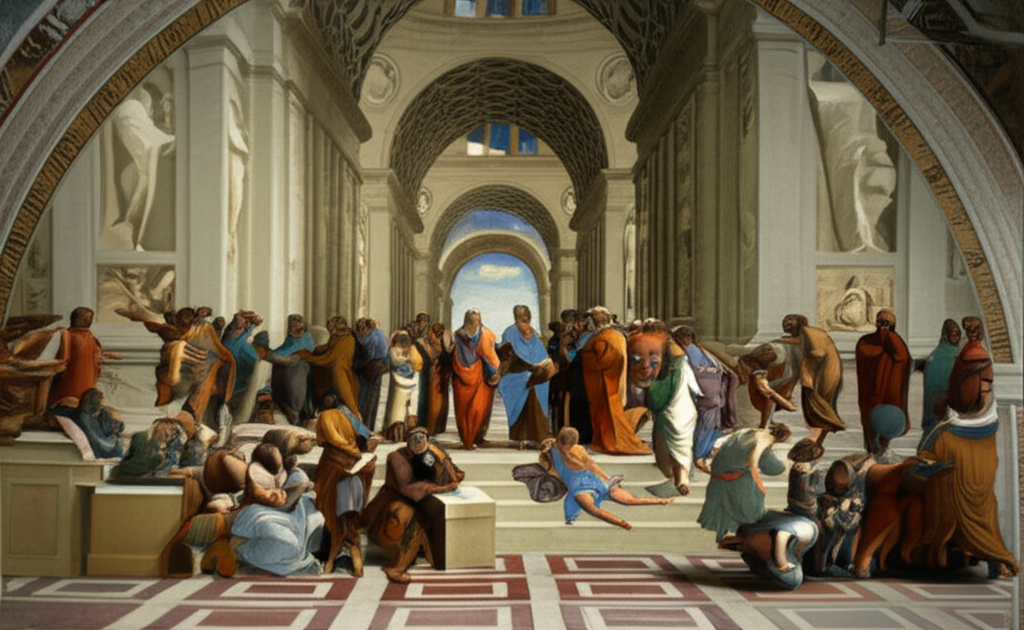
- Plato's Republic: Plato famously viewed certain forms of art, particularly imitative poetry and drama, with suspicion. He believed they could corrupt the soul by appealing to the irrational parts of the mind and misleading citizens with false representations of reality. He recognized art's immense power to shape character and opinion, so much so that he advocated for strict censorship in his ideal state, prioritizing truth and virtue over aesthetic pleasure.
- Aristotle's Poetics: In contrast to Plato, Aristotle saw value in art, particularly tragedy. He argued that tragedy, through "catharsis," purged the audience of pity and fear, offering moral and intellectual insights. For Aristotle, art provided a means to understand human nature and the world, thereby influencing opinion through emotional purification and intellectual illumination rather than corruption.
- Classical Rhetoricians: Thinkers like Quintilian, whose work on rhetoric is foundational, implicitly understood the aesthetic dimension of persuasion. While focusing on verbal arguments, the principles of appeal to emotion (pathos) and character (ethos) are deeply resonant with how art persuades, demonstrating an ancient recognition of non-logical influence on opinion.
These foundational texts underscore a long-standing philosophical debate about art's ethical and societal implications, all revolving around its undeniable capacity to influence the human mind.
The Nuances of Influence
It is crucial to acknowledge that art's influence is rarely monolithic or simple. The interpretation of art is subjective, filtered through individual experiences, cultural contexts, and personal biases. An artwork that inspires one person to action might be dismissed by another, or even interpreted in a completely contradictory way. However, the cumulative effect of artistic expression over time, across diverse audiences, undeniably contributes to the evolution of collective opinion. Art opens spaces for dialogue, contemplation, and re-evaluation, allowing societies to grapple with complex ideas in a uniquely human way.
Conclusion
The role of art in shaping opinion is undeniable and deeply ingrained in human history and philosophy. It functions as a powerful form of rhetoric, engaging the mind through emotion, symbolism, and narrative to influence individual perspectives and collective consciousness. From the cautionary tales of Plato to the cathartic experiences described by Aristotle, the philosophical tradition has consistently recognized art's profound capacity to mold our understanding of the world and our place within it. As we navigate an increasingly complex information landscape, understanding art's persuasive power becomes ever more critical for discerning how our opinions are formed and transformed.
📹 Related Video: PLATO ON: The Allegory of the Cave
Video by: The School of Life
💡 Want different videos? Search YouTube for: "Plato's Philosophy of Art and the Republic"
📹 Related Video: ARISTOTLE ON: The Nicomachean Ethics
Video by: The School of Life
💡 Want different videos? Search YouTube for: "Aristotle Poetics Catharsis Rhetoric Explained"


