

The Unveiling of the Soul: Art's Indispensable Role in Emotional Expression
Summary:
Art, in its myriad forms, serves as an unparalleled conduit for the human spirit, playing an indispensable role in the expression of emotion. From the earliest cave paintings to the most complex symphonies, art has consistently offered a profound language beyond words, enabling individuals and cultures to articulate, explore, and share their deepest feelings. This article delves into the philosophical underpinnings of art's capacity to externalize internal states, examining how it fosters catharsis, builds empathy, and reveals the intricate tapestry of human experience through its unique forms of expression.
The human experience is, at its core, an intricate dance of emotions. Joy, sorrow, fear, love, anger, wonder – these are the currents that shape our perceptions and drive our actions. Yet, articulating these profound internal states often proves elusive through mere words. It is here that art steps onto the stage, not merely as an adornment to life, but as an essential, perhaps even primal, instrument for the expression of emotion. Indeed, to understand the role of art in human civilization is to understand its profound connection to our emotional landscape.
From the dawn of consciousness, humanity has sought to give form to the formless, to make visible the invisible stirrings of the heart and mind. This endeavor, inherently philosophical, suggests that expression through art is not merely an aesthetic choice but a fundamental psychological and social necessity.
Art as a Mirror and a Lens: Reflecting and Shaping Emotion
The concept of art as a reflection of reality, or mimesis, has deep roots in Western thought, notably explored by philosophers like Plato and Aristotle in the Great Books of the Western World. While Plato, in his Republic, viewed art as an imitation, often removed from truth, Aristotle, in his Poetics, championed its capacity to imitate human action and, crucially, to evoke emotion in the audience.
- Mimesis: Art's ability to imitate life, including emotional states, allowing us to see our own feelings externalized and comprehensible.
- Catharsis: Aristotle's groundbreaking idea that tragedy, through pity and fear, purges these emotions from the spectator, providing a profound emotional release and purification. This suggests that art doesn't just display emotion; it actively processes it within the observer.
This dual function—mirroring and processing—underscores art's critical role. It allows us to recognize shared emotional experiences, validating our own feelings, and simultaneously offers a mechanism for their management and understanding.
The Language Beyond Words: When Words Fail, Art Speaks
Consider the limitations of verbal language. While precise for conveying information, it often falters when attempting to capture the nuance, intensity, or ambiguity of emotion. How does one truly describe the feeling of profound grief or ecstatic joy? Art provides an alternative lexicon, a means of articulating the ineffable.
Modes of Artistic Emotional Expression:
- Music: Perhaps the most direct conduit for emotion, music bypasses the intellect to resonate directly with our affective core. A minor chord evokes melancholy, a rapid tempo excitement. As Schopenhauer suggested, music is not merely an imitation of the world, but a direct expression of the will itself, the very emotional fabric of existence.
- Visual Arts (Painting, Sculpture): Color, line, form, and composition are all employed to convey mood and sentiment. The tortured brushstrokes of a Van Gogh, the serene gaze of a Madonna, or the dynamic tension of a Rodin sculpture each articulate a complex emotional narrative without uttering a single word.
- Literature (Poetry, Drama, Fiction): While using words, literature transcends their literal meaning through metaphor, imagery, rhythm, and narrative structure to evoke deep emotional responses, drawing readers into the characters' inner worlds and shared human predicaments.
- Dance: The human body becomes a living sculpture, its movements, gestures, and spatial relationships communicating a spectrum of feelings, from despair to triumph, often with raw, unmediated power that defies verbal description.
Each form of art offers a unique vocabulary for emotional expression, allowing artists to communicate feelings that defy conventional articulation and enabling audiences to experience them vicariously and profoundly.
Art as a Catalyst for Empathy and Connection
Beyond individual expression, art serves a crucial social role in fostering empathy and connection. When we engage with a piece of art that powerfully expresses an emotion, we are invited into the subjective world of the artist or the characters depicted. This imaginative leap allows us to experience, however briefly, what it might be like to feel as another does.
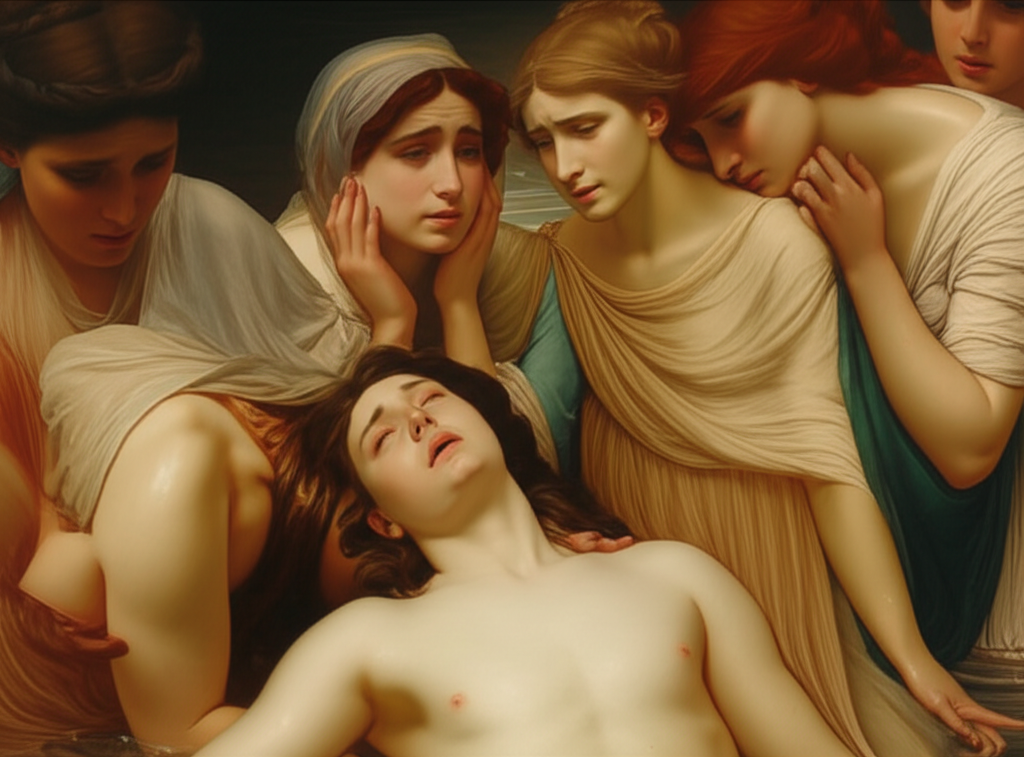
This shared emotional experience bridges divides, cultivating understanding and compassion. It reminds us of our common humanity, that beneath the surface of individual lives, there exists a universal wellspring of emotion that binds us all. The collective experience of viewing a play, listening to a symphony, or witnessing a dance performance can forge powerful, albeit temporary, bonds among strangers, united by a shared emotional journey.
The Artist's Emotional Odyssey
For the artist, the act of creation is often an intensely emotional journey itself. The compulsion to create, to wrestle with ideas and feelings and give them tangible form, is a testament to the profound need for expression. The canvas, the score, the stage – these become arenas where internal struggles are externalized, where joy is amplified, and pain is transmuted into something meaningful. This process can be therapeutic, a way for the artist to navigate and make sense of their own complex emotional landscape. The very act of shaping and refining an emotional expression can provide clarity and release, transforming personal turmoil into universal resonance.
Conclusion: The Enduring Imperative of Art
In conclusion, the role of art in expressing emotion is not merely incidental but fundamental to the human condition. It is a timeless imperative, a testament to our innate need to communicate what lies deepest within us. From the philosophical inquiries of the ancients to the contemporary explorations of modern artists, the power of art to articulate, evoke, and process emotion remains unparalleled. It enriches our individual lives, deepens our understanding of others, and continually reminds us of the profound and often mysterious currents that flow through the human soul. Art does not just decorate our world; it illuminates our inner world, making visible the very essence of our emotional existence.
YouTube Video Suggestions:
-
📹 Related Video: ARISTOTLE ON: The Nicomachean Ethics
Video by: The School of Life
💡 Want different videos? Search YouTube for: ""Aristotle Poetics Catharsis Emotion Art Philosophy""
2. ## 📹 Related Video: What is Philosophy?
Video by: The School of Life
💡 Want different videos? Search YouTube for: ""Schopenhauer Music Emotion Philosophy Expression""