

The Ineffable Language: The Role of Art in Expressing Emotion
The human experience is a tapestry woven with threads of thought and feeling, and it is often in the realm of the latter—our deepest emotions—that words falter. Here, art steps forth, assuming an indispensable role as a profound medium for expression. From the ancient cave paintings to the avant-garde installations of today, art has consistently served as humanity's most potent and universal language for communicating the ineffable currents of the soul, allowing both creator and observer to navigate the complex landscape of human feeling. This article delves into how art not only mirrors our internal states but actively shapes and shares them, fostering empathy and understanding across cultures and epochs.
The Philosophical Foundation of Artistic Emotion
Throughout the annals of Western thought, the connection between art and emotion has been a recurring theme. Philosophers from Plato to Aristotle, and later aestheticians, grappled with art's power to stir the soul. Plato, in his Republic, viewed artistic expression with suspicion, fearing its capacity to incite passions and disrupt rational order. Yet, even in his apprehension, he acknowledged art's immense emotional sway. Aristotle, conversely, celebrated this power, particularly in tragedy, positing that it could lead to catharsis—a purging of emotions like pity and fear, ultimately offering a beneficial psychological release. This historical dialogue underscores art's ancient and enduring role as a conduit for emotional experience, not merely decorative, but deeply functional in the human psyche.
Mechanisms of Emotional Expression in Art
How does art achieve this profound expression of emotion? It employs a diverse palette of techniques that bypass the strictures of verbal language, tapping directly into our sensory and empathetic faculties.
- Symbolism and Metaphor: Artists often use symbols, colors, shapes, and sounds to represent emotions abstractly. A jagged line might convey anger, a muted blue sorrow, or a soaring melody joy. These are not direct depictions but evocative metaphors that resonate emotionally.
- Representation and Mimesis: Figurative art, literature, and drama directly portray characters or scenarios experiencing emotions. A painter captures a tearful face, a writer describes a character's anguish, or a dancer embodies despair. This mirroring (mimesis) allows the audience to recognize and empathize with the depicted feeling.
- Evocation and Resonance: Perhaps the most powerful aspect is art's ability to evoke emotion in the observer. A piece of music might instill a sense of melancholy, a sculpture a feeling of awe, or a poem a surge of nostalgia. The art itself becomes a catalyst, generating an emotional response that may or may not precisely mirror the artist's original intention but is undeniably real for the audience.
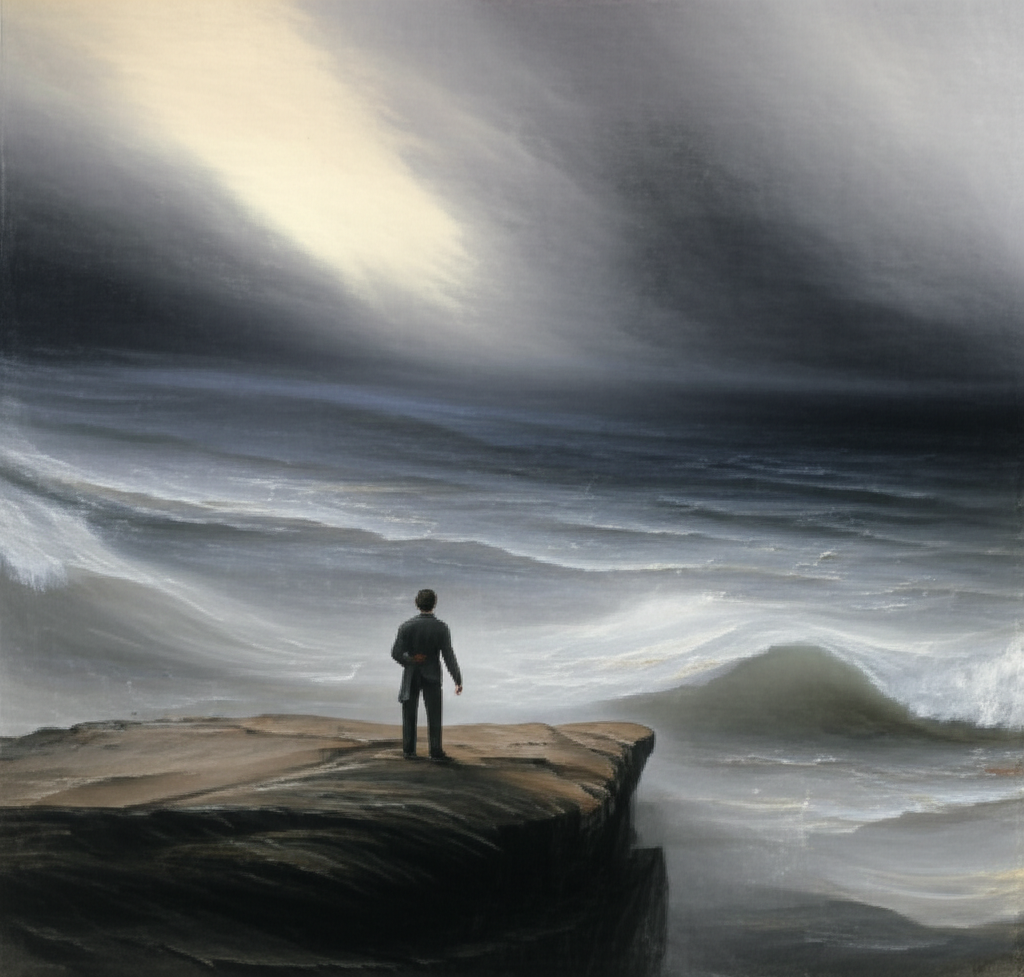
The Universal Dialogue of Feeling
One of the most remarkable aspects of art's role is its capacity to bridge divides. Emotions are universal, even if their triggers and cultural interpretations vary. A classical Greek tragedy can still move a modern audience, a Renaissance Madonna can still evoke tenderness, and a piece of abstract music can still convey tension or release, regardless of geographical or temporal distance.
Consider the various forms of artistic expression:
- Visual Arts (Painting, Sculpture, Photography): Use color, form, light, and composition to communicate joy, sorrow, anger, serenity, or wonder.
- Performing Arts (Music, Dance, Theatre): Employ rhythm, melody, movement, gesture, and narrative to express a vast spectrum of human feeling, often in real-time and collaboratively.
- Literary Arts (Poetry, Prose): Use carefully chosen words, imagery, and narrative structures to articulate complex emotional states and invite empathetic engagement.
This shared language of emotion allows us to understand not just the artist, but also ourselves and others. Art provides a safe space to explore difficult feelings, to confront uncomfortable truths, and to celebrate shared joys. It is through this empathetic exchange that art performs its most vital role in human society.
Art as a Container for the Unspeakable
There are emotions so profound, so complex, or so traumatic that they defy verbal articulation. Grief, ecstasy, existential dread, or the subtle nuances of love often resist being neatly packaged into words. Here, art becomes a container, a vessel for these unspeakable feelings. A mournful requiem, a stark abstract painting, or a poignant poem can hold and convey these depths without needing to define them explicitly. This allows for a deeper, more intuitive understanding, connecting individuals on a level beyond mere intellect. The expression becomes the experience itself, raw and unfiltered.
Conclusion: Art's Enduring Mandate
The role of art in expressing emotion is not merely a supplementary function; it is foundational to human communication and understanding. Art transcends the limitations of language, offering a universal conduit for the boundless landscape of human feeling. It allows us to process our own internal worlds, to connect empathetically with others, and to preserve the emotional tapestry of humanity across generations. As long as humans feel, art will remain their most eloquent and essential voice, perpetually articulating the ineffable.
📹 Related Video: PLATO ON: The Allegory of the Cave
Video by: The School of Life
💡 Want different videos? Search YouTube for: ""Plato Aristotle Art Emotion Philosophy""
📹 Related Video: PLATO ON: The Allegory of the Cave
Video by: The School of Life
💡 Want different videos? Search YouTube for: ""Aesthetics of Emotion in Art""