

The Profound Role of Animals in the Ecosystem of Our World: A Philosophical Inquiry
The intricate tapestry of our World is woven with countless threads, each representing a unique and indispensable component. Among these, the Role of Animal life stands as a cornerstone, not merely for its biological functions but for its profound philosophical implications regarding Nature's design and humanity's place within it. This article explores the multifaceted contributions of fauna to the global ecosystem, urging us to look beyond mere utility and to appreciate the intrinsic value and interconnectedness that define our living World. It is a journey into understanding how every creature, from the smallest insect to the largest mammal, participates in a grand, evolving cosmic order, compelling us to reflect on our ethical responsibilities towards the natural realm.
The Intrinsic Value of Animal in the World's Tapestry
From the earliest philosophical inquiries, thinkers have grappled with the concept of Nature and the place of living beings within it. Ancient Greek philosophers, notably Aristotle in his History of Animals and other biological works, meticulously categorized and observed animal life, often discerning a teleological purpose—an inherent end or goal—in their existence. This perspective suggests that animals possess an intrinsic value, not solely defined by their usefulness to humans, but as integral parts of a naturally ordered World.
Beyond Utility: A Philosophical Lens on Nature's Design
To view animals merely as resources or commodities is to miss a deeper philosophical truth. Their existence contributes to the aesthetic, spiritual, and systemic richness of the World. Plato, in his Timaeus, speaks of a cosmos ordered by a divine craftsman, where all parts contribute to a beautiful and harmonious whole. In this light, every Animal plays a Role in completing the World's perfect form, reflecting a fundamental order that transcends human perception. Their unique behaviors, adaptations, and life cycles are not accidental but are, in a sense, expressions of Nature's inherent wisdom and capacity for self-organization.
Ecological Architects: The Multifaceted Role of Fauna
The practical, ecological contributions of animals are vast and undeniably critical to the health and stability of the global ecosystem. These roles are not isolated but are deeply interwoven, demonstrating the profound interconnectedness of all life. Understanding these functions is key to appreciating the delicate balance that sustains our World.
From Microbes to Mammals: A Spectrum of Contributions
Animals perform a myriad of essential services that maintain the planet's life support systems. These roles can be broadly categorized as follows:
- Decomposers and Scavengers: Organisms like dung beetles, vultures, and various invertebrates break down dead organic matter, recycling nutrients back into the soil, thus fertilizing it for new growth. This fundamental Role prevents the accumulation of waste and ensures the continuous flow of energy within ecosystems.
- Pollinators: Insects, birds, and bats are crucial for the reproduction of countless plant species, including many of the crops that feed humanity. Without these diligent workers, the diversity of plant life, and consequently, the food webs they support, would collapse.
- Seed Dispersers: Animals consume fruits and then deposit seeds in new locations, often far from the parent plant, aiding in forest regeneration and the spread of plant species across landscapes. This Role is vital for biodiversity and ecosystem resilience.
- Predators and Prey: The predator-prey relationship is a cornerstone of natural selection and population control. Predators maintain the health of prey populations by culling the weak or sick, while prey species drive the evolution of speed, camouflage, and defensive strategies. This dynamic ensures a robust and adaptable World.
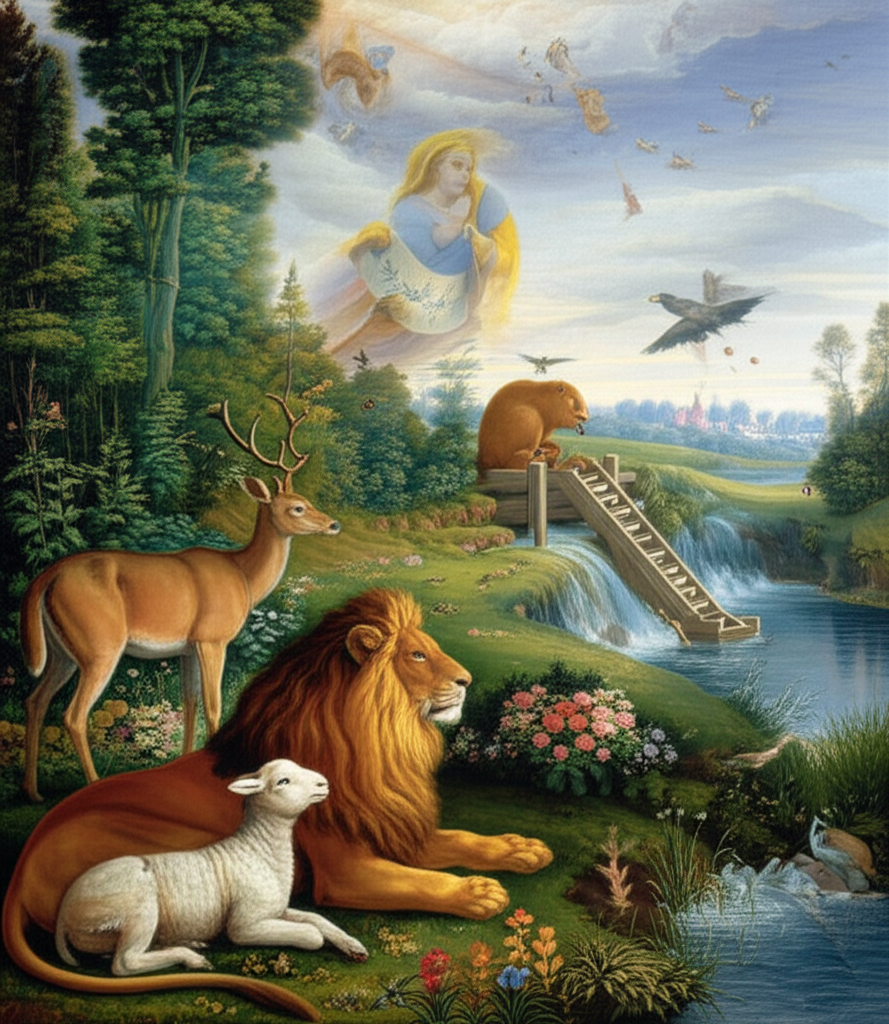
- Ecosystem Engineers: Animals like beavers (building dams), earthworms (aerating soil), and coral polyps (creating reefs) physically modify their habitats, creating new niches and influencing the structure and function of entire ecosystems. Their Role in shaping landscapes is immense.
Humanity's Place: Stewardship and Ethical Considerations
The recognition of the vital Role of Animal life naturally leads to a contemplation of humanity's responsibilities. Philosophers throughout history have debated the ethical treatment of animals, ranging from notions of human dominion to calls for compassionate stewardship. The Great Books of the Western World contain texts that underscore both perspectives, from interpretations of Genesis that grant humans authority over creation to later philosophical arguments for duties towards animals, even if indirect.
Our Role in Acknowledging the Animal World
As beings capable of complex moral reasoning, our Role extends beyond mere observation to active conservation and ethical engagement. The ecological crises we face today—habitat loss, climate change, species extinction—are direct consequences of a failure to acknowledge and respect the fundamental Role of animals in maintaining the planetary balance. A truly philosophical approach demands that we consider the long-term implications of our actions, not just for human well-being, but for the flourishing of the entire World. This requires a shift from an anthropocentric view to one that embraces the intrinsic worth of all life.
The Interconnected Web: A Holistic View of Nature
The profound interconnectedness of all life forms is a recurring theme in philosophical thought and is starkly evident in ecological studies. Every Animal's Role, no matter how seemingly minor, contributes to the overall health and resilience of the ecosystem. Remove one thread, and the entire tapestry weakens.
The Ripple Effect: Every Animal's Role Matters
Consider the concept of trophic cascades, where the removal of a top predator can have cascading effects down the food chain, altering vegetation, water quality, and even the physical landscape. This illustrates how the Role of a single species can have far-reaching consequences throughout the World. This holistic view aligns with ancient philosophical concepts of a unified cosmos, where all elements are interrelated and interdependent. Our understanding of Nature must therefore be one of dynamic balance, where change in one part inevitably creates ripples throughout the whole.
In conclusion, the Role of Animal life in the ecosystem of our World is not merely a biological fact but a profound philosophical truth. It challenges us to look beyond instrumental value, to appreciate the intricate design of Nature, and to recognize our ethical obligation as stewards of this magnificent planet. The World is a complex, living entity, and every Animal is an essential part of its enduring vitality.
📹 Related Video: ARISTOTLE ON: The Nicomachean Ethics
Video by: The School of Life
💡 Want different videos? Search YouTube for: ""Aristotle's Philosophy of Nature and Animals""
📹 Related Video: ARISTOTLE ON: The Nicomachean Ethics
Video by: The School of Life
💡 Want different videos? Search YouTube for: ""Ecological Ethics: Our Moral Duties to the Environment""