

The Celestial Ascent: Unpacking the Angel's Role in Theological Hierarchy
Angels, often depicted as ethereal beings with wings and halos, occupy a profound and often misunderstood role within the vast tapestry of theology. Far from mere mythological embellishments, their existence and structured placement reveal fundamental truths about the divine order, creation, and the very nature of existence itself. This article delves into the intricate position of the angel within the theological hierarchy, exploring their essential nature, their functions as divine intermediaries, and how their form shapes our understanding of the cosmos.
Summary: Messengers of the Divine Order
In theological frameworks, particularly within Abrahamic traditions, angels are understood as intelligent, incorporeal beings created by God to serve specific functions within the divine economy. Their primary role is that of messengers, guardians, and executors of divine will, forming a hierarchical structure that bridges the gap between the purely transcendent God and the material world. This celestial order, with its distinct ranks and duties, provides a profound insight into the harmonious and purposeful nature of creation, where every entity, from the highest seraph to the lowest human, plays a part in a grand divine symphony.
The Metaphysical Form of Angels: Pure Intellect and Will
To comprehend the role of angels, one must first grasp their unique metaphysical form. Unlike humans, who are composite beings of body and soul, angels are traditionally understood as pure spirits, possessing intellect and will but lacking material bodies. Thomas Aquinas, drawing heavily from Aristotelian metaphysics within the Summa Theologica (a cornerstone of the Great Books of the Western World), describes angels as "subsistent intellectual substances." This means they exist independently, not as accidents of matter, and their very being is defined by their capacity for knowledge and choice.
- Immateriality: Angels are not bound by the limitations of space and time as material beings are. Their presence is spiritual, not physical.
- Intellectual Perfection: Their understanding is direct and intuitive, not reliant on sensory experience or discursive reasoning as ours is. They grasp truths immediately.
- Volitional Freedom: Like humans, angels possess free will, capable of choosing good or evil, as evidenced by the fall of Lucifer and his cohort.
This pure spiritual form allows them to perfectly reflect and execute the divine will without the impediments of corporeal existence, making them ideal intermediaries between God and creation.
The Theological Hierarchy: A Ladder to the Divine
The concept of an angelic hierarchy is central to understanding their role. Pseudo-Dionysius the Areopagite, whose ideas profoundly influenced medieval theology, articulated a nine-fold division of angelic choirs, grouped into three main orders or triads. This structure, often discussed in works within the Great Books, illustrates a meticulously organized cosmos where divine grace flows downwards through ordered channels.
Table 1: The Nine Choirs of Angels
| First Sphere (Closest to God) | Second Sphere (Governors of Cosmos) | Third Sphere (Guardians & Messengers) |
|---|---|---|
| Seraphim | Dominions (or Lordships) | Principalities (or Rulers) |
| Cherubim | Virtues | Archangels |
| Thrones | Powers | Angels |
Each rank possesses distinct attributes and functions, reflecting increasing proximity to the divine light:
- First Sphere: These angels are primarily concerned with the contemplation of God's essence, radiating divine love and knowledge.
- Second Sphere: They govern the celestial bodies and the cosmic order, executing God's providential plan for the universe.
- Third Sphere: These are the angels most directly involved with humanity, serving as messengers, guardians, and executors of divine will on Earth.
This hierarchical arrangement is not merely a bureaucratic structure but a philosophical model demonstrating how divine perfection descends to lower orders of being, maintaining harmony and purpose throughout creation.
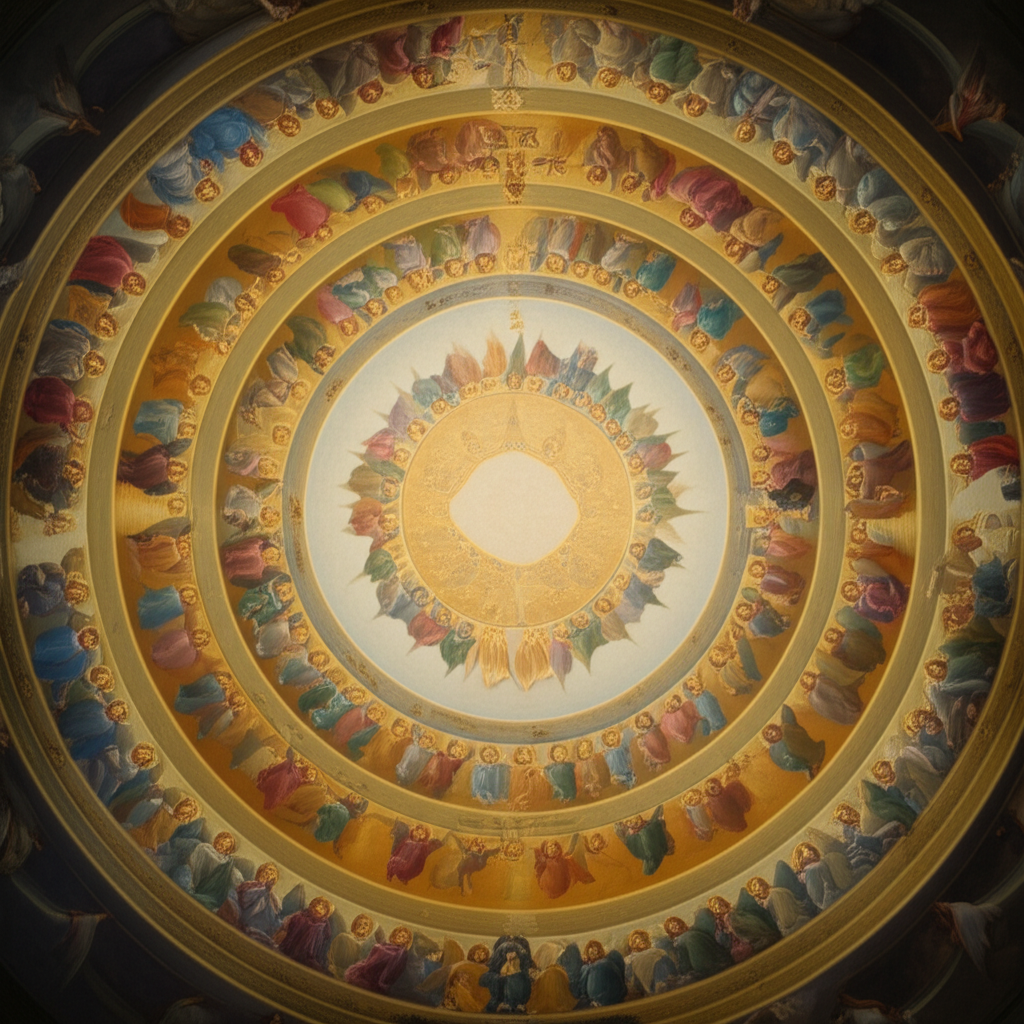 shown closest to the light, radiating intense color and spiritual energy, while the lower orders (Angels, Archangels) are depicted closer to a subtly implied earthly realm, carrying scrolls or swords.)
The Angel's Multifaceted Role: Messengers, Guardians, and Executors
The role of the angel is remarkably diverse, yet always centered on their function as instruments of God's will.
- Messengers (Angeloi): This is their most recognized function, as the Greek word "angelos" itself means "messenger." From the annunciation to Mary to the delivery of divine commands in various scriptural narratives, angels serve as conduits of divine communication to humanity.
- Guardians and Protectors: Angels are often assigned to individuals, nations, or even churches, offering protection, guidance, and intercession. The concept of "guardian angels" is a deeply ingrained part of popular theology.
- Executors of Divine Judgment and Providence: Angels are depicted carrying out God's judgments, leading armies, and influencing historical events according to divine plan. They are active participants in the unfolding of cosmic history.
- Contemplators and Worshippers: At their highest levels, angels ceaselessly worship and contemplate God, reflecting His glory and participating in the divine life. This contemplative role is paramount, as their very existence is an act of praise.
These functions highlight the dynamic interplay between the transcendent God and His created order, with angels serving as vital links in this chain of being.
Conclusion: The Enduring Significance of Angels in Theology
The role of the angel in theological hierarchy is far more than a quaint religious detail; it is a profound philosophical construct that illuminates core tenets of Western thought. Their immaterial form, their structured placement in the divine order, and their multifaceted functions as intermediaries offer insights into the nature of reality, the flow of divine grace, and the purposeful design of the cosmos. From the intricate arguments of Aquinas in the Summa Theologica to the poetic visions in ancient texts, angels stand as enduring symbols of the spiritual realm's active involvement in the material world, continually reminding us of a reality beyond our immediate perception and the grand, ordered universe in which we reside.
📹 Related Video: ARISTOTLE ON: The Nicomachean Ethics
Video by: The School of Life
💡 Want different videos? Search YouTube for: ""Aquinas Summa Theologica Angels Explained""
📹 Related Video: ARISTOTLE ON: The Nicomachean Ethics
Video by: The School of Life
💡 Want different videos? Search YouTube for: ""Pseudo-Dionysius Celestial Hierarchy Explained""