

The Rhetoric of War and Peace: A Philosophical Examination
The landscape of human conflict and cooperation is profoundly shaped not merely by actions, but by the words that precede, accompany, and follow them. This article delves into the intricate relationship between rhetoric and the perennial human struggle between war and peace. From ancient philosophical inquiries to contemporary geopolitical strategies, language serves as the primary instrument through which governments and leaders forge narratives, justify actions, and sway public opinion. We will explore how persuasive communication can ignite the flames of conflict or lay the groundwork for lasting harmony, drawing insights from the enduring wisdom contained within the Great Books of the Western World. Understanding this rhetorical interplay is crucial for any engaged citizen seeking to navigate the complex currents of political discourse.
The Ancient Art of Persuasion: Foundations of Conflict and Consensus
The power of rhetoric has been recognized since antiquity. Philosophers like Plato, though often wary of its manipulative potential, acknowledged its profound influence on the polis. Aristotle, in his Rhetoric, meticulously dissected the art of persuasion, identifying its components: logos (logic), pathos (emotion), and ethos (credibility). These elements remain the bedrock upon which narratives of war and peace are constructed.
Consider the historical accounts within the Great Books, such as Thucydides' History of the Peloponnesian War. Here, speeches are not mere embellishments; they are integral to understanding the motivations, justifications, and strategic considerations that led to devastating conflict. The orators of Athens and Sparta used sophisticated rhetorical techniques to rally their citizens, demonize their enemies, and rationalize their imperial ambitions. The very language employed could either bridge divides or deepen them, setting the stage for either diplomatic resolution or inevitable bloodshed.
Key Philosophical Perspectives on Rhetoric:
- Plato: Often viewed rhetoric with suspicion, seeing it as a tool for flattery and manipulation rather than the pursuit of truth. He distinguished between true rhetoric (aimed at justice) and false rhetoric (aimed at pleasing).
- Aristotle: Provided a systematic analysis of rhetoric as an art, seeing it as a neutral tool that could be used for good or ill. He emphasized the importance of understanding an audience and crafting arguments effectively.
- Cicero: Advocated for the orator perfectus, a speaker who combined wisdom and eloquence, using rhetoric for the service of the state and justice.
Forging Consent: The Rhetoric of War
When nations prepare for or engage in conflict, the government's primary task, beyond military readiness, is to craft a compelling narrative that justifies the immense human and economic cost. This is where the rhetoric of war comes into full force, often employing specific strategies to garner public support and suppress dissent.
Common Rhetorical Strategies in Times of War:
- Framing the Enemy: Dehumanization, portraying the adversary as an existential threat, barbaric, or irrational. This often simplifies complex geopolitical realities into a clear good-versus-evil dichotomy.
- Appeals to Patriotism and Duty: Invoking national pride, shared values, and the concept of sacrifice for the greater good. Citizens are often reminded of historical grievances or past glories.
- Justification through Necessity: Presenting war as the only option, a last resort against an aggressor or to protect vital interests. This often downplays diplomatic alternatives.
- Moral Imperative: Casting the conflict as a crusade for universal values like freedom, democracy, or human rights, thereby elevating the war beyond national interest.
- Censorship and Information Control: Limiting access to alternative viewpoints or information that might undermine the official narrative, ensuring a cohesive message.
The skillful deployment of such language can transform a costly, ambiguous conflict into a righteous crusade, demonstrating the profound capacity of rhetoric to shape perception and action on a grand scale.
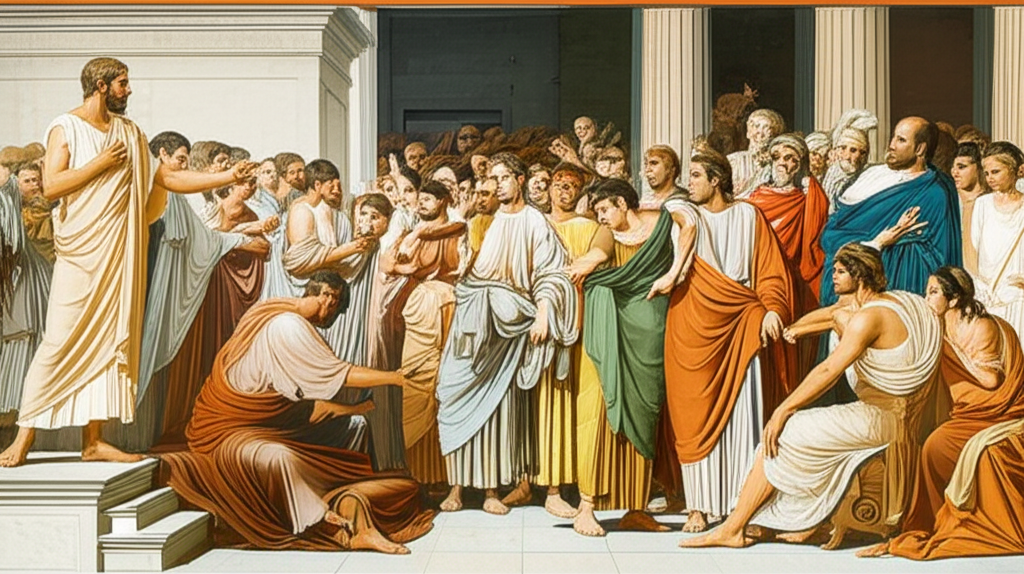
The Delicate Dance of Diplomacy: Rhetoric in Pursuit of Peace
While the rhetoric of war mobilizes and divides, the rhetoric of peace aims to reconcile, unite, and build bridges. Achieving peace often requires a different set of persuasive skills, focused on empathy, mutual understanding, and the search for common ground. Here, the challenge for governments and diplomats is to de-escalate tensions, foster trust, and negotiate compromises, all through the careful use of language.
The Great Books offer numerous examples of attempts at reconciliation, from philosophical dialogues seeking universal truths to historical accounts of treaties and alliances. The rhetoric of peace often involves:
- Emphasizing Shared Humanity: Focusing on common interests, universal values, and the costs of conflict for all parties.
- Acknowledging Legitimate Concerns: Validating the grievances or fears of the opposing side, even while disagreeing with their actions.
- Proposing Win-Win Solutions: Framing negotiations as opportunities for mutual benefit rather than zero-sum games.
- Building Trust through Credibility: Demonstrating sincerity, reliability, and a genuine commitment to resolution.
- Crafting Inclusive Narratives: Moving beyond "us vs. them" to "we," fostering a sense of collective responsibility for a peaceful future.
This form of rhetoric is often more subtle, requiring patience, active listening, and a profound understanding of the other's perspective. It is the art of transforming adversaries into partners, a testament to the constructive power of language.
The Citizen's Imperative: Discerning Truth in the Rhetorical Storm
In an age of constant information flow, understanding the rhetoric of war and peace is not merely an academic exercise; it is a vital civic responsibility. Citizens are bombarded with narratives from governments, media, and various interest groups, each vying for influence. The ability to critically analyze these persuasive messages is paramount.
To navigate this rhetorical landscape, one must cultivate a philosophical skepticism, questioning the underlying assumptions, emotional appeals, and logical consistency of arguments. As we learn from the Socratic tradition, true wisdom begins with questioning.
Questions for Critical Engagement with Rhetoric:
- Who is speaking, and what is their agenda? (Consider ethos)
- What emotions are being invoked, and why? (Consider pathos)
- What evidence is presented, and is it logically sound? (Consider logos)
- What information is being omitted, and why?
- How does this narrative compare to alternative viewpoints?
By developing these critical faculties, individuals can move beyond simply reacting to rhetoric and instead actively engage with political discourse, holding governments accountable for the language they employ. This empowers citizens to become more informed participants in the ongoing dialogue between war and peace, contributing to a more reasoned and just society.
YouTube Video Suggestions:
-
📹 Related Video: ARISTOTLE ON: The Nicomachean Ethics
Video by: The School of Life
💡 Want different videos? Search YouTube for: ""Aristotle Rhetoric explained""
-
📹 Related Video: KANT ON: What is Enlightenment?
Video by: The School of Life
💡 Want different videos? Search YouTube for: ""Noam Chomsky propaganda model""