

The Eloquent Battlefield: Deconstructing the Rhetoric of War and Peace
The landscape of human conflict and cooperation is not solely shaped by armies clashing or treaties being signed. Beneath the surface, a more insidious and pervasive force is constantly at play: rhetoric. This article delves into how the careful, often manipulative, deployment of language by government and other actors dictates our perception, justification, and ultimately, our engagement with war and peace. From ancient battlefields to modern diplomatic tables, the art of persuasion remains a pivotal, often unseen, weapon and tool, shaping collective consciousness and steering the course of history. Understanding this linguistic architecture is crucial for any thoughtful citizen wishing to navigate the complex moral and political choices presented by the state of global affairs.
The Foundational Power of Rhetoric
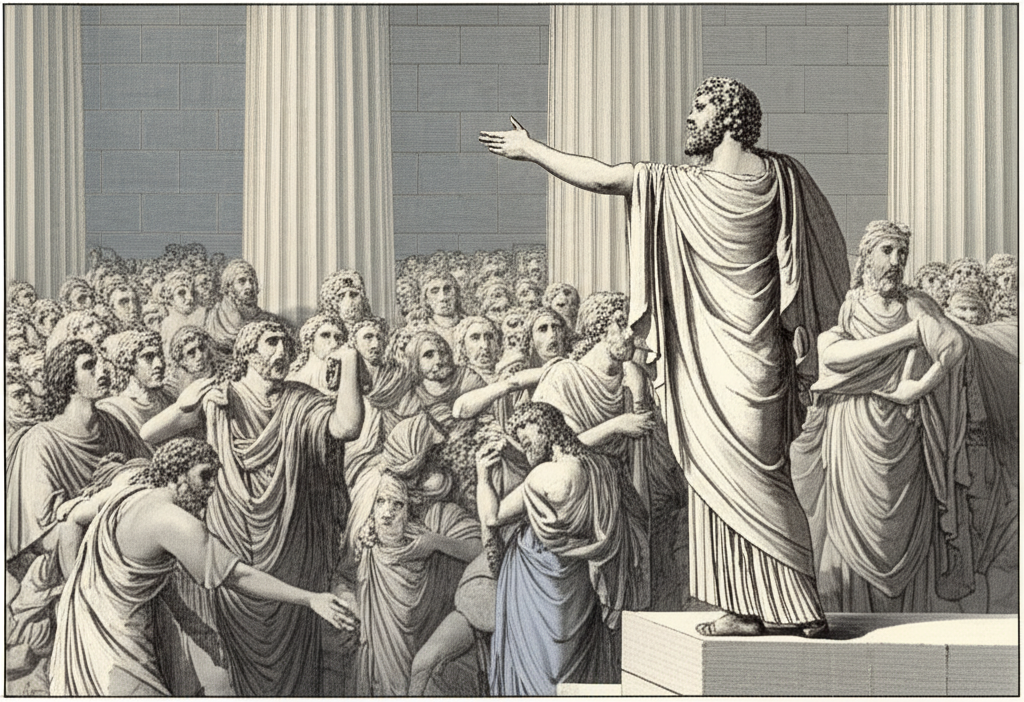
Rhetoric, at its heart, is the art of persuasion. As articulated by Aristotle in his seminal work, Rhetoric, it is the faculty of observing in any given case the available means of persuasion. In the context of war and peace, this means the strategic crafting of messages to influence public opinion, mobilize populations, demonize enemies, or foster alliances. It is not merely about speaking eloquently, but about understanding the audience, the context, and the desired outcome. The language employed becomes a powerful instrument, capable of transforming abstract concepts into visceral realities, thereby altering our understanding of justice, necessity, and sacrifice.
Key Aspects of Rhetorical Power:
- Logos: Appeals to logic and reason, often through statistics, historical precedents, or expert testimony.
- Pathos: Appeals to emotion, such as fear, patriotism, anger, or hope.
- Ethos: Appeals to credibility and character, presenting the speaker or their cause as trustworthy and authoritative.
The Rhetoric of War: Justification and Mobilization
When nations contemplate war, the initial skirmishes often occur not on battlefields, but in the realm of public discourse. Government leaders and their allies employ carefully constructed narratives to justify military action, framing it as inevitable, necessary, or even morally imperative. This involves a deliberate choice of language that can dehumanize the enemy, elevate the nation's own cause, and prepare the populace for sacrifice.
Common Rhetorical Strategies in Times of War:
- Demonization: Portraying the enemy as inherently evil, barbaric, or a threat to civilization. This strips them of their humanity, making violence against them seem more acceptable.
- Exaggeration of Threat: Amplifying perceived dangers to instill fear and create a sense of urgency for military intervention.
- Appeals to Patriotism and Duty: Invoking national pride, historical grievances, or the defense of shared values to rally support.
- Euphemisms: Using softer, less confronting terms for violent actions (e.g., "collateral damage" for civilian casualties, "pre-emptive strike" for invasion).
- Framing: Presenting the conflict as a struggle between good and evil, freedom and oppression, or order and chaos.
The speeches of leaders throughout history, from Pericles' Funeral Oration (as recounted by Thucydides) to modern presidential addresses, demonstrate how rhetoric can transform a costly and bloody endeavor into a noble crusade, essential for the nation's survival or moral standing.
The Rhetoric of Peace: Diplomacy and Reconciliation
Conversely, the pursuit of peace also relies heavily on sophisticated rhetoric. The language of diplomacy, negotiation, and reconciliation is designed to build bridges, find common ground, and de-escalate tensions. Here, the goal shifts from mobilization to persuasion, from division to unity. It requires a different set of rhetorical tools, often emphasizing shared humanity, mutual interests, and the benefits of cooperation.
Rhetorical Tools for Fostering Peace:
- Empathy and Understanding: Articulating the perspectives and legitimate concerns of all parties involved.
- Appeals to Shared Values: Highlighting common goals such as stability, prosperity, or human rights.
- Promise of Mutual Benefit: Emphasizing the economic, social, or security advantages of peace over conflict.
- De-escalation of Language: Moving away from accusatory or inflammatory terms towards neutral or conciliatory phrasing.
- Vision Casting: Presenting a compelling future where cooperation thrives and past grievances are overcome.
Philosophers like Immanuel Kant, in his exploration of Perpetual Peace, implicitly acknowledge the power of rational discourse and diplomatic language in establishing enduring harmony among states. The careful crafting of treaties, declarations, and diplomatic communiqués are all exercises in rhetorical mastery aimed at shaping a peaceful reality.
Government, Language, and the Public Sphere
The role of government in deploying rhetoric is paramount. Governments possess the platforms, resources, and perceived legitimacy to shape public discourse on a grand scale. Through official statements, media briefings, educational campaigns, and even cultural initiatives, they dictate the narrative surrounding war and peace. The very definition of a "threat" or a "solution" is often a product of governmental language.
Consider the implications of this power:
| Aspect | Rhetoric of War | Rhetoric of Peace |
|---|---|---|
| Primary Goal | Mobilization, Justification, Dehumanization | De-escalation, Reconciliation, Alliance Building |
| Emotional Appeal | Fear, Anger, Patriotism | Hope, Trust, Shared Humanity |
| Key Terms | Enemy, Threat, Sacrifice, Victory, Freedom | Dialogue, Cooperation, Stability, Resolution, Future |
| Impact on Public | Unifies against an external 'other', demands action | Fosters introspection, encourages compromise |
This manipulation of language is not always malicious, but it is always strategic. It highlights the critical need for citizens to develop a discerning ear, to question the narratives presented, and to understand the underlying rhetorical techniques at play.
Conclusion: The Unending Dialogue
The rhetoric of war and peace is an enduring philosophical and practical challenge. It reminds us that language is never neutral; it carries intent, shapes perception, and has tangible consequences. From the ancient insights of Plato and Aristotle on persuasive speech to the modern analyses of propaganda, the capacity of words to incite conflict or broker lasting peace remains a central concern for anyone contemplating the nature of human society and the role of government. As we engage with the global political arena, a critical understanding of these rhetorical maneuvers is not merely an academic exercise, but a vital tool for informed citizenship and the pursuit of a more just and peaceful world.
YouTube Video Suggestions:
-
📹 Related Video: ARISTOTLE ON: The Nicomachean Ethics
Video by: The School of Life
💡 Want different videos? Search YouTube for: ""Aristotle Rhetoric explained" for an overview of classical rhetorical theory"
2. ## 📹 Related Video: PLATO ON: The Allegory of the Cave
Video by: The School of Life
💡 Want different videos? Search YouTube for: ""Thucydides Peloponnesian War rhetoric" for analysis of historical speeches and their impact on conflict"