

The Eloquence of Conflict and Concord: Unpacking the Rhetoric of War and Peace
Summary: The words we choose, the narratives we construct, and the appeals we make are not mere reflections of reality; they actively shape it, especially when it comes to the monumental decisions of war and peace. This article delves into how rhetoric—the art of persuasion—has historically been, and continues to be, a primary instrument in the hands of government and individuals alike, determining whether societies descend into conflict or strive for harmony. From ancient Greek debates to modern diplomatic negotiations, the language employed dictates the path forward, making the study of rhetoric essential for understanding the dynamics of war and peace.
The Unseen Weapon: Language as the Crucible of Destiny
In the grand theatre of human affairs, few dramas are as profound or as consequential as the transitions between war and peace. While we often focus on geopolitical forces, economic pressures, or military might, it is crucial to recognize the silent, yet potent, force that orchestrates these shifts: rhetoric. Far from being mere ornamentation, language is a fundamental tool of power, capable of rallying nations to arms or forging bonds of lasting accord. As students of philosophy, we are compelled to examine the intricate ways in which words are wielded, for within their careful construction lies the potential for both devastation and salvation.
The Great Books of the Western World offer an indispensable lens through which to view this phenomenon. From the epic poems of Homer, which glorify martial prowess, to the detailed political analyses of Thucydides, where speeches are as significant as battles, we find consistent evidence of rhetoric's pivotal role. It is through persuasive language that leaders justify their actions, mobilize populations, and define the very essence of friend and foe.
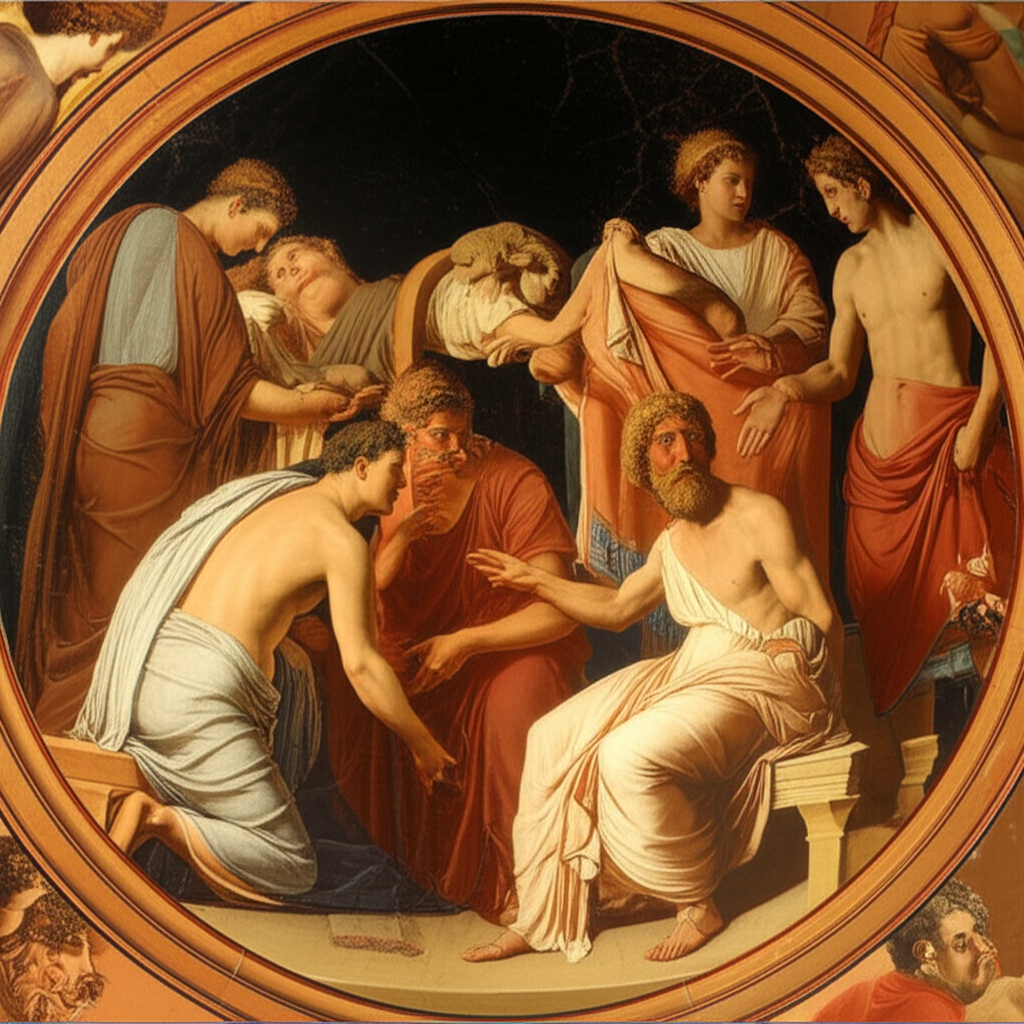
Ancient Echoes: Rhetoric in the Crucible of Antiquity
The foundations of our understanding of rhetoric are deeply rooted in classical thought. The ancient Greeks, especially, grappled with the power and perils of persuasion, recognizing its central role in the polis.
-
Thucydides and the Peloponnesian War: Perhaps no ancient text better illustrates the rhetoric of war and peace than Thucydides' History of the Peloponnesian War. His detailed accounts of speeches delivered by Athenian and Spartan leaders reveal how language was used to frame conflicts, justify aggression, and negotiate truces. The chilling Melian Dialogue, for instance, is a stark demonstration of realpolitik expressed through rhetoric, where the Athenians argue for might over right, leaving the Melians with a choice between submission and annihilation. Here, the government's voice becomes the instrument of its will, stripped bare of moral pretense.
-
Plato and Aristotle: The Philosophical Divide:
- Plato, particularly in dialogues like Gorgias and Phaedrus, viewed rhetoric with suspicion. He saw it as a tool often employed by sophists to manipulate emotions and obscure truth, prioritizing persuasion over genuine knowledge. For Plato, such rhetoric could easily lead a government astray, fostering injustice and demagoguery.
- Aristotle, in his seminal work Rhetoric, offered a more pragmatic and systematic analysis. He defined rhetoric as "the faculty of observing in any given case the available means of persuasion." Aristotle identified three modes of persuasion: ethos (credibility), pathos (emotion), and logos (logic). He understood that rhetoric, while capable of misuse, was essential for effective governance and public discourse, including the crucial deliberations concerning war and peace.
These philosophical explorations set the stage for understanding how language functions not merely as communication, but as a strategic force.
The Dueling Dialects: Rhetoric of War vs. Rhetoric of Peace
The language used to advocate for war is fundamentally different from that used to pursue peace. Recognizing these distinctions is crucial for critical engagement with political discourse.
| Feature | Rhetoric of War | Rhetoric of Peace |
|---|---|---|
| Framing of "Other" | Dehumanization, demonization, threat, enemy | Partner, stakeholder, potential ally, common humanity |
| Appeals | Fear, patriotism, honor, security, justice (retributive) | Empathy, mutual benefit, cooperation, shared future, justice (restorative) |
| Key Terms | Sacrifice, victory, defense, aggression, insurgency, collateral damage | Dialogue, negotiation, compromise, diplomacy, reconciliation, stability |
| Goals | Domination, punishment, conquest, elimination of threat | Resolution, coexistence, harmony, mutual understanding |
| Emotional Tone | Urgent, indignant, fearful, aggressive | Hopeful, conciliatory, rational, patient |
| Role of Government | Mobilizer, protector, avenger | Mediator, facilitator, builder of bridges |
The government's role in shaping these narratives is paramount. Through speeches, policy statements, and propaganda, it can either escalate tensions or de-escalate conflicts, all through the careful deployment of rhetoric.
Modern Applications: The Enduring Power of Persuasion
Even in our hyper-connected, information-saturated age, the principles of rhetoric remain strikingly relevant. The speed and reach of modern media amplify the impact of language, making the discernment of persuasive techniques more critical than ever.
- Euphemisms and Obfuscation: The rhetoric of war often relies on euphemisms to soften the harsh realities of conflict. "Collateral damage" instead of civilian casualties, "enhanced interrogation techniques" instead of torture, or "surgical strikes" for bombing raids – these linguistic choices are designed to sanitize violence and make it more palatable to the public.
- Appeals to Emotion (Pathos): Leaders frequently tap into deep-seated emotions—fear of the "other," pride in one's nation, outrage at perceived injustices—to garner support for military action. Conversely, appeals to empathy and shared values are central to building consensus for peace initiatives.
- The Credibility of the Speaker (Ethos): The perceived trustworthiness and authority of a government or its representatives significantly influence the reception of their rhetoric. A leader seen as honest and principled will have greater sway in advocating for either war or peace.
YouTube: "Thucydides Melian Dialogue analysis" or "The Philosophy of Rhetoric in Politics"
Concluding Thoughts: The Philosopher's Duty in a World of Words
As Emily Fletcher, I believe it is our philosophical duty to critically examine the rhetoric that pervades our political discourse. Understanding how language is used to frame the choices between war and peace empowers us to be more discerning citizens, capable of seeing beyond the immediate emotional appeal to the underlying arguments and intentions. The Great Books remind us that this struggle for intellectual clarity is an ancient one, and its stakes—the very fabric of society and the lives within it—are eternally high. By engaging with rhetoric not as a neutral medium, but as a powerful, often loaded, instrument, we can better contribute to a world where reason and empathy, rather than manipulation and fear, guide the decisions of government and humanity.
📹 Related Video: What is Philosophy?
Video by: The School of Life
💡 Want different videos? Search YouTube for: "The Rhetoric of War and Peace philosophy"