

The Lingua Franca of Conflict and Concord: Exploring the Rhetoric of War and Peace
The delicate balance between conflict and cooperation, between War and Peace, is not merely a matter of military might or diplomatic strategy; it is fundamentally shaped by rhetoric. From the ancient battlefields to modern geopolitical arenas, language serves as the primary instrument through which intentions are declared, alliances are forged, enemies are defined, and resolutions are sought. This article delves into the profound philosophical implications of the rhetoric employed by governments and leaders, examining how carefully constructed narratives can sway public opinion, justify drastic actions, or pave the way for lasting accord. Understanding this linguistic landscape is crucial for any citizen wishing to critically engage with the forces that shape our world.
The Power of Persuasion: What is Rhetoric?
At its core, rhetoric is the art of persuasion. As articulated by Aristotle in his Rhetoric, it is "the faculty of observing in any given case the available means of persuasion." This isn't just about flowery speech; it's about the strategic deployment of language to achieve a specific effect on an audience. In the context of War and Peace, rhetoric becomes a potent force, capable of:
- Mobilizing populations: Inspiring citizens to fight or sacrifice.
- Dehumanizing the 'other': Justifying aggression by portraying adversaries as less than human.
- Forging unity: Rallying disparate groups around a common cause or threat.
- Negotiating settlements: Crafting arguments for compromise and reconciliation.
The Great Books of the Western World are replete with examples of rhetoric's power, from the persuasive orations in Thucydides' History of the Peloponnesian War to the philosophical arguments for statecraft in Plato's Republic or Machiavelli's The Prince. These texts reveal that the effectiveness of a leader often hinges on their mastery of this art.
Language as a Weapon: The Rhetoric of War
When governments contemplate or engage in war, the rhetoric they employ is designed to achieve specific psychological and political objectives. It aims to create a compelling narrative that legitimizes violence and demonizes the enemy.
- Justification and Legitimization: Leaders often appeal to concepts like "self-defense," "national interest," "freedom," or "security" to frame military action as a necessary, even noble, endeavor. The "just war" tradition, discussed by thinkers from Augustine to Aquinas, provides a framework, however often manipulated, for such justifications.
- Dehumanization: A common tactic is to strip the adversary of their humanity through pejorative labels, stereotypes, and exaggerated claims. This psychological distancing makes it easier for soldiers to fight and for the public to accept civilian casualties.
- Appeals to Emotion: Fear, patriotism, anger, and a sense of moral outrage are frequently invoked. Slogans and symbols become powerful shorthand for complex issues, bypassing critical thought in favor of visceral reactions.
- Concealing Costs: The true human and economic costs of war are often downplayed or reframed as necessary sacrifices for a greater good.
Consider the stark contrast between the rhetoric of a declaration of war and the rhetoric of a peace treaty. One seeks to amplify division, the other to bridge it.
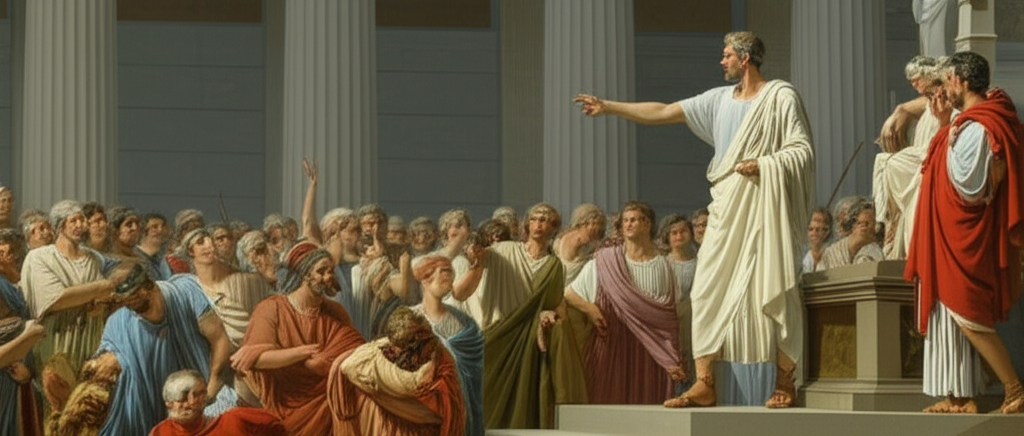
Language as a Bridge: The Rhetoric of Peace
Conversely, the rhetoric of peace seeks to foster understanding, cooperation, and reconciliation. It often requires a shift in perspective, moving away from an 'us vs. them' mentality towards shared interests and common humanity.
- Emphasizing Shared Values: Peace rhetoric highlights common goals, mutual benefits, and universal human rights, rather than differences. Immanuel Kant's vision of perpetual peace, for instance, relies on rational states recognizing shared moral principles.
- Building Empathy: It encourages understanding of the other side's perspective, acknowledging grievances without necessarily condoning past actions.
- Diplomacy and Negotiation: The language of diplomacy is carefully calibrated, focusing on compromise, mutual respect, and the search for common ground. Treaties and agreements are meticulously worded to ensure clarity and enforceability, aiming to prevent future misunderstandings.
- Reconciliation and Forgiveness: Post-conflict rhetoric often focuses on healing, rebuilding, and fostering forgiveness to prevent cycles of violence. This might involve truth commissions or public apologies.
Key Rhetorical Strategies in War and Peace
| Strategy Type | Objective | Examples in War Rhetoric | Examples in Peace Rhetoric |
|---|---|---|---|
| Pathos (Emotion) | Arouse strong feelings | "They hate our freedoms!" "Remember our fallen!" | "Let us build a brighter future together." "Hope for humanity." |
| Logos (Logic) | Appeal to reason and evidence | "Our intelligence shows imminent threat." "Strategic necessity." | "Economic interdependence benefits all." "Shared security interests." |
| Ethos (Credibility) | Establish authority and trustworthiness | "As your commander-in-chief..." "History demands this action." | "As a global leader, we advocate for..." "Our commitment to dialogue." |
| Framing | Shape perception of an issue | "Pre-emptive strike," "surgical operation" | "Peace process," "mutual understanding" |
| Metaphor/Analogy | Create vivid, memorable comparisons | "The enemy is a cancer." "A necessary evil." | "Building bridges, not walls." "A new dawn of cooperation." |
The Government's Role: Curating Narratives
Governments are masters of rhetoric. They control vast communication apparatuses, from official press releases to state-sponsored media, allowing them to shape public discourse. The selection of specific words, the emphasis on certain facts, and the omission of others are all strategic choices. For instance, the framing of a military intervention as a "humanitarian mission" rather than an "invasion" fundamentally alters public perception.
This curation of narratives is a double-edged sword. While it can be used to rally support for noble causes, it can also be exploited to manipulate populations, suppress dissent, and perpetuate cycles of conflict. As citizens, our critical engagement with these narratives, informed by a philosophical understanding of language and its power, becomes paramount.
Conclusion: A Call for Critical Engagement
The rhetoric of War and Peace is not a static phenomenon; it evolves with political landscapes and technological advancements. Yet, its fundamental mechanisms, rooted in the art of persuasion, remain timeless, echoing the insights of the Great Books. From the ancient Greek city-states debating war in the agora to modern nations negotiating treaties at the UN, the judicious or manipulative use of language determines the course of history.
As Emily Fletcher, I urge us to cultivate a keen awareness of the rhetoric surrounding us. To question the narratives presented, to seek out diverse perspectives, and to understand the philosophical underpinnings of the arguments being made. Only through such critical engagement can we hope to discern truth from propaganda and contribute meaningfully to the pursuit of genuine peace.
📹 Related Video: PLATO ON: The Allegory of the Cave
Video by: The School of Life
💡 Want different videos? Search YouTube for: ""Plato's Gorgias Rhetoric and Justice" for a deep dive into the philosophical critique of rhetoric."
📹 Related Video: PLATO ON: The Allegory of the Cave
Video by: The School of Life
💡 Want different videos? Search YouTube for: ""Thucydides History of the Peloponnesian War Rhetoric and Power" for historical examples of political speech."