

The Rhetoric of Tyranny
In the philosophical tradition, rhetoric is often understood as the art of persuasion. However, when wielded by those seeking absolute power, it transforms into a potent instrument of tyranny, perverting language itself to manipulate perception, stifle dissent, and consolidate government control. This article explores how tyrannical regimes systematically corrupt discourse, turning words into weapons against truth and freedom, a phenomenon observed and warned against by thinkers throughout the Great Books of the Western World.
The Art of Persuasion Perverted: Understanding Rhetoric's Dark Side
Rhetoric, at its core, is a powerful tool for shaping belief and action. In its noble form, it facilitates reasoned debate, inspires collective action towards justice, and articulates profound truths. Yet, as classical philosophers from Plato to Aristotle recognized, its persuasive force is morally neutral; it can be employed for both enlightenment and deception. For the tyrant, rhetoric is not about truth or genuine consensus, but about bending reality to their will, creating a narrative that justifies their oppressive rule. It is the systematic deployment of language to obscure, rather than illuminate.
The Tyrant's Lexicon: Language as a Tool of Control
Tyrannical regimes do not merely suppress speech; they actively re-engineer language. They understand that controlling the meaning of words is tantamount to controlling thought itself. Concepts like "freedom," "justice," and "truth" are redefined to serve the state's agenda, often acquiring their opposite meanings. Dissent becomes "treason," criticism becomes "sabotage," and oppression is rebranded as "security" or "order." This linguistic subversion creates a parallel reality, making it increasingly difficult for citizens to articulate their grievances or even recognize the true nature of their subjugation.
Consider the following common rhetorical tactics employed by tyrants:
- Euphemism and Doublespeak: Using benign or vague terms to describe harsh realities (e.g., "re-education camps" for prisons, "collateral damage" for civilian casualties).
- Ad Hominem Attacks: Discrediting opponents by attacking their character or motives rather than their arguments.
- Gaslighting: Systematically questioning the sanity or memory of the populace, leading them to doubt their own perceptions of reality.
- Fear-Mongering: Constantly invoking external or internal threats to justify authoritarian measures and demand unwavering loyalty.
- Cult of Personality: Elevating the leader to an almost divine status, beyond reproach or criticism, often through hyperbolic praise and manufactured narratives of infallibility.
- Historical Revisionism: Rewriting the past to align with the current regime's ideology, erasing inconvenient truths and fabricating heroic narratives.
This deliberate corruption of language is central to maintaining tyranny, as it blurs the lines between fact and fiction, making critical thought a perilous and often impossible endeavor.
Erosion of Discourse: Silencing Dissent and Forging Consensus
Beyond the manipulation of individual words, tyrannical government actively dismantles the very infrastructure of free discourse. Independent media is suppressed, academic freedom curtailed, and public spaces for debate are eradicated or co-opted. The goal is not just to prevent opposition from speaking, but to prevent the very idea of opposition from forming.
When genuine dialogue is replaced by monologues of state-sanctioned narratives, the public sphere shrinks, and citizens become isolated. This isolation makes it harder for individuals to recognize shared grievances or organize collective resistance. The constant repetition of official slogans, the pervasive surveillance, and the immediate condemnation of any deviation from the party line all contribute to an atmosphere where self-censorship becomes the norm, and the tyrant's rhetoric reigns supreme.
Historical Echoes: Lessons from the Great Books
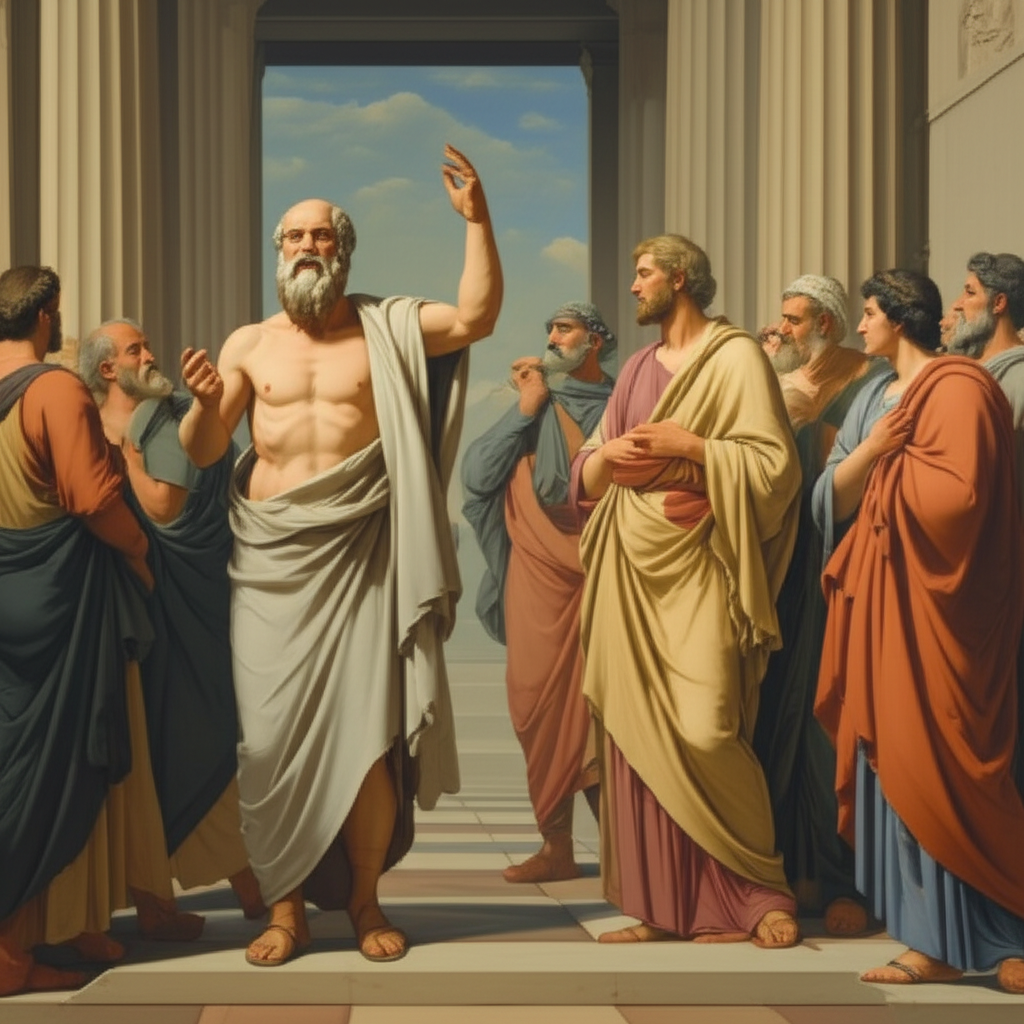
The insidious nature of tyrannical rhetoric is a recurring theme in the Great Books of the Western World. Plato, in his Republic, explored how a philosopher king could prevent the degeneration of the ideal state into various forms of unjust rule, including tyranny, largely through the proper education and use of rhetoric for truth. Aristotle, in Politics, meticulously analyzed the mechanisms by which tyrants seize and maintain power, often noting their reliance on deception and the suppression of the populace. Machiavelli, in The Prince, while often misconstrued, offered a stark, pragmatic analysis of how rulers, including despots, must skillfully use appearances and language to maintain control, irrespective of moral truth. These foundational texts serve as enduring warnings, demonstrating that the weaponization of language is not a modern phenomenon, but a timeless strategy of oppression.
The Philosophical Defense: Cultivating Critical Awareness
Resisting the rhetoric of tyranny demands a robust philosophical defense. It requires an unwavering commitment to critical thinking, a relentless pursuit of truth, and a steadfast refusal to allow language to be stripped of its integrity. By scrutinizing claims, questioning authority, and engaging in genuine, open dialogue, individuals can inoculate themselves against manipulative persuasion. Philosophy provides the tools to dissect arguments, identify logical fallacies, and distinguish between genuine discourse and propaganda. In an age where information is abundant but truth often elusive, the ability to critically evaluate language is perhaps our most vital bulwark against the encroachment of tyranny.
📹 Related Video: PLATO ON: The Allegory of the Cave
Video by: The School of Life
💡 Want different videos? Search YouTube for: ""Plato's Warning Against Tyranny and Rhetoric""
📹 Related Video: ARISTOTLE ON: The Nicomachean Ethics
Video by: The School of Life
💡 Want different videos? Search YouTube for: ""The Power of Language: How Propaganda Shapes Reality""